
Deck Ledger Flashing: Stop Water Intrusion Before Rot Starts
Understand deck ledger flashing, membrane layers, material compatibility and warning signs of rot. Get a professional scope for your Western NC mountain home.
Key Takeaways
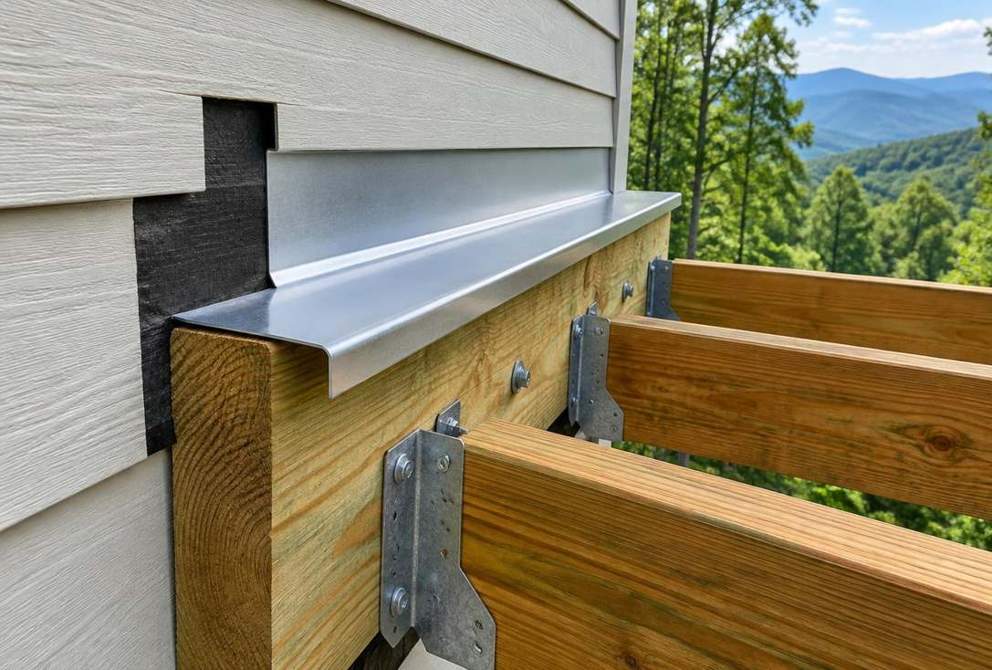
A deck ledger connection must keep water out of the wall and protect the structural attachment. That normally involves flashing integrated with the water-resistive barrier, compatible membrane and a rigid cap. Do not treat a small gap behind a ledger as permission to skip moisture protection; local code, approved connection details and fastener penetrations still need review.
TL;DR:
- Flashing geometry must follow the locally applicable code and approved assembly, with wall integration that sheds water outward.
- Specify corrosion-resistant flashing and compatible fasteners, with thickness and treated-lumber isolation verified for the actual product and local code.
- Proper installation involves layering membrane before and over the ledger, folding over the top, and installing a cap flashing that laps behind the WRB and siding for redundancy.
- Common mistakes include using under-gauge materials, short or backward laps, metal contact with treated wood, blocked drainage gaps, and reliance solely on caulk for sealing.
- In mountain rain and freeze-thaw exposure, detail drainage, compatible laps and membrane integration carefully; extra layers must not trap moisture.
What Does Deck Ledger Flashing Actually Do?
Ledger bolts and the house connection interrupt the drainage plane. Proper flashing directs water down and out before it reaches the sheathing or rim joist. Rot here is a structural safety concern, not just a cosmetic leak.
The 2024 model IRC R507.9.1.5 contains specific ledger-flashing dimensions and an exception for certain spaced connections. It is not automatically the adopted code for every Western NC permit. Ask the local building department and contractor to identify the applicable edition, amendments and approved detail. Spacing alone does not waterproof bolt penetrations or establish a safe connection.
What Materials Work Best for Ledger Board Flashing?
Three categories cover almost every ledger flashing job: rigid metal, self-adhering membrane, and preformed combination systems. Which one wins depends on your climate, your ledger's wood treatment, and how much redundancy you want built in.
Metal flashing remains the standard for the cap layer. G185 galvanized steel is the most common choice, and the "185" refers to the zinc coating weight per square foot, a heavier coating than standard G60 galvanized, which buys real corrosion resistance for a modest cost bump. Stainless steel costs more but resists corrosion better in wet, high-elevation, or coastal air, and it's the safer pick anywhere it will touch pressure-treated lumber directly. Copper flashing shows up on higher-end builds for its longevity and looks, though it's rarely the budget pick for a ledger.
Self-adhering membrane (sometimes called peel-and-stick flashing) is the workhorse behind the scenes. It seals around fasteners, bridges the transition where the ledger meets the sheathing, and gives you a second line of defense if the rigid cap ever develops a pinhole leak. Building science guidance treats membrane integration with the WRB as best practice, not an upgrade.
Preformed cap systems, like the EverFlash deck ledger flashing system, combine a rigid profile with built-in isolation, and come in stainless steel or plastic versions. Stainless resists corrosion better against treated wood; plastic sidesteps metal-to-lumber contact entirely but check your local code before relying on it as the sole flashing layer.
Galvanized steel and aluminum can corrode faster when pressed against modern pressure-treated lumber preservatives. Isolate metal from treated wood with a membrane strip, or use stainless steel where direct contact is unavoidable.
Pro Tip: In damp or snowy climates, don't treat the cap flashing as your only defense. Add membrane behind and over the ledger even if your local inspector would sign off on cap flashing alone.
How Do You Install Deck Ledger Flashing Step by Step?
This is a contractor sequence to discuss, not a homeowner teardown or fastening instruction. The ledger may support the deck; removing bolts or opening structural wood without a support plan can cause failure.
- Assess the ledger, rim joist, sheathing and connections; determine any required temporary support and permits.
- Expose only the areas covered by the approved work plan and repair damaged structural material before concealing it.
- Integrate compatible membrane and cap flashing with the wall drainage plane and approved structural attachment.
- Lap the water-resistive barrier above the flashing so water drains outward; specify ends, corners and penetrations.
- Use compatible fasteners and preserve drainage and ventilation openings.
- Complete required inspections before closing the wall and deck finishes.
Do not pull siding, loosen a ledger or probe structural wood yourself to diagnose hidden rot. Have a qualified professional assess it.
What Are the Most Common Deck Ledger Flashing Mistakes?
Most ledger flashing failures trace back to one of a handful of repeatable errors, and most of them show up years later as rot rather than an obvious leak.
- Unverified material thickness. Check the approved product and applicable code instead of assuming a shelf label or gauge number establishes suitability.
- Backward or short laps. A lap that runs the wrong direction, or one that's an inch short of code minimums, channels water into the wall instead of away from it.
- Direct metal-to-treated-wood contact. Galvanized flashing against modern pressure-treated lumber corrodes faster than the same metal on untreated framing.
- Blocked drainage gaps. Mulch, caulk, or trim pressed against the bottom of the flashing traps water right where it's supposed to exit.
- Relying on caulk as the primary seal. Caulk shrinks, cracks, and fails long before a properly lapped membrane system does.
Watch for a soft or spongy feel when you press on the band joist near the ledger, peeling paint or bulging siding directly above the deck attachment, rust streaks running down the flashing face, or water stains on an interior wall below deck level. Surface rust on visible flashing is often a cosmetic fix. Soft wood at the band joist is a structural issue that calls for opening up the wall and likely bringing in a contractor rather than patching over it.
What Should You Look for When Buying Deck Ledger Flashing?
A written scope should identify flashing material and thickness, compatible membrane, fasteners, end treatment, wall integration and any structural repairs. Gauge numbers vary by metal and are not a universal substitute for a stated thickness. Confirm product approval and compatibility with treated lumber before installation.
Highlander's Take on Ledger Flashing in Mountain Climates
Western NC decks experience heavy rain, shaded drying conditions and freeze-thaw cycling. The wall connection needs drainage and material compatibility matched to that exposure. Do not conceal moisture damage beneath a new cap.
Our field approach on damp or high-elevation sites leans on redundant membrane layers, larger laps than code requires, treated joist ends, and stainless or membrane isolation anywhere metal meets pressure-treated lumber. This extra margin is less costly during initial construction and more expensive to add later once siding and trim are installed.
If you're seeing soft wood, rust streaks, or interior staining below a deck ledger, that's worth a professional inspection before the next storm season, not after.
Should You Flash a Ledger Yourself or Call a Pro?
Ledger flashing repairs can involve structural attachment and hidden rot. Have a qualified contractor assess the work, especially where there is soft wood, sagging, complex siding, masonry or a door threshold. Do not loosen ledger fasteners without a structural support plan.
When you do call a contractor, ask what flashing material and gauge they use, how they isolate metal from treated lumber, and whether their written scope specifies extensions beyond code minimums for your site's exposure. A fair estimate should spell out material specs and price before any siding comes off the wall.
Get a Professional Deck Ledger Inspection From Highlander
Contact Highlander Building Services, Inc. to discuss your deck connection and exterior water issues. Our outdoor living services provide a starting point for project planning. Request a scope that separates flashing, wall repairs and structural work.
See under-deck drainage planning before concealing framing with a ceiling or drainage system.
Discuss Your Mountain Home Project
Highlander Building Services, Inc. serves Western North Carolina homeowners. Contact our team or request an inspection to discuss a written project scope. Call (828) 524-7773. Visit our Franklin service area for local information.
Frequently Asked Questions
Does a deck ledger need flashing?
The connection must prevent water entry into the wall and protect structural wood. Flashing is normally part of that detail. A model-code spacing exception is not permission to ignore bolt penetrations or local code review.
Which flashing materials are suitable?
Use an approved corrosion-resistant product with compatible membrane and fasteners. Verify thickness, treatment compatibility and any isolation requirements with the manufacturer and local building department.
Can I repair ledger flashing myself?
Ledger work can expose or disturb a load-bearing connection. Do not loosen bolts or remove structural material without a professional assessment and support plan. Hidden rot needs structural review, not just a patch.
Which code applies to my deck?
The local building department determines the adopted code edition and amendments for your permit. Have the contractor identify the applicable ledger detail rather than assuming a quoted 2024 model-code dimension applies everywhere.
Related Services
Get a straight answer about your roof in Western NC
Local crews, written scopes, and a response during business hours.
- 4.8★ Google · 158 reviews
- Licensed & insured · family-owned since 2017
- Franklin-based crews across 10 WNC counties
Calls are answered by the local team during working hours. Messages are answered during business hours.
More Western NC resources
Mountain-Proven Results
Written By
Highlander Editorial Team
Highlander Building Services
Expert roofing and construction guidance from the team that builds in Western North Carolina's mountains every day.
Why Highlander
Talk to a local roofer
Photos, findings, and a written scope — no pressure to buy anything.
(828) 524-7773Request an InspectionStart with three simple contact details.
Roofing or construction, you do not need to diagnose the problem or finish a long intake first. Send your contact details and Highlander will discuss the project with you.
Prefer to talk directly?
(828) 524-7773- 4.8★ Google · 158 reviews
- Licensed and insured
- Crews based in Franklin, serving Western North Carolina