
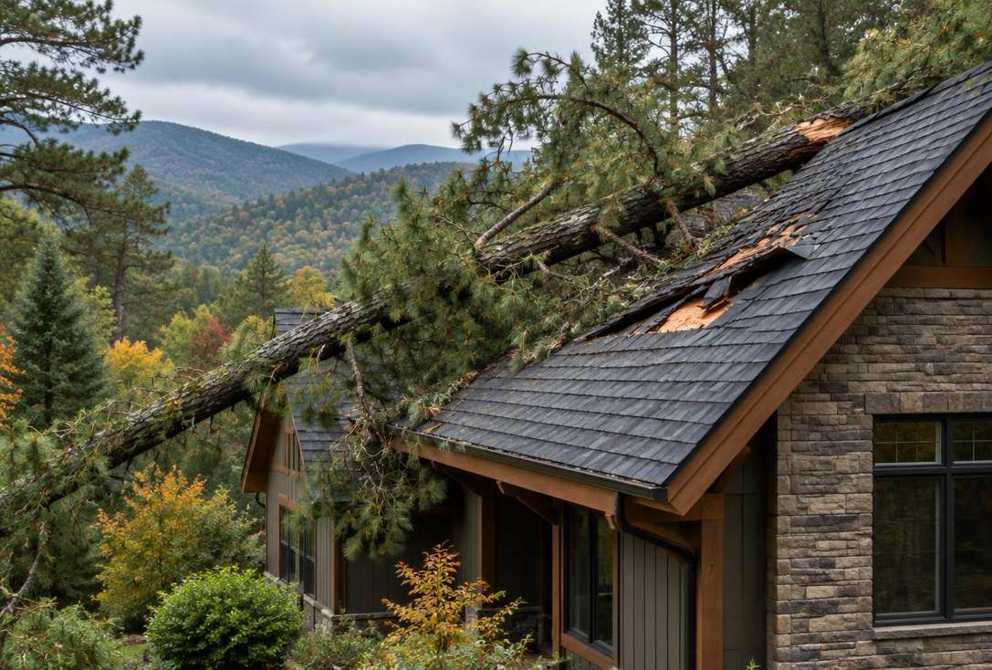
Tree on Your Roof in Western NC: Safety, Tarping and Repairs
What to do after a tree hits your Western NC roof: safe documentation, coordinated removal, temporary protection, insurance questions and written repair scopes.
Key Takeaways
If a tree lands on your roof, get everyone out of the affected rooms, and call 911 if anyone is hurt or a power line is down. Stay off the roof, photograph the damage from the ground, call your insurer, and get a licensed roofer out for emergency tarping. Removal and repair typically follow, coordinated among the roofer, a tree service, and occasionally a structural engineer.
TL;DR:
- Insurance claims should be filed immediately, and documentation must include detailed photos, videos, and receipts to support the damage assessment.
- Temporary protection timing, cost and reimbursement depend on storm conditions, safe access, damage extent and your insurance policy. Request a written estimate; no fixed price or response deadline is promised.
- Prioritize emergency services and the utility when there is danger, then coordinate roofing and tree-removal professionals. Notify your insurer promptly, but do not delay necessary safety or mitigation work.
- Structural repairs can require engineering, permits and several trades. The schedule depends on the actual damage and safe removal plan, not a fixed number of days.
- Regular pruning, clearing debris, and post-storm roof inspections help prevent future tree strikes and minimize repair costs.
Safety First: Securing People and Property in the First Hour
Call 911 immediately if anyone is injured or you see a downed power line anywhere near the tree, the roof, or the yard. Live wires can hide under branches and leaves, and staying clear of downed lines and not touching them is the single most important rule in the first minutes after a strike.
Do not climb onto the roof, even if the damage looks minor from a window. Wet shingles, hidden cracks in decking, and a tree that's still shifting under its own weight make roof access dangerous for anyone without fall protection and training. Grab a pair of binoculars and assess from the ground or from a safe upstairs window instead.
Once the scene is stable, document everything. Take:
- Wide shots of the whole roof and the tree's position from multiple angles.
- Close-up photos of the impact point, cracked shingles, and any punctures.
- Interior shots of ceiling stains, sagging drywall, or daylight coming through the roof deck.
Keep original dated photos and video. Stay out of affected rooms and do not approach electrical equipment near water; ask emergency services or the utility to make the area safe. Leave debris removal and structural checks to professionals.
Pro Tip: Shoot a slow video walk-around before you touch anything. A single video with the date and time visible on your phone's lock screen is often more convincing to an adjuster than a stack of still photos.
Insurance: What to Expect and What to Document
Most homeowners policies pay for tree damage when the tree strikes a covered structure. That's true even if the tree originated on a neighbor's property. The claim typically runs through your own policy, not theirs.
Tree removal and debris coverage can have separate limits. Policy exclusions, the cause of loss and maintenance history may affect the decision. Ask your insurer for a written coverage explanation rather than assuming damage or removal is automatically paid.
A few habits protect your claim from day one:
- File the claim the same day if possible. Delays raise questions insurers don't need.
- Keep every receipt, from tarping to temporary lodging if the home is uninhabitable.
- Have your roofer document the full scope of damage in writing, not just what's visible from the ground.
- Ask for a supplemental estimate if the adjuster's initial payout misses hidden damage found during repair.
If the payout feels short, you're allowed to push back with a written, itemized estimate from your contractor. Adjusters revise numbers regularly when the paperwork backs it up.
Who to Call First and How the Trades Work Together
After emergency hazards are controlled, notify your insurer and contact roofing and tree-removal professionals to agree on a safe sequence. A tree may need stabilization or removal before any roofer can reach the damaged area. Never enter beneath a loaded or sagging roof.
- Ask qualified contractors for insurance, any applicable license, a written scope and payment schedule.
- Have a structural engineer review damaged rafters, trusses or unstable framing when necessary.
- Document urgent mitigation, but do not delay it while waiting for a claim number.
What the Repair Process Actually Looks Like
Temporary protection begins only when the roof is safe to access. The source article cited $300 to $800 as an example from another market, not a verified Western NC or Highlander price. Storm demand, roof pitch, access and structural damage can move costs outside that range. Get a site-specific written estimate and ask your insurer which mitigation expenses are covered.
After tarping, the roofer inspects the deck, rafters, and interior ceilings to scope the full repair. If framing looks compromised, this is where the structural engineer's report comes in, and insurers often lean on that report finalizing the claim amount.
Once removal is coordinated with the arborist, the repair itself moves through a few phases:
- Clear remaining debris and confirm the tree is fully off the structure.
- Repair or replace damaged decking and framing members.
- Install new underlayment and flashing around the repaired section.
- Match and install finish roofing material, then handle any interior drywall or insulation repairs.
Completion depends on removal access, hidden damage, engineering, permits and material availability. Crane-assisted removal and multiple interior trades may extend the schedule. Ask for a staged plan rather than relying on a one-week promise.
Cutting the Odds of a Repeat Tree Strike
Once repairs are done, the smartest move is making sure this doesn't happen again next storm season. A few standards go a long way:
- Keep roughly a 10-foot clearance between branches and the roofline.
- Remove dead or visibly diseased trees near the house before they become a liability.
- Hire a certified arborist for major pruning or removal rather than tackling large limbs yourself.
- Schedule a roof inspection after major storms, even when nothing looks obviously wrong.
Gutters clogged with leaves and debris also add stress during heavy rain, so clean them out as part of the same seasonal check.
Highlander's Take on Tree-Strike Repairs
Mountain tree strikes combine roofing damage, difficult access and potential structural loads. A written assessment should separate temporary protection, safe tree removal and permanent repair. Review our post-storm inspection guide for documentation priorities.
How Highlander Can Help After a Tree Strikes Your Roof
Discuss the damage with Highlander Building Services, Inc. Have safe ground-level photos, any claim number and access notes ready. Explore roof repair and storm damage services. Emergency services and utility crews, not a roofing appointment, are the first call for immediate danger.
Discuss Your Mountain Home Project
Highlander Building Services, Inc. serves Western North Carolina homeowners. Contact our team or request an inspection to discuss a written project scope. Call (828) 524-7773. Visit our Franklin service area for local information.
Frequently Asked Questions
Should I call my insurer or a roofer first?
Call emergency services or the utility first if anyone is injured, power lines are down or the structure is unsafe. Notify your insurer promptly and coordinate qualified roofing and tree-removal professionals; do not delay urgent mitigation for a claim number.
Does insurance cover a tree falling on a roof?
A covered tree-impact loss may be insured, but exclusions, deductibles, maintenance history and debris-removal limits vary. Ask your insurer to confirm your policy terms in writing.
Can I remove the tree myself?
No. A tree can shift or release loads into damaged framing. Keep clear and have qualified tree-removal and roofing professionals coordinate the work.
How long does the repair take?
The schedule depends on safe removal, structural damage, engineering, permits, weather and material availability. A site assessment is needed before a reliable timeline can be given.
What does emergency tarping cost?
Costs vary with access, pitch, damage and storm demand. Request a written local estimate and verify mitigation coverage with your insurer.
Related Services
Get your roof checked after the storm in Western NC
Call and talk to someone local, or request an inspection and we'll come document the damage in person.
- 4.8★ Google · 158 reviews
- Licensed & insured · family-owned since 2017
- Franklin-based crews across 10 WNC counties
Calls are answered by the local team during working hours. Messages are answered during business hours.
More Western NC resources
Mountain-Proven Results
Written By
Highlander Editorial Team
Highlander Building Services
Expert roofing and construction guidance from the team that builds in Western North Carolina's mountains every day.
Why Highlander
Talk to a local roofer
Photos, findings, and a written scope — no pressure to buy anything.
(828) 524-7773See Roof RepairStart with three simple contact details.
Roofing or construction, you do not need to diagnose the problem or finish a long intake first. Send your contact details and Highlander will discuss the project with you.
Prefer to talk directly?
(828) 524-7773- 4.8★ Google · 158 reviews
- Licensed and insured
- Crews based in Franklin, serving Western North Carolina