
Storm Damage Roof Inspection: A Homeowner Photo Checklist
Document roof storm damage safely from the ground, organize dated photos and prepare questions for a professional inspection and your insurer.
Key Takeaways
If your roof saw high winds, hail, falling debris, or heavy standing water in a recent storm, schedule a professional storm damage roof inspection and start documenting everything now. Insurers weigh timely, well-labeled evidence heavily, and some damage worsens fast under rain. Stay off a wet or steep roof: start your own check from the ground and let a trained inspector handle the rest.
TL;DR:
- Insurers prefer documented, dated photos of all damage points, including wide-range shots and close-ups with scale, to validate storm-related roof damage.
- Damage signs vary: wind lifts shingles at edges, hail dents metal and granules, debris causes punctures, and standing water often indicates drainage issues, not necessarily storm impact.
- Conduct ground-level inspections using binoculars and record interior signs like water stains or light gaps early, but avoid climbing wet or steep roofs yourself.
- Professional inspection reports should include detailed diagrams, damage counts, labeled photos, cause attribution, and specific repair estimates to support insurance claims.
- Since storm impact on mountain homes differs, documenting with annotated photos and expert inspections increases the likelihood of a smooth insurance process and proper repairs.
What to inspect on and around your roof after a storm
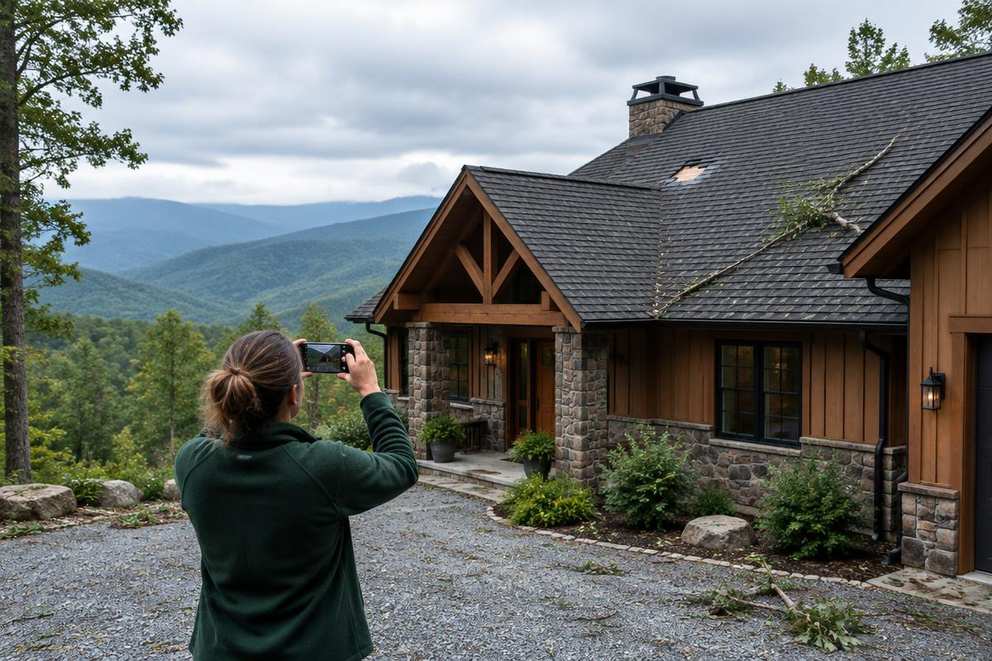
Start from safe ground-level locations with binoculars. A ground view is useful but cannot reveal every defect; leave roof access to qualified professionals.
- Missing or lifted shingles: look for bare patches, curled edges, or shingles sitting at odd angles.
- Granule buildup visible around downspouts: record it, but do not assume it proves hail or wind damage; ordinary wear can also shed granules.
- Dented vents, flashing, or gutters: soft metal often shows hail bruising more clearly than shingles do.
- Debris and punctures: branches, hail, or wind-blown objects can crack or puncture roofing material directly.
- Standing water or sagging areas: pooling after rain points to clogged drainage or a dip in the deck.
Each damage type leaves its own signature. Wind tends to lift shingles along ridges and edges first. Hail bruises asphalt granules and dents anything metal, including flashing and gutter runs. Falling debris leaves localized punctures or gouges, usually near trees or taller structures nearby. Standing water, meanwhile, often points to a drainage problem rather than storm impact alone, though a storm can be what exposed it.
Inside the house, photograph upper-floor ceiling stains from safe rooms. Leave attic access to a professional if footing, wiring or structural conditions are uncertain. Interior signs may appear before exterior damage becomes obvious.
How to document damage for insurer review
Objective, dated photos help an insurer review observed conditions. Keep wide shots from the ground, professional close-ups where available, and a log with dates and locations. Documentation alone cannot guarantee acceptance or settlement.
- Shoot wide shots first: capture each roof slope and elevation from the ground to show overall context.
- Use camera zoom from the ground. Leave close-up roof photos and scale measurements to the inspector; never climb to place a coin beside damage.
- Label and log each image: name files by date and location, and keep a simple written log alongside them.
- Photograph interior signs from safe rooms. Leave attic recording to a professional if footing, wiring or structural conditions are uncertain.
- Back up everything immediately: cloud storage or a second device protects your evidence if your phone is lost or damaged.
Pro Tip: Keep your original photo files untouched and store copies separately. Never discard damaged shingles, flashing, or gutter sections before an adjuster has reviewed them.
When to call a pro and when to file an insurance claim
Before filing a claim, weigh the numbers:
- Review the repair estimate and policy deductible with your insurer or licensed insurance adviser. Claims history and premium effects vary; do not assume a claim will raise premiums or delay required notification.
- Factor in hidden damage risk: a small visible issue sometimes hides deck or flashing problems that only a closer inspection catches.
- Notify your insurer promptly and ask about reporting deadlines; do not postpone notification while collecting a complete report. Record each conversation.
Adjuster response times vary by event, so a minor local claim might get attention within days while a widespread regional disaster can take longer.
Safety and DIY limits: what to check and what to leave alone
Call a professional immediately if you notice sagging rooflines, large open holes, or active interior leaks. These point to structural concerns that worsen quickly. Temporary tarping and emergency patches look simple but are easy to get wrong on a slope, so leave that work, along with any roof access, to an experienced crew.
What a thorough storm damage inspection report should include
A useful inspection report records observed conditions, their locations and repair recommendations, distinguishing apparent storm impact from wear. It cannot establish coverage or guarantee approval.
- An annotated roof diagram noting slope, pitch, and the location of each damage point.
- Professional hail sampling where appropriate: inspectors may document defined sample areas; methods and insurer requirements vary. Homeowners should not mark roof test squares.
- A labeled photo gallery tying each image to a specific location and cause.
- Cause attribution that distinguishes storm impact from age-related wear.
- A line-item repair estimate breaking down materials and labor.
Counted and photographed findings can help an insurer assess the loss, but no particular inspection label or hail count guarantees coverage or settlement.
Preparing for the insurance adjuster visit
Walking into the adjuster meeting organized changes how the conversation goes.
- Bring your photo log and dated images, along with any prior maintenance receipts that establish your roof's condition before the storm.
- Have your contractor's written estimate ready so the adjuster sees a professional's cost breakdown alongside their own assessment.
- Be present for the walkthrough, get the adjuster's name and contact information, and take your own notes and photos as they inspect.
- If you disagree with the adjuster's findings, consider getting a second contractor estimate or, where state rules allow it, consulting a licensed public adjuster for an independent opinion.
Ready also recommends asking every adjuster for identification and written contact details before the visit ends, a small step that prevents confusion later.
A field perspective on mountain storm inspections
Storm damage on mountain homes rarely looks the same as it does at lower elevations. Wind exposure, steep pitches, and moisture pooling behave differently on a ridge home than on a flat suburban lot, and a report that does not account for that gives an incomplete picture. A photo log paired with a clear, annotated inspection report, the kind that ties each image to a specific cause, tends to hold up far better once an adjuster reviews it. Homeowners who document first and ask questions second are usually the ones with the smoother claim.
Request a storm damage inspection from Highlander Building Services
A documented checklist helps, but a trained eye catches what photos alone sometimes miss, especially on steep mountain roofs where wind exposure and moisture behave differently than they do at lower elevations. We built our storm damage and insurance support around that gap: a detailed, photo-backed inspection report, emergency tarping when a roof needs protection right away, and a written estimate before any work begins.
- A full photo-documented inspection that gives you the same kind of evidence an adjuster expects to see.
- Emergency tarping and temporary protection handled by an experienced crew, not a weekend fix.
- A detailed written estimate with a single point of contact from inspection through repair.
If you need a roof repair assessed quickly or suspect the damage warrants a full roof replacement, have your storm date, photos, and any insurer contact details ready when you call. Reach out through our roofing services page to get an inspection scheduled.
Discuss Your Roof in Western North Carolina
Highlander Building Services, Inc. can discuss your storm damage concerns, roof repairs or roof replacement. Request an inspection and bring your storm date, photos and policy questions. See our Franklin service area or contact our team.
Frequently Asked Questions
Should I climb onto the roof to document damage?
No. Take photos from safe ground-level positions and leave roof access, close-up measurements and temporary tarping to qualified professionals.
Does a storm inspection guarantee insurance coverage?
No. Your policy, endorsements, exclusions, deductible and the assessed cause determine coverage. Notify your insurer promptly and request its requirements in writing.
What records should I keep?
Keep original dated photos, storm dates, maintenance records, mitigation receipts, contractor reports and notes of insurer conversations. Back up originals separately from annotated copies.
Does storm damage always mean a full replacement?
No. Repairability depends on the extent of damage, remaining roof condition, deck and flashing integrity, product availability and applicable installation requirements.
Related Services
Get your roof checked after the storm in Western NC
Call and talk to someone local, or request an inspection and we'll come document the damage in person.
- 4.8★ Google · 158 reviews
- Licensed & insured · family-owned since 2017
- Franklin-based crews across 10 WNC counties
Calls are answered by the local team during working hours. Messages are answered during business hours.
More Western NC resources
Mountain-Proven Results
Written By
Highlander Editorial Team
Highlander Building Services
Expert roofing and construction guidance from the team that builds in Western North Carolina's mountains every day.
Why Highlander
Talk to a local roofer
Photos, findings, and a written scope — no pressure to buy anything.
(828) 524-7773See Storm DamageStart with three simple contact details.
Roofing or construction, you do not need to diagnose the problem or finish a long intake first. Send your contact details and Highlander will discuss the project with you.
Prefer to talk directly?
(828) 524-7773- 4.8★ Google · 158 reviews
- Licensed and insured
- Crews based in Franklin, serving Western North Carolina