
Shingle Blistering: 3 Stages, Hail Clues and Mountain Home Checks
How to spot shingle blistering safely, tell it apart from hail damage, and fix the heat and ventilation problems behind it on a Western NC mountain home.
Key Takeaways
Shingle blistering happens when trapped gas or moisture inside an asphalt shingle pushes up through the surface, forming small raised bumps. It usually comes from manufacturing volatiles, heat buildup or poor attic ventilation rather than a single storm. If you spot blisters, photograph them from the ground, stay off the roof, and schedule an inspection if the bumps have lost granules or a leak has appeared.
Key Takeaways
- Closed blisters are usually cosmetic. Granule loss exposes asphalt to faster weathering, and open pits expose the mat and raise leak risk.
- Inspect from the ground with binoculars or a zoom lens in low morning or late afternoon light. Do not walk on the roof.
- Have a contractor check balanced soffit intake and ridge exhaust before patching. Poor attic airflow can keep causing blisters under replacement shingles.
- Random marks tied to a storm suggest hail. Repeating bumps on sunny slopes point to blistering that developed over time.
- Call a contractor if blister tops rupture, the mat is exposed, leaks appear or the damage covers a wide area.
How to Spot Shingle Blistering Safely
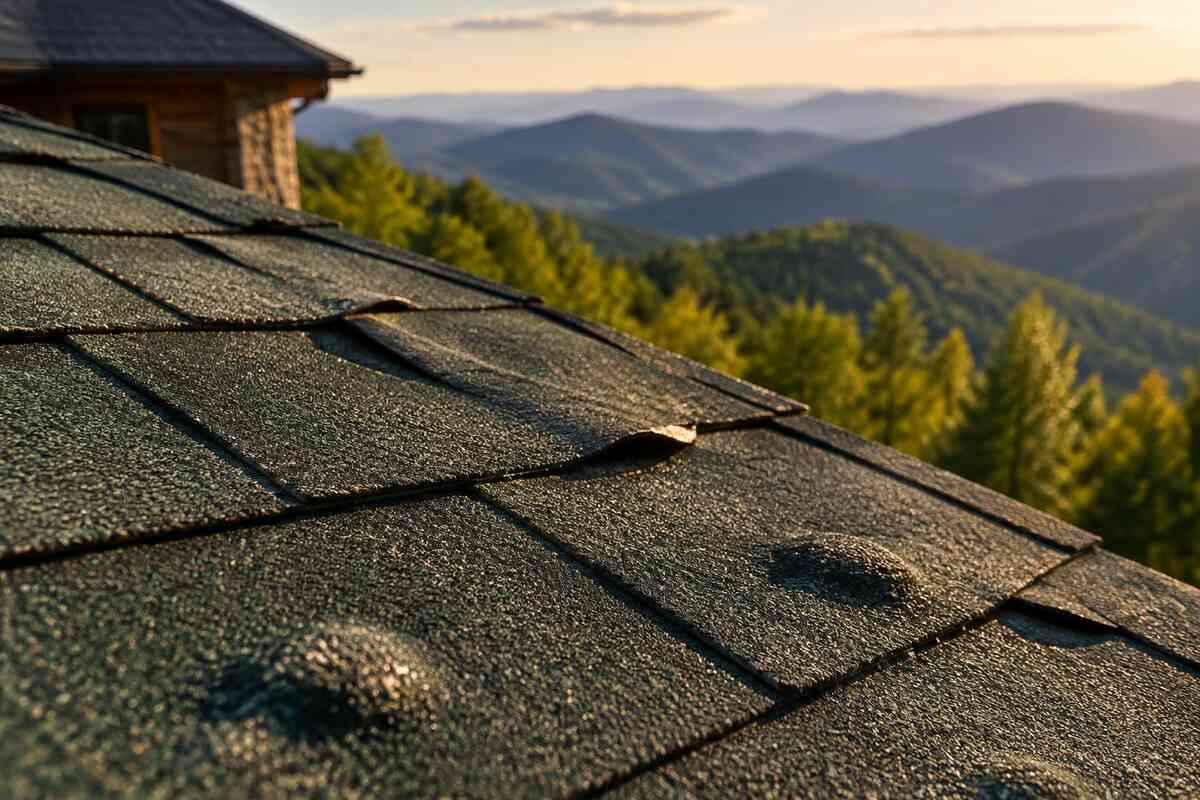
Blistering shows up as small raised bumps scattered or clustered across a slope, often where the roof gets the most direct sun. Unlike a single dent or tear, blisters repeat in a pattern tied to heat exposure rather than random impact points.
The clearest view comes from low-angle light, early morning or late afternoon, when shadows make raised areas easier to see. Binoculars or a camera zoom from the ground work well and keep you off the roof entirely. Leave climbing to a qualified professional with fall protection; softened asphalt also scuffs and tears underfoot.
- Photograph from several angles, with a wide shot for context and zoomed shots of individual blisters.
- Note the date and which slope each photo shows so you can track changes.
That record gives you a baseline. If blisters are early and cosmetic, you have something to compare against later. If they have already lost granules, the record helps a contractor or insurer.
The Three Stages
- Closed blister: a smooth, unbroken bump with granules intact. Largely cosmetic.
- Blister with granule loss: the top has thinned or cracked, exposing asphalt to UV and weather.
- Open pit: the blister top has worn away, leaving a crater that exposes the shingle mat. Leak risk rises and wear speeds up.
Granules shield the asphalt from UV and heat. Once they are gone, that spot ages faster than the rest of the roof. Label each photo with the date, slope and a short note such as "closed blister, south slope" so the sequence makes sense later.
What Causes Blistering
Most roofs that blister have more than one cause at work.
Manufacturing. Small amounts of moisture or volatile compounds can be trapped in a shingle during production. This is sometimes called "blister rash." Manufacturers often treat minor cases as cosmetic, though building professionals note it can still speed granule loss.
Heat. Florida Solar Energy Center testing found shingle color and reflectivity change peak surface temperatures substantially, with dark shingles running much hotter than light ones. Repeated heat cycles soften and expand the asphalt.
Attic ventilation. When intake and exhaust are not balanced, heat and moisture build up under the deck and raise shingle temperatures from below. Asphalt Roofing Manufacturers Association guidance recommends balanced soffit intake with ridge exhaust, sized to standard net free area ratios.
Installation. Shingles applied directly over insulation, without the airspace ventilation depends on, are flagged by the same industry guidance as a factor in premature failure, blistering included.
Hail Damage vs. Blistering
- Pattern: hail leaves random, scattered marks. Blistering forms clustered bumps that repeat on sun-exposed slopes.
- Shape: hail marks usually show a clear point of impact. Blisters are rounder and softer.
- Timing: hail damage appears suddenly after a specific storm. Blistering develops over months or years.
- Granules: hail knocks granules loose in a localized impact zone. Blistering wears granules off the tops of raised bumps as they age.
The two can overlap. A blister top already thinned by heat is easier for hail to knock off, which can make storm damage look worse. If your roof took a hailstorm and also shows repeating bumps elsewhere, document both separately. Our hail damage roof checklist covers storm marks in more detail.
Prevention and Maintenance
Most prevention comes down to managing heat, not chasing individual bumps.
- Have a contractor calculate your attic's net free ventilation area and confirm intake and exhaust are balanced.
- If you are reroofing a hot, sun-exposed slope, ask about more reflective shingle colors.
- Keep soffit vents clear of insulation and debris, and keep branches trimmed back from the roof.
- Schedule a seasonal look with a mountain roof maintenance checklist so small issues get caught early.
Avoid do-it-yourself patches. Spot repairs on blistered areas can hide a heat or ventilation problem if they are not paired with a broader assessment. Our mountain roof ventilation guide covers how elevation and tree cover affect attic airflow, and ridge vent vs. box vent explains exhaust options.
When to Call a Professional
Call a qualified professional once blister tops have ruptured, the mat is exposed, you see active leaks, or blistering covers a wide area. Bring dated photos, notes on recent storms and any installation records.
Ask about a ventilation assessment, whether the fix is a spot repair, partial reroof or full replacement, and how the manufacturer's warranty treats blistering versus storm damage. Your policy and your warranty decide coverage; many draw a line between cosmetic blistering and functional damage from an identifiable storm.
Our Perspective
On mountain homes, we start a blistering inspection in the attic, checking ventilation balance and decking condition before looking at the shingles, because elevation and tree cover change how heat and moisture move. We map granule loss across the roof to separate isolated cosmetic spots from a ventilation-driven pattern.
The common mistake is spot-patching blistered shingles without checking the attic. If heat and moisture are still building underneath, new shingles in the same spot can blister again. A few blisters on a well-vented south slope may only need monitoring. The same blisters over a hot, poorly vented attic mean the whole roof is working harder than it should.
How We Help
Our roof inspections map blistering, check attic ventilation and document decking condition, with a written scope and one point of contact. Depending on what we find, the answer may be a roof repair, a ventilation upgrade, or a roof replacement if the roof is near the end of its life. Contact us to schedule an inspection.
Sources
Local to Franklin, NC
This article was written specifically for homeowners in Franklin and the surrounding area. Highlander Building Services serves Franklin and all of Western North Carolina with in-person consultations and local crews.
Talk With Our Local TeamFrequently Asked Questions
Is shingle blistering covered under a roofing warranty?
It depends on the manufacturer and the cause. Some warranties exclude minor cosmetic blistering, while blistering tied to a ventilation or installation problem may be handled differently. Review your warranty terms with a contractor.
Can shingle blistering cause a roof leak?
Yes, once a blister top wears away and exposes the shingle mat, that spot becomes vulnerable to water. Closed blisters are mainly cosmetic, but open pits raise leak risk.
Does shingle color affect blistering?
Color affects heat. Florida Solar Energy Center testing found darker shingles reach notably higher surface temperatures than lighter, more reflective ones, and that heat adds to the stress behind blistering.
How is shingle blistering different from hail damage?
Hail leaves random impact marks tied to one storm date. Blistering forms clustered, repeating bumps on sun-exposed slopes that develop gradually. Both can appear on the same roof.
What should I check first if I see blisters?
Attic ventilation. Unbalanced intake and exhaust is a common contributor. A qualified professional can confirm whether that is the cause before you decide on repairs.
Related Services
Have your roof looked at in Franklin, NC
Most maintenance issues are cheap to fix and expensive to ignore. We'll tell you which one this is.
- 4.8★ Google · 158 reviews
- Licensed & insured · family-owned since 2017
- Franklin-based crews across 10 WNC counties
Calls are answered by the local team during working hours. Messages are answered during business hours.
More for Franklin, NC
Real Work in Franklin
Market Context
Roofing & Construction in Franklin
Explore localized standards and proven projects in your area.
Written By
Highlander Editorial Team
Highlander Building Services
Expert roofing and construction guidance from the team that builds in Western North Carolina's mountains every day.
Why Highlander
Roofing help in Franklin, NC
Photos, findings, and a written scope — no pressure to buy anything.
(828) 524-7773Request an InspectionStart with three simple contact details.
Roofing or construction, you do not need to diagnose the problem or finish a long intake first. Send your contact details and Highlander will discuss the project with you.
Prefer to talk directly?
(828) 524-7773- 4.8★ Google · 158 reviews
- Licensed and insured
- Crews based in Franklin, serving Western North Carolina