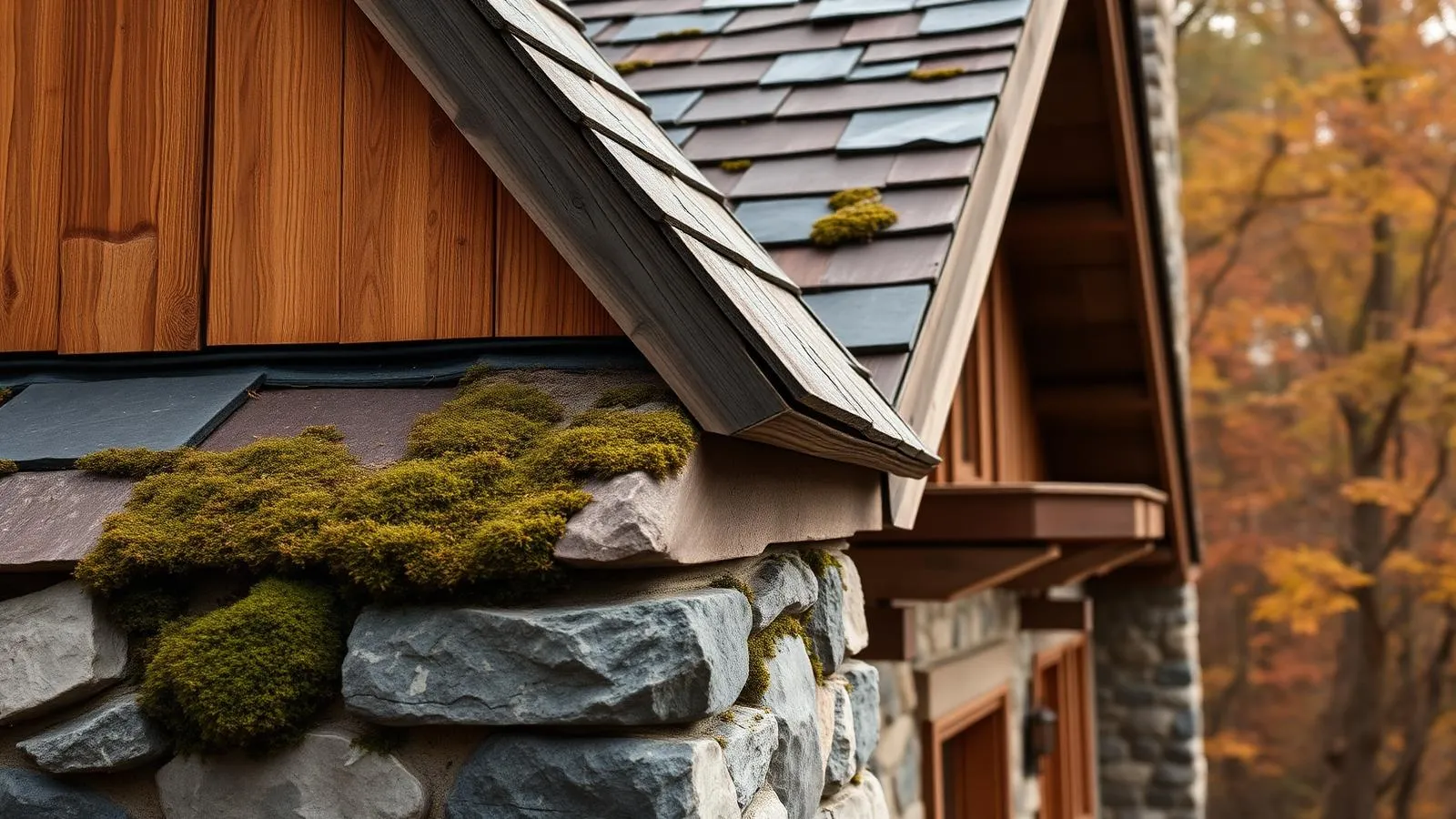
Brava Synthetic vs Cedar Shake vs Natural Slate for Mountain Homes
Three ways to get a textured, high-end roof on a Western NC home — compared on weight, lifespan, maintenance, fire and what each one asks of the structure.
Key Takeaways
If you want the look of slate or cedar on a Western North Carolina home and you are not reframing the roof, Brava synthetic is usually the answer: it reproduces both textures at a fraction of the weight, carries a long manufacturer warranty, and does not feed moss the way real cedar does under heavy canopy. Real cedar is right when the house genuinely calls for it and the owner accepts the maintenance. Natural slate is right when the structure was built for it, because almost nothing else lasts as long.
The three are often presented as alternatives at different prices. They are really three different relationships with the roof.
Side by Side
| Criterion | Brava synthetic | Cedar shake | Natural slate |
|---|---|---|---|
| What it is | Moulded composite, coloured through the material | Split or sawn western red cedar | Quarried stone |
| Weight | Light — comparable to a heavy asphalt roof | Light to moderate | Very heavy; most roofs need engineering |
| Typical service life | 50 years, with a long manufacturer warranty | 20–30 years here, shorter under heavy shade | A century or more; fixings fail first |
| Maintenance | Keep valleys and gutters clear | Cleaning, treatment, replacing split or cupped courses | Occasional slate replacement and flashing work |
| Moisture and moss | Does not absorb water; moss does not take hold in the material | Absorbs and releases moisture; moss is the main enemy on shaded lots | Sheds water; moss can grow on the surface without harming the stone |
| Fire | Class A rated assemblies available | Requires treatment for a comparable rating | Non-combustible |
| Freeze-thaw | Designed for it; stays dimensionally stable | Moves with moisture content | Excellent, provided the fixings are right |
| Repairability | Individual tiles replaceable | Individual shakes replaceable | Individual slates replaceable, with skilled labour |
| Colour | Blended at the factory; specify before ordering | Weathers to silver-grey unless treated | Fixed by the quarry |
| Structure required | Standard framing | Standard framing, ventilated substrate | Engineered framing, often reinforced |
What Each One Asks of You
Brava synthetic. You choose the colour blend before the order, because that is set at the factory and cannot be adjusted on the roof. After that the roof asks very little: keep the valleys and gutters clear and inspect the flashing like any other roof. It is the system we specify most often on plateau homes that want the slate or shake look without the structural conversation.
Cedar shake. Cedar belongs on plenty of mountain homes, and it wants three things: a ventilated substrate so the underside can dry, stainless fixings that will not stain the wood, and an owner who accepts that it weathers and needs attention. On a wooded north-facing lot it holds moisture for days after rain, and that single factor drives how long a cedar roof lasts here more than anything else about the product.
Natural slate. Slate outlives everyone involved in installing it. What fails is the fixings and the flashing around it, which is why slate work is usually repair and re-hanging rather than replacement. The constraint is weight: unless the roof was framed for stone, putting slate on it means an engineer looks at the structure first.
How This Plays Out on the Plateau
Highlands, Cashiers, Sapphire and Lake Toxaway have the region's concentration of homes where this question comes up, and three local conditions decide it:
- Rainfall and canopy. Among the highest rain totals in the eastern United States, with lots of shaded, north-facing slopes. That is the hardest possible environment for real cedar and irrelevant to synthetic.
- Design review. Club and gated communities often have a say in roof appearance. Synthetic profiles that read as slate or shake usually satisfy that while solving the weight and maintenance problem.
- Second-home ownership. A roof that is inspected twice a year rather than looked at daily favours the system with the fewest maintenance obligations.
When to Choose the Other One
We will talk you out of synthetic when the house is genuinely historic and the roof is part of what makes it so. Reproduction material on a period building is a real loss, and a slate roof that can be repaired should be repaired.
We will talk you out of cedar when the lot is heavily shaded and the owner is not going to maintain it. A cedar roof that nobody treats is a short roof.
We will talk you out of slate when the framing was never designed for the load and the budget does not stretch to the engineering and reinforcement that would make it safe.
What Matters More Than the Material
On every one of these systems, the failure points are the same: valleys, chimneys, sidewalls, skylights and eaves. A beautiful roof detailed badly leaks in exactly the same places as a cheap one. Ask how the valleys will be built, how the chimney will be flashed, what underlayment goes down and how the eaves are protected before you settle on the surface material.
Highlander installs Brava synthetic, cedar shake and repairs natural slate across Western North Carolina. See specialty roofing, Brava synthetic roofing, or request an inspection.
Frequently Asked Questions
Does Brava synthetic actually look like slate or cedar?
Close enough that most people do not identify it from the ground, because the tiles are moulded from real slate and real shake and the colour runs through the material rather than sitting on the surface. Up close, and to a trained eye, it reads as a composite. On a plateau home with a design review, it usually satisfies the requirement.
How long does a cedar roof last in Western NC?
Typically 20 to 30 years, and the biggest variable is shade. A cedar roof in full sun on a well-ventilated substrate reaches the top of that band; the same roof on a heavily wooded north-facing slope, without treatment, can fall well short of it.
Can I put slate on my house?
Only if the structure can carry it. Slate is several times the weight of an asphalt roof, so unless the house was framed for stone an engineer needs to assess the roof structure first. Where the load is the obstacle, synthetic slate is the usual route to the same look.
Is synthetic slate worth it compared with asphalt?
It costs considerably more and lasts considerably longer, so the answer turns on how long you intend to own the house and whether the appearance matters to you. On a home you plan to keep, and where the roof is visible and part of the design, the lifecycle case is straightforward. On a rental or a short ownership horizon it usually is not.
Which of the three handles freeze-thaw best?
Slate and synthetic both handle it well — slate because stone is dimensionally stable, synthetic because it is engineered for the cycling. Cedar moves with its moisture content, which is why fixings, ventilation and the substrate underneath matter more on a cedar roof than on either of the others.
Related Services
Compare materials on your actual roof in Western NC
Pitch, exposure, and access change what makes sense. We price the real options, not a generic quote.
- 4.8★ Google · 158 reviews
- Licensed & insured · family-owned since 2017
- Franklin-based crews across 9 WNC counties
Calls are answered by the local team during working hours. Messages get a reply within one business day.
More Western NC resources
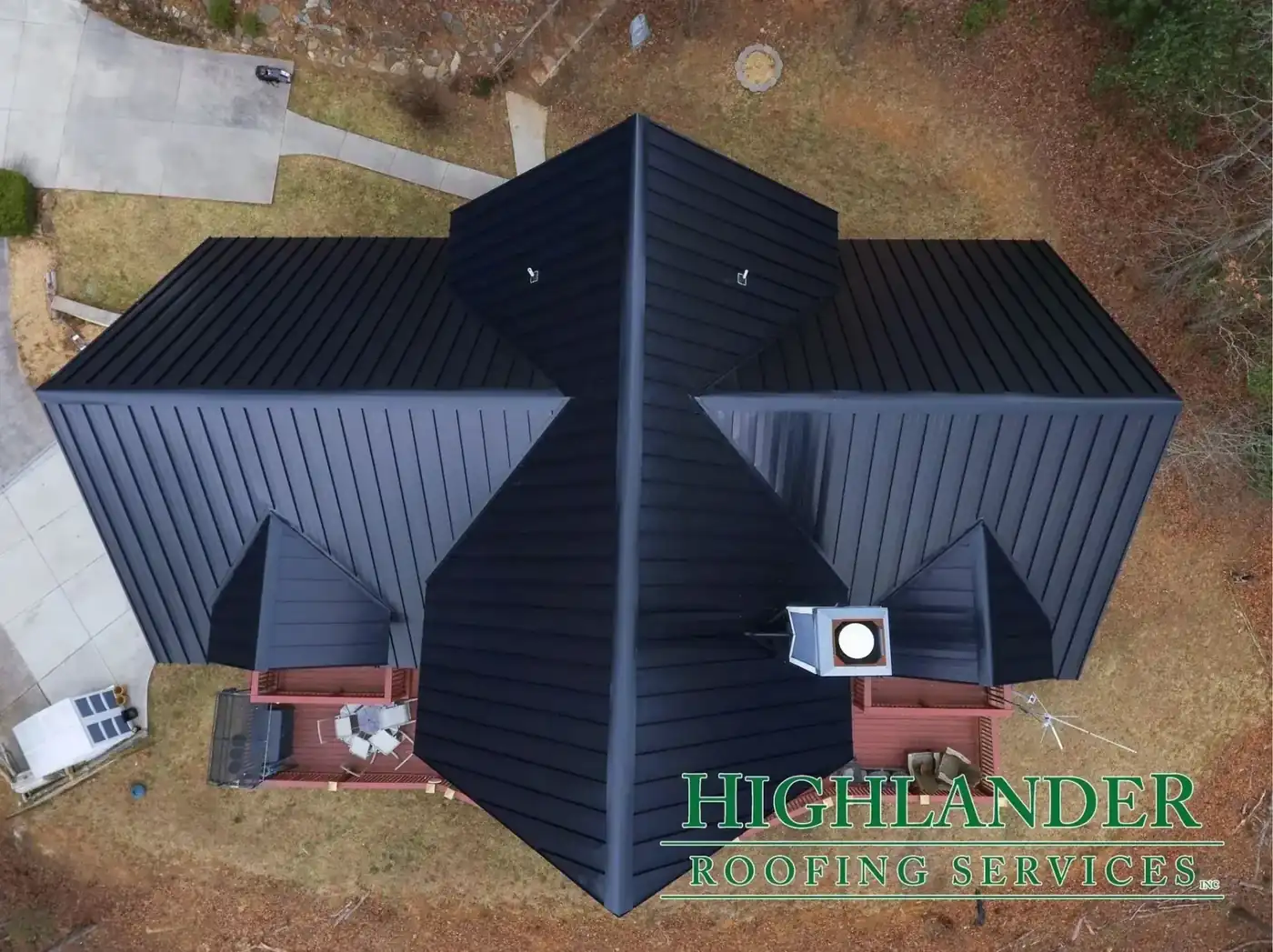
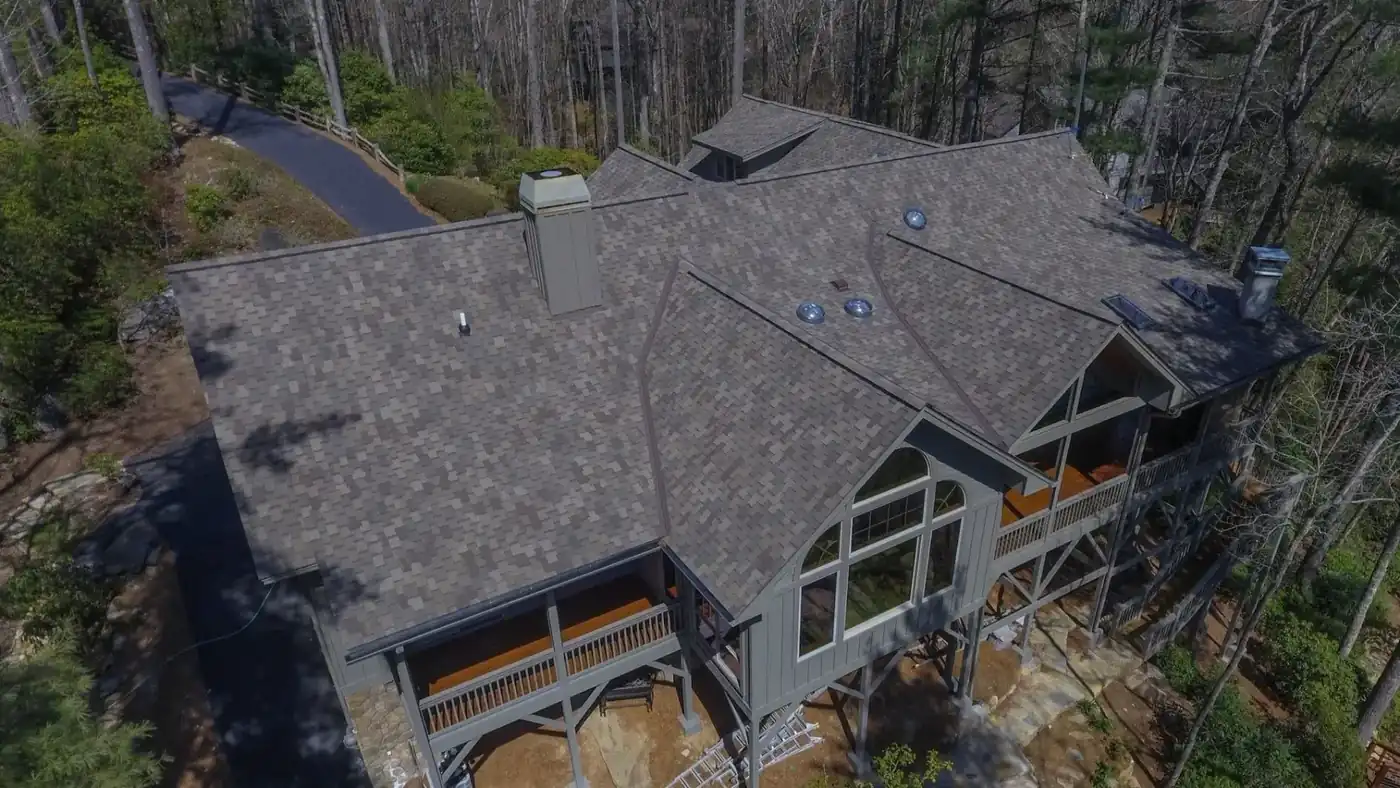
Mountain-Proven Results
Written By
Highlander Editorial Team
Highlander Building Services
Expert roofing and construction guidance from the team that builds in Western North Carolina's mountains every day.
Why Highlander
Talk to a local roofer
Photos, findings, and a written scope — no pressure to buy anything.
(828) 524-7773Request an Inspection