
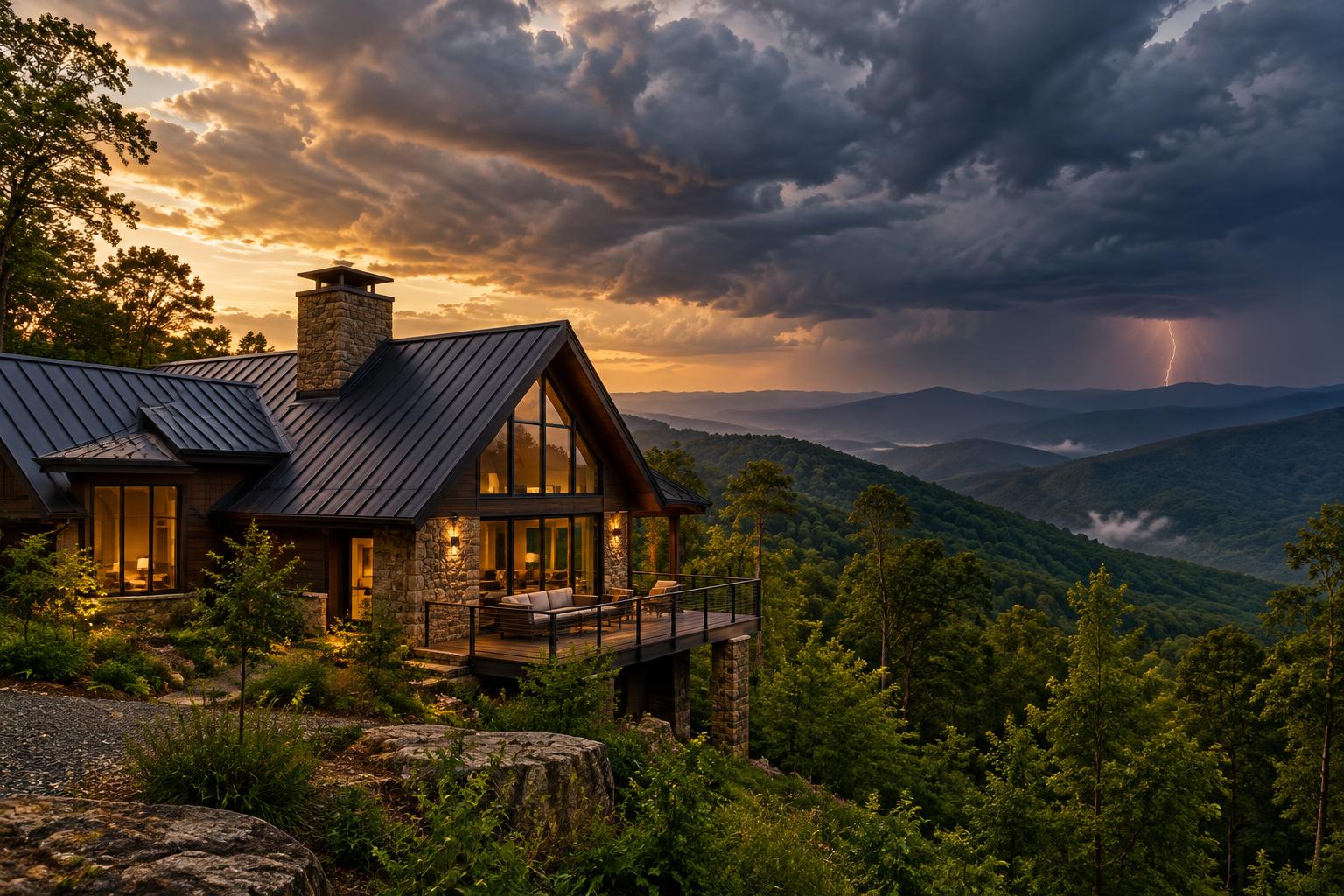
Do Metal Roofs Attract Lightning? A Mountain Homeowner's Guide
No. Metal roofs do not attract lightning. Height, shape and isolation decide where a bolt lands. Here is what happens in a strike and when a mountain home should consider lightning protection.
Key Takeaways
No. A metal roof does not attract lightning and does not make your home more likely to be struck. The National Weather Service says height, pointed shape and isolation are the dominant factors in where a bolt lands, not the roofing material. What a metal roof changes is what happens after a strike, and for a home on a ridge or a hillside in Western North Carolina, the details of grounding, wiring and storm habits matter more than the material on top.
Key Takeaways
* Metal roofs do not attract lightning. Height, pointed shapes and isolation decide where lightning strikes, not roofing material.
* A metal roof is no more dangerous in a strike than other materials. It is noncombustible, and when properly grounded it can spread the energy of a strike over a wider area.
* A metal roof does not protect a building from lightning. A true lightning protection system is a separate, code-based installation done by certified professionals.
* The greater danger to people inside is lightning traveling through wiring and plumbing, so stay off corded phones, appliances and water during a storm.
* Stay inside for at least 30 minutes after the last thunder you hear.
Why people think metal attracts lightning
The belief is easy to understand. Metal conducts electricity well, lightning is electricity, and a shiny panel on top of a house looks like an invitation. It feels like common sense that a conductor would pull a bolt toward it.
The flaw in that reasoning is what lightning actually responds to. A strike begins as a channel reaching down from a storm cloud toward the ground, and it connects with whatever tall, pointed or isolated object offers the shortest path. The National Weather Service addresses this directly in its lightning myths page: metal roofs do not attract lightning, and the factors that count are height, shape and isolation. Metal does not reach up and grab a bolt that was headed elsewhere.
A second source of the myth is that people see metal in the aftermath of strikes: a struck flagpole, a damaged antenna, a charred shed with a tin roof. Those objects were struck because of where they stood and how tall they were. The metal was along for the ride.
The trade body for metal construction in the United States puts it plainly in its guidance on lightning strikes and metal roofing: a metal roof is no more dangerous than other materials in a strike.
What actually raises the odds of a strike
If the roof material is not the variable, what is? The same guidance lists the factors that influence risk: the location of the building, its height relative to its surroundings, its size, and how often thunderstorms occur in the region.
In plain terms:
* Height relative to surroundings. The tallest structure in an open area is the likeliest contact point. A tall house among taller trees is in a different position from a tall house alone on a clearing.
* Isolation. A building standing apart, with nothing nearby of similar height, is more exposed than one in a cluster.
* Pointed features. Chimneys, cupolas, antennas and tall trees beside the house can all play a role.
* Size. A larger footprint presents more surface to a storm.
* Regional storm frequency. More thunderstorms mean more opportunities.
Notice what is absent from the list: the color, finish, thickness or type of roof. Standing seam, screw-down panels, metal shingles or asphalt shingles do not appear in it.
Mountain homes: where terrain does the deciding
Western North Carolina homes often sit where the first factors apply. A house near a ridge line, on an exposed knoll, or at a cleared lot with a long view is higher and more isolated than a house on a valley floor. That is the main reason a mountain homeowner might think about lightning at all, and it is a reason rooted in the site, not the roof.
If you are choosing between metal and shingles for a mountain property, lightning should not be the tiebreaker, because it does not favor one over the other in terms of strike likelihood. The better questions are about wind exposure, snow and ice shedding, moisture and longevity. Our guides on metal versus shingle roofs for Western NC mountain homes and whether metal roofing suits a Western NC mountain home cover those trade-offs.
If your house is the high point on a bare site, that is worth knowing for a different reason: it is the kind of location where a conversation about a dedicated lightning protection system makes sense. More on that below.
What happens when lightning hits a metal roof
If a strike does land on a home with a metal roof, here is what the research says.
The roof does not burn. Metal is noncombustible. A properly grounded metal roof can conduct strike energy across a broader area, which reduces the heat delivered to any one spot on the building and the potential for fire damage, according to the Metal Construction Association's guidance. That guidance goes as far as saying a grounded metal roof may be a more desirable option than other materials.
It is not a lightning protection system. The same source is careful here: metal roofs do not protect a building against lightning. Spreading energy and reducing heat is a benefit, but it is not the same as intercepting a strike and guiding it to the ground on purpose.
The real hazard is inside the walls. Lightning can enter a house through plumbing or electrical wiring, according to NOAA's lightning FAQ, which puts people at risk if they are using electrical appliances or plumbing fixtures. The National Weather Service adds that lightning can enter through wires or pipes that extend outside, or through the ground, and then travel through electrical, phone, plumbing and radio or TV systems. That is true whether your roof is metal, asphalt or cedar.
So the roof material is not what separates a harmless storm from a dangerous one. What the house is connected to, and what you are doing inside during the storm, matters far more.
Metal versus shingles in a strike
Homeowners often ask whether shingles are the safer choice. Based on the research, there is no evidence that they are. Neither material changes the chance of being struck. After a strike, metal's noncombustible nature and its ability to spread energy when grounded are points in its favor, not against it.
That said, a roof choice should be made on the things that do differ between materials: how a roof handles heavy mountain rain and wind, how it sheds snow, how long it lasts, how it sounds in a storm, and how it looks on your home. We address the sound question in our guide to metal roof noise, and the broader comparison in our metal versus shingle breakdown for WNC homes.
Does a metal roof need a lightning protection system?
Not as a rule. Most homes do not have one, and a metal roof does not make one mandatory. But if your home is exposed, valuable, or holds equipment you cannot easily replace, it is reasonable to ask a qualified installer whether a system suits it.
Here is what such a system is. The National Weather Service explains that a lightning protection system does not prevent a strike. It is designed to intercept a strike and give the discharge a safe, conductive path to the ground. The NWS says systems should follow Lightning Protection Institute, NFPA and UL standards, and should include bonding and surge protection for incoming power, data and communication lines.
A few points worth knowing before you call anyone:
- It is a specialist job. The Lightning Protection Institute states that lightning protection is not a do-it-yourself project. It should be installed by LPI-certified contractors using UL-listed materials, per its FAQ.
- There are written standards. The same FAQ notes that standard practice is defined by NFPA 780 and by UL 96 and UL 96A. NFPA 780 is the installation standard.
- Grounding and bonding matter. A metal roof can be part of the path, but only if it is properly connected. A roofing contractor and a lightning protection installer should coordinate so the two systems work together, not against each other.
- Surge protection covers a different route. Because lightning can come in through power, phone and data lines, protecting those lines is part of a complete approach, as the NWS guidance describes.
If you are planning a new metal roof and also considering lightning protection, mention it at the start. Panels, fasteners and ridge details are easier to coordinate with a protection system before the roof goes on than after.
Staying safe inside during a thunderstorm
Because the biggest indoor risk is lightning traveling through the building's wiring and plumbing, your habits during a storm count. NOAA's lightning safety guidance says to stay inside a substantial building, stay off corded phones and computers, avoid plumbing, and keep away from windows.
In practice:
* Skip showers, baths and dishwashing while thunder is audible.
* Use a cordless or cell phone rather than a landline.
* Unplug sensitive electronics ahead of a storm when you can, and do not touch them during one.
* Keep away from windows and doors.
The 30-minute rule
The rule is simple: stay in a safe place for at least 30 minutes after the last thunder you hear. NOAA's lightning safety page states it as the standard for waiting after the last sound of thunder. Storms can deliver strikes from a distance, and the end of the rain is not the end of the danger.
This applies equally to anyone working on a roof. Roofers and homeowners should come down at the first sound of thunder, and no one should climb onto a metal or any other roof until the 30 minutes have passed.
Our perspective: choose the roof for the mountain, then plan for the storm
We work on roofs in Franklin, Highlands, Cashiers, Sylva and the surrounding area, and the lightning question comes up often from homeowners who like the idea of metal but worry about a ridge-top lot. Our view is straightforward.
The roofing material is not what makes your home a target. The site does. So we start with the property: how high it sits, what surrounds it, how wind and moisture hit it. Those same mountain conditions are what a roof system has to be designed around anyway, which is why we start every metal roof conversation with the site itself. For many homes, a metal roof is a strong answer to those conditions, and the research gives no reason to rule it out over lightning.
Where a home is truly exposed, we think the right move is to treat roofing and lightning protection as two separate decisions that need to be coordinated. A metal roof is a durable, noncombustible covering. A lightning protection system is a purpose-built installation by certified specialists following NFPA and UL standards. We would rather tell you plainly which job is which than blur them. We provide detailed written scopes and prices, and with one point of contact on your project, any coordination with a protection installer stays clear and accountable.
Questions to ask before you choose a metal roof
Whether you have a lightning concern or not, these questions help you compare estimates fairly:
* Which metal system is being proposed? Standing seam, exposed-fastener panels and metal shingles differ in look, construction and cost. Our metal roofing cost page lays out the options.
* How will the roof be grounded or bonded if a protection system is planned? Ask the roofer and the protection installer to confirm the details with each other.
* Is the scope written down? A written scope and price removes guesswork about flashing, underlayment and accessories.
* Who will be on my roof? Ask who does the work, who supervises it and who you call if something needs attention.
* What is the plan for storm season? Ask how the contractor handles damage response and insurance paperwork after a storm.
For a closer look at the roof type many mountain homeowners ask about first, see standing seam metal roofing in Western NC.
Planning a metal roof for your mountain home
If you are weighing a metal roof, we can walk the property, talk through exposure and design, and give you a written scope with a clear price. Highlander Building Services handles roof repair, replacement, metal and specialty roofing, and storm damage response across Western North Carolina. Start with our roofing services, or go straight to metal roofing options and costs.
If a storm has already left your roof damaged, our storm damage roof repair service covers emergency tarping and claims support.
Sources
* Lightning Myths, National Weather Service
* Lightning Strikes and Metal Roofing, Metal Construction Association
* Lightning Frequently Asked Questions, NOAA JetStream
* Lightning Indoors, National Weather Service
* Lightning Safety, NOAA JetStream
Local to Franklin, NC
This article was written specifically for homeowners in Franklin and the surrounding area. Highlander Building Services serves Franklin and all of Western North Carolina with in-person consultations and local crews.
Talk With Our Local TeamFrequently Asked Questions
Are metal roofs safe in a lightning storm?
Yes, they are no more dangerous than other roofing materials. A metal roof is noncombustible, and a properly grounded one can spread strike energy over a wider area, reducing heat at any single point. The greater risk to people is lightning traveling through plumbing and wiring, so stay away from both during a storm.
Does a metal roof protect my house from lightning?
Not by itself. Metal roofs do not protect a building against lightning. A lightning protection system is designed to intercept a strike and carry it safely to the ground. If you want one, hire an LPI-certified installer who follows NFPA 780 and UL standards.
What is the 30-minute rule for lightning?
It means staying in a safe place for at least 30 minutes after you hear the last thunder. Lightning can strike away from the storm's main rain area, so a dry sky does not mean it is safe. The rule applies to people outdoors and to anyone considering going up on a roof.
Can lightning come inside through a metal roof?
Lightning enters a home mainly by following wires, pipes and the ground, not because of the roof material. It can travel through electrical, phone, plumbing and radio or TV systems. That is why NOAA advises avoiding corded phones, appliances, computers and plumbing during a storm.
Is my mountain home more likely to be struck?
It can be, if it is tall relative to its surroundings or isolated. Location, height, size and regional thunderstorm frequency all influence risk. That is a feature of the site, and it is the same whether your roof is metal or shingle.
Related Services
Compare materials on your actual roof in Franklin, NC
Pitch, exposure, and access change what makes sense. We price the real options, not a generic quote.
- 4.8★ Google · 158 reviews
- Licensed & insured · family-owned since 2017
- Franklin-based crews across 10 WNC counties
Calls are answered by the local team during working hours. Messages are answered during business hours.
More for Franklin, NC
Real Work in Franklin
Market Context
Roofing & Construction in Franklin
Explore localized standards and proven projects in your area.
Written By
Highlander Editorial Team
Highlander Building Services
Expert roofing and construction guidance from the team that builds in Western North Carolina's mountains every day.
Why Highlander
Roofing help in Franklin, NC
Photos, findings, and a written scope — no pressure to buy anything.
(828) 524-7773Request an InspectionStart with three simple contact details.
Roofing or construction, you do not need to diagnose the problem or finish a long intake first. Send your contact details and Highlander will discuss the project with you.
Prefer to talk directly?
(828) 524-7773- 4.8★ Google · 158 reviews
- Licensed and insured
- Crews based in Franklin, serving Western North Carolina