Metal Roof Noise: What the Assembly Changes and How to Fix It
Learn how decking, insulation and panel installation affect metal roof rain noise. Compare inspection points and compatible fixes for mountain homes.
Key Takeaways
Rain noise depends on the entire roof and ceiling assembly, not the metal panel alone. Solid decking, compatible underlayment and insulation can reduce transmitted sound, but metal and shingle roofs are not guaranteed to sound identical.
TL;DR:
>
- Assess the complete roof assembly and use manufacturer-compatible details. Acoustic test figures describe specific tested conditions, not guaranteed reductions for an occupied home. Do not change fastener spacing, coatings or ventilation without professional approval.
- Assess the complete roof assembly and use manufacturer-compatible details. Acoustic test figures describe specific tested conditions, not guaranteed reductions for an occupied home. Do not change fastener spacing, coatings or ventilation without professional approval.
- Assess the complete roof assembly and use manufacturer-compatible details. Acoustic test figures describe specific tested conditions, not guaranteed reductions for an occupied home. Do not change fastener spacing, coatings or ventilation without professional approval.
- Assess the complete roof assembly and use manufacturer-compatible details. Acoustic test figures describe specific tested conditions, not guaranteed reductions for an occupied home. Do not change fastener spacing, coatings or ventilation without professional approval.
- When noise persists or is excessive, interior treatments such as sealing penetrations and adding mass to the ceiling can help, but assembly fixes are typically more effective.
What Causes Metal Roof Noise in the First Place
Metal roof noise comes from two different sources, and understanding the difference matters for fixing it. Impact noise happens when raindrops, hail, or debris strike the panel directly and set it vibrating like a drumhead. Airborne noise is the broader rumble of wind or heavy rain that reaches your ears through gaps, thin materials, or poor insulation. A bare, thin metal sheet over open framing has nothing to stop either kind of vibration from traveling straight into the living space below.
Several physical factors change how much a panel resonates:
- Panel gauge: thinner metal flexes and rings more than heavier gauge panels.
- Unsupported span: wide gaps between fasteners or purlins let panels vibrate more freely.
- Assess the complete roof assembly and use manufacturer-compatible details. Acoustic test figures describe specific tested conditions, not guaranteed reductions for an occupied home. Do not change fastener spacing, coatings or ventilation without professional approval.
- Roof pitch: steeper pitches shed rain faster, which can reduce the duration of impact noise.
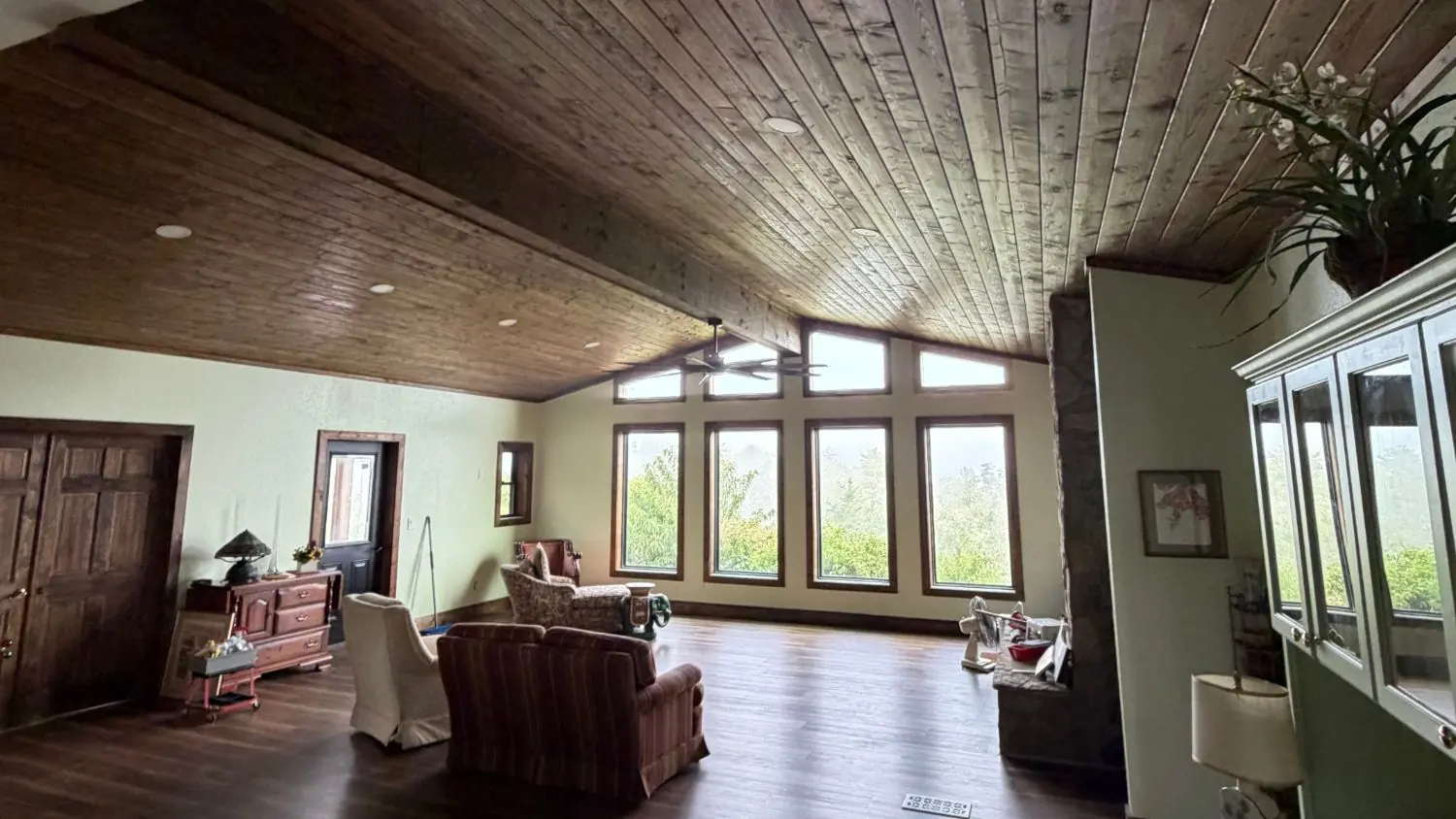
The bigger factor, though, is what sits between the metal and your ceiling. Continuous decking, such as plywood or OSB, gives the panel something solid to bear against instead of open air. A quality underlayment adds a damping layer, and attic insulation absorbs sound energy before it ever reaches the room below. Skip any of these, and you get the noisy scenarios homeowners actually complain about: barns and outbuildings with open framing, vaulted ceilings with minimal insulation above them, and thin exposed-fastener panels installed without adequate decking.
Assess the complete roof assembly and use manufacturer-compatible details. Acoustic test figures describe specific tested conditions, not guaranteed reductions for an occupied home. Do not change fastener spacing, coatings or ventilation without professional approval.
How Loud Is a Metal Roof, Really?
There is no single decibel level for a metal roof or a guaranteed difference from shingles. Rainfall intensity, panel profile, deck, underlayment, insulation, ceiling construction and measurement location all affect the result.
Published tests compare particular assemblies under controlled conditions. Their reductions do not promise the same result on your home, and results from different tests cannot simply be added together. A complete assembly can substantially reduce rain noise compared with bare panels over open framing, but an audible difference may remain.
Practical Ways to Reduce Metal Roof Noise
- Have a qualified professional check loose or damaged panels and fasteners against manufacturer requirements.
- Assess decking, insulation, air leakage and ceiling construction without blocking ventilation.
- During planned re-roofing, consider compatible acoustic layers supported by product test data.
- For ceiling-side work, evaluate structural load, moisture control, fire safety and room-specific sound paths.
Do not add fasteners, spray damping coatings or fill ventilation paths as an improvised repair. Any treatment must be compatible with the roof system, movement requirements, fire provisions and warranties. Recovering over shingles also requires code, deck and manufacturer approval, not just a noise preference.
How We Inspect and Specify Noise-Reduction Work
When we evaluate a noisy metal roof, we start with the assembly, not the panel. Our inspection checklist typically covers:
- Decking type and condition: confirming continuous plywood or OSB versus open framing or skip sheathing.
- Attic insulation R-value: checking whether insulation depth matches recommended levels for the region.
- Panel gauge and fastener layout: verifying spacing and fixing type against the manufacturer's spec.
- Penetrations and eave details: checking for gaps around vents, skylights, and edges that let sound and air through.
Assess the complete roof assembly and use manufacturer-compatible details. Acoustic test figures describe specific tested conditions, not guaranteed reductions for an occupied home. Do not change fastener spacing, coatings or ventilation without professional approval.
When It's Actually Worth Addressing
Assess the complete roof assembly and use manufacturer-compatible details. Acoustic test figures describe specific tested conditions, not guaranteed reductions for an occupied home. Do not change fastener spacing, coatings or ventilation without professional approval.
If your bedrooms or living areas sit directly beneath the metal with minimal insulation above, an inspection is a reasonable step. For most houses, though, the smarter move is folding assembly fixes into a planned re-roof rather than tearing into a sound roof purely for noise, and saving invasive retrofits for the specific rooms where it actually bothers you. Readers weighing whether metal roofing fits a mountain home at all should factor this into the broader decision, not just the sound question.
Get a Noise-Focused Roof Inspection
If a noisy roof has you second-guessing metal, the fix usually isn't switching materials, it's fixing the assembly. We handle on-site inspections, written estimates, and both retrofit and full re-roof work, addressing factors like wind exposure and elevation that shape how a roof performs.
- On-site inspection: we check decking, insulation, fasteners, and panel condition before recommending anything.
- Written estimate: scope, products, and expected outcome, laid out before you commit.
- One point of contact: a single contact guides your project from estimate through completion.
Readers comparing panel types and how fixings affect performance can also check current options and costs on our metal roofing services page to get a sense of what a retrofit or re-roof involves for your home.
Sources
- Controlled rainfall-noise testing of damping treatments (Australian Acoustical Society)
- Roof assembly and underlayment test summary
Plan your Western North Carolina project
Review our metal roofing services and Franklin service area. Request a written estimate for your roof and drainage conditions.
Leave roof access, ladder inspections and repairs to qualified professionals.
Local to Franklin, NC
This article was written specifically for homeowners in Franklin and the surrounding area. Highlander Building Services serves Franklin and all of Western North Carolina with in-person consultations and local crews.
Talk With Our Local TeamFrequently Asked Questions
Are metal roofs noisier than shingles?
They can be. The panel, decking, insulation and ceiling all affect sound, so a complete residential assembly can be quieter than bare metal over open framing without guaranteeing identical noise to shingles.
Is rain noise a sign of a roof defect?
Not by itself. A new rattle, loose panel or unusually strong room-specific noise warrants an assessment of fixings, deck and insulation.
Can I add screws to quiet the panels?
Do not improvise fastener changes. A qualified installer must follow manufacturer spacing and expansion requirements to avoid leaks or damaged panels.
What noise reduction should I expect?
There is no universal decibel promise. Ask for test data for the proposed product and assembly, and discuss realistic room-specific expectations.
Related Services
Compare materials on your actual roof in Franklin, NC
Pitch, exposure, and access change what makes sense. We price the real options, not a generic quote.
- 4.8★ Google · 158 reviews
- Licensed & insured · family-owned since 2017
- Franklin-based crews across 10 WNC counties
Calls are answered by the local team during working hours. Messages are answered during business hours.
More for Franklin, NC
Real Work in Franklin
Market Context
Roofing & Construction in Franklin
Explore localized standards and proven projects in your area.
Written By
Highlander Editorial Team
Highlander Building Services
Expert roofing and construction guidance from the team that builds in Western North Carolina's mountains every day.
Why Highlander
Roofing help in Franklin, NC
Photos, findings, and a written scope — no pressure to buy anything.
(828) 524-7773Request an InspectionStart with three simple contact details.
Roofing or construction, you do not need to diagnose the problem or finish a long intake first. Send your contact details and Highlander will discuss the project with you.
Prefer to talk directly?
(828) 524-7773- 4.8★ Google · 158 reviews
- Licensed and insured
- Crews based in Franklin, serving Western North Carolina