
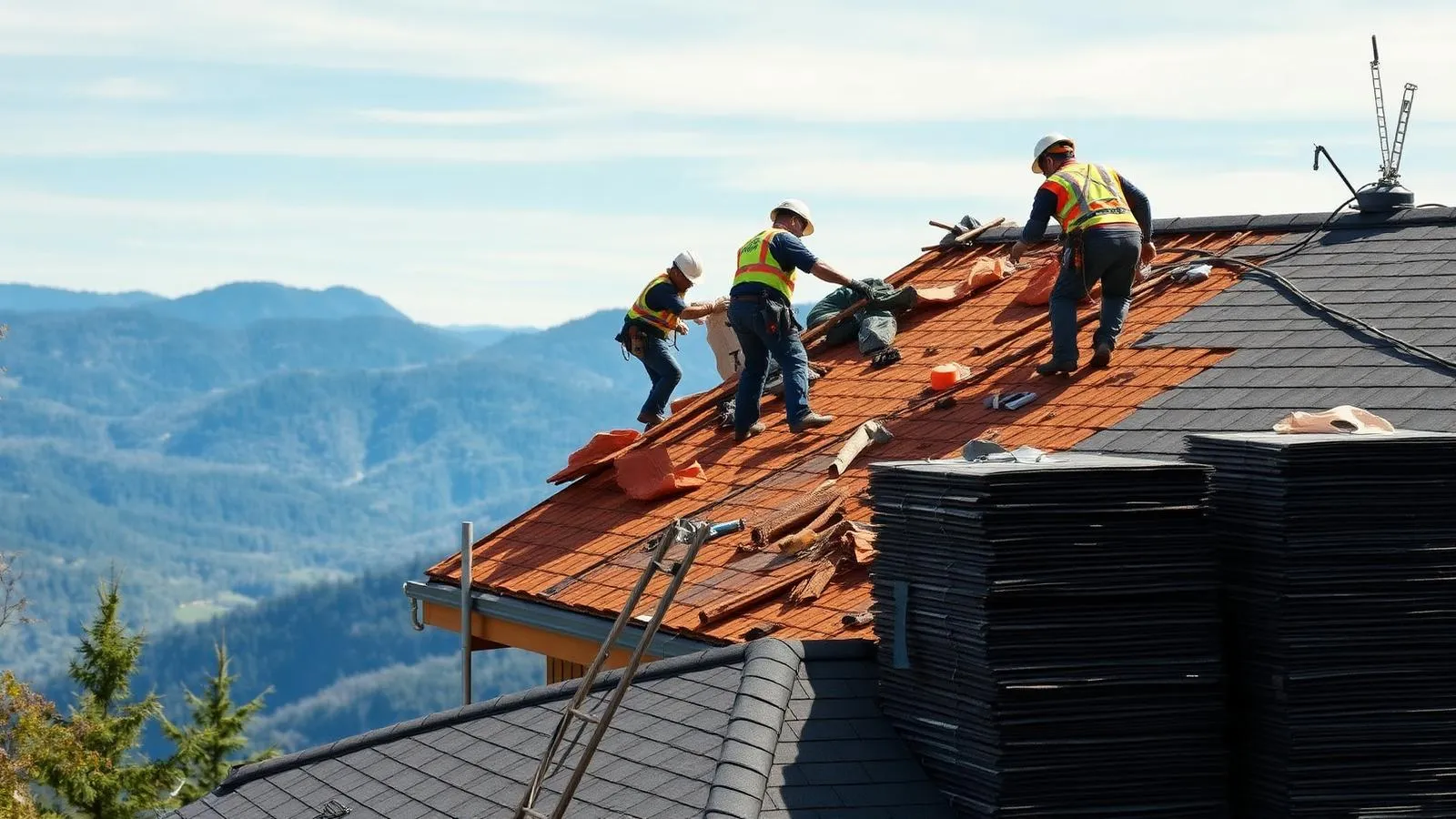
How Long Roofs Actually Last in Western North Carolina, by Material
Manufacturer life ranges are written for average climates. Here is what asphalt, metal, synthetic, cedar, and slate realistically deliver in the North Carolina mountains, and what shortens each one.
Key Takeaways
Published ranges versus mountain reality
Manufacturer lifespan figures describe a product installed correctly in an average climate. Western North Carolina is not an average climate. Elevation raises UV intensity, freeze-thaw cycles run through most of the cold season, rainfall totals in parts of the region are among the highest in the eastern United States, and heavily shaded slopes may not dry out for days.
The numbers below are what we actually see on roofs across the region.
Realistic service life in the WNC mountains
| Material | Common published range | Realistic here | Main limiting factor |
|---|---|---|---|
| Three-tab asphalt | 20-25 years | 12-18 years | Wind uplift and UV |
| Heavy dimensional asphalt | 30-50 years | 18-30 years | Ventilation and UV |
| Class 4 impact-resistant asphalt | 30-50 years | 22-32 years | Ventilation |
| Exposed-fastener metal | 25-40 years | 25-35 years | Fastener and gasket cycling |
| Standing-seam metal | 40-70 years | 40-60 years | Detail work at penetrations |
| Synthetic composite shake/slate | 50 years | 40-50 years | Installation detail |
| Natural cedar shake | 30 years | 15-25 years | Moisture and moss |
| Natural slate | 75-150 years | 75+ years | Structural capacity and flashing |
Treat these as planning figures for a correctly installed system. A poorly ventilated roof of any material can lose a third of its life without ever showing a dramatic failure.
The four things that shorten every roof here
1. Ventilation. An unbalanced attic bakes the underside of the covering in summer and drives condensation in winter. It is the most common defect we find and the cheapest one to fix during a replacement.
2. Flashing shortcuts. Chimney and sidewall flashing that was face-nailed and caulked instead of properly stepped will leak on a schedule set by the caulk, not by the roof.
3. Undersized drainage. When gutters cannot carry a heavy Western North Carolina rain event, water tracks behind fascia and into soffits. The roof gets blamed for a drainage failure.
4. Reused consumables. Pipe boots, gaskets, and sealants are consumable parts. Leaving them in place through a re-roof guarantees a leak long before the field wears out.
Elevation matters more than most people expect
Below roughly 2,400 feet, heat, humidity, algae, and canopy debris are the dominant stressors. Between 2,400 and 3,400 feet, slow drying and shoulder-season freeze-thaw govern. Above 3,400 feet, ice loading and sustained wind take over and the specification has to change: heavier underlayment coverage, metal or closed-cut valleys, enhanced fastening, and deliberate snow management.
A roof specified for Hendersonville is not automatically the right roof for Highlands, even though both are in the same region.
Getting the most out of whatever you have
- Clear gutters and valleys at least twice a year, more under heavy canopy
- Trim limbs back off the roof plane
- Replace pipe boots when they start to check, not after they split
- Address moss and algae on shaded slopes before they hold moisture against the covering
- Have the roof looked at every two to three years, and after any significant weather event
- Keep photographs of the roof in good condition so you have a baseline
Maintenance will not turn an eighteen-year asphalt roof into a forty-year roof, but it reliably buys several years at the end of the range instead of several years off the front.
Planning the next roof
If your current roof is inside five years of the realistic range above, start planning rather than reacting. You get better material choices, better scheduling, and better pricing when you are not making the decision with a bucket on the floor.
We measure the roof, document the assembly, and give you real numbers for the systems that suit your elevation. Start with a consultation, or read about roof replacement and specialty roofing systems.
Frequently Asked Questions
Why do roofs last less time in the mountains?
Higher UV intensity at elevation, repeated freeze-thaw cycling, wind-driven rain that exploits detail flaws, and north slopes that stay damp under canopy all age materials faster than the milder conditions manufacturers base their ranges on.
Does the warranty length tell me how long the roof will last?
No. Warranty terms describe manufacturing defect coverage under specific conditions, not real-world service life, and most are prorated. Installation quality and ventilation influence actual lifespan far more than the warranty document does.
What single factor most extends roof life here?
Balanced attic ventilation. It is inexpensive at installation, invisible afterward, and it is the difference between a roof reaching its rated life and quietly failing years early from beneath.
Related Services
Compare materials on your actual roof in Western NC
Pitch, exposure, and access change what makes sense. We price the real options, not a generic quote.
- 4.8★ Google · 158 reviews
- Licensed & insured · family-owned since 2017
- Franklin-based crews across 9 WNC counties
Calls are answered by the local team during working hours. Messages get a reply within one business day.
More Western NC resources
Mountain-Proven Results
Written By
Highlander Editorial Team
Highlander Building Services
Expert roofing and construction guidance from the team that builds in Western North Carolina's mountains every day.
Why Highlander
Talk to a local roofer
Photos, findings, and a written scope — no pressure to buy anything.
(828) 524-7773Request an Inspection