
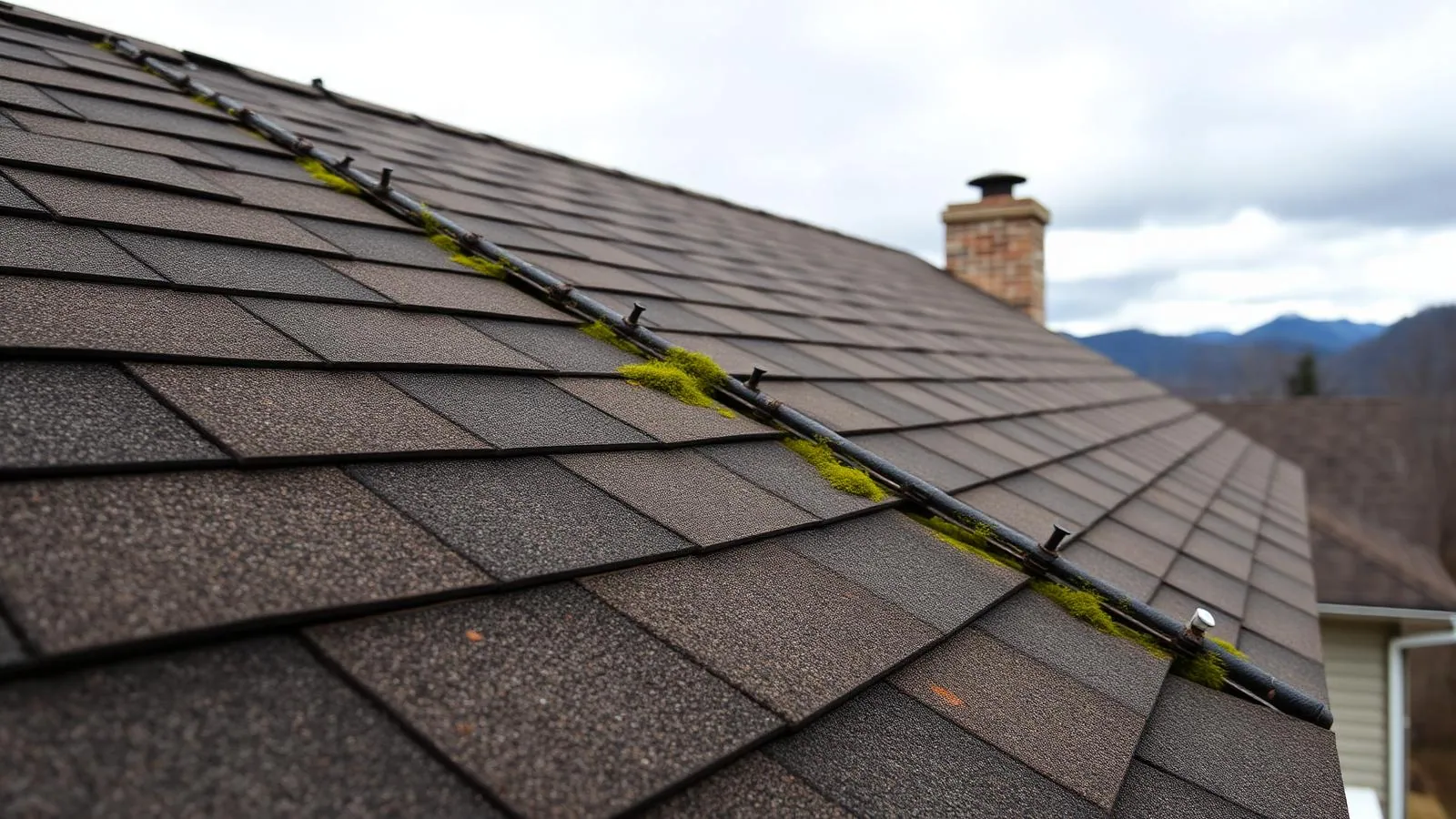
Why Roofs Fail Early in Western North Carolina
Flashing, vent boots, debris, wind uplift, loose fasteners, drainage and underlayment — the seven failures behind almost every early roof replacement here.
Key Takeaways
Roofs in Western North Carolina fail early for a small number of repeatable reasons, and almost none of them are the roof covering itself giving up. In order, what we find when we open a roof up is: flashing that was never detailed correctly, cracked vent boots, organic debris holding water against the surface, wind uplift at rakes and ridges, loose fasteners on metal, drainage that returns water to the house, and underlayment that aged out before the shingles did.
If you own a mountain home here, those seven are what to watch for. Below is what each one looks like from the ground and what it actually takes to fix.
1. Flashing Failure at Chimneys, Walls and Skylights
By a wide margin this is the leading leak source on roofs across the region. Chimney flashing, roof-to-wall step flashing, dormer and skylight flashing all depend on being cut in and layered correctly. Sealant alone is not flashing, and sealant is what we find in place of it on most of the leaks we are called to.
What it looks like:
- Ceiling stains near a chimney, dormer or skylight
- Moisture on an interior chimney wall
- Visible gaps, cracked caulk or a flashing edge standing proud of the masonry
The fix is to cut new counter-flashing into the mortar joint and rebuild the step flashing in sequence, not to add more sealant.
2. Cracked Vent Boots
Rubber and synthetic boots around plumbing vents crack under UV and freeze-thaw cycling long before the roof around them wears out. Once the collar splits, water runs down the outside of the pipe and into the ceiling below. It is one of the cheapest repairs on a roof and one of the most common causes of interior damage, purely because nobody looks at it.
3. Debris and Organic Buildup
Tree cover is the defining feature of most lots here, and leaves, needles and twigs collect in valleys, behind chimneys and in gutters. That debris holds moisture against the roof surface, backs water up during heavy rain, feeds algae and moss on shaded slopes, and overwhelms drainage in a storm. On a wooded lot, clearing it is genuine maintenance rather than a one-off job.
4. Wind Uplift at Rakes and Ridges
Exposure varies enormously between a sheltered valley and an open ridge. On ridgeline homes and exposed lots, gusts regularly lift shingles along rake edges and ridge lines. On older roofs the adhesive strip between courses has lost its bond, which makes uplift progressively easier each season. A handful of lifted tabs is enough to let wind-driven rain reach the underlayment.
5. Fasteners and Seams on Metal Roofs
Metal roofs do not fail all at once; they fail slowly at their connections. On exposed-fastener panels the screws back out as the panels expand and contract, and once a screw lifts, its washer no longer seals the hole. On standing seam the equivalent issue is sealant failure at seams, penetrations and terminations. Both are inspection-and-service items, not replacement triggers.
6. Drainage That Returns Water to the House
A large share of interior water problems on mountain homes are not roof failures at all. Clogged gutters overflow behind the fascia, downspouts discharge at the foundation, grading channels water back toward the wall, and an undersized system simply cannot carry what a plateau downpour delivers. Fixing drainage often resolves what looks like a roof leak.
7. Underlayment That Aged Out First
Underlayment is the layer nobody sees. On an older roof, once the surface material is near the end of its life the underlayment is usually not far behind, which is why a patch on a twenty-year-old roof buys less time than owners expect. When we open a repair, what sits beneath the shingle decides whether the fix lasts.
Why Elevation Accelerates All Seven
Every item above exists everywhere. What Western North Carolina adds is intensity: higher UV at elevation ages boots and sealant faster, freeze-thaw cycling works open every small gap, rainfall totals on the plateau are among the highest in the eastern United States, and heavy canopy keeps north-facing slopes damp for days. A detail that would last twenty years in the Piedmont can fail here in eight.
What This Means for Maintenance
- Have the flashing and penetrations inspected, not just the field of the roof
- Keep valleys and gutters clear, especially on wooded lots
- Have exposed-fastener metal roofs checked for backed-out screws on a schedule
- Treat new interior stains as urgent rather than cosmetic
- Fix drainage before assuming the roof is the problem
Highlander inspects roofs across Franklin, Highlands, Cashiers, Sylva and the surrounding counties and provides written, photographed findings. See roof repair, seamless gutters, or request an inspection.
Frequently Asked Questions
What is the most common leak source on Franklin homes?
Flashing failure, especially at chimneys, dormers, and roof to wall transitions, is by a wide margin the most common leak source we see.
Are metal roofs immune to these problems?
No. Metal roofs have their own failure modes, mostly at fasteners, seams, and sealant. Regular inspection is still important.
Can algae or moss on my roof damage it?
Organic growth on a shaded roof holds moisture against the surface material and can accelerate wear. Appropriate cleaning and treatment help.
How do I know if my ventilation is undersized?
A professional inspection can evaluate attic ventilation against the roof area. Undersized ventilation is common on older Franklin homes.
Does Highlander handle all of these repairs?
Yes. Our team works on flashing, sealant, vent boots, shingles, metal systems, gutters, and ventilation across the Franklin area.
Related Services
Get a straight answer about your roof in Western NC
Local crews, written scopes, and a response within one business day.
- 4.8★ Google · 158 reviews
- Licensed & insured · family-owned since 2017
- Franklin-based crews across 9 WNC counties
Calls are answered by the local team during working hours. Messages get a reply within one business day.
More Western NC resources
Mountain-Proven Results
Written By
Highlander Editorial Team
Highlander Building Services
Expert roofing and construction guidance from the team that builds in Western North Carolina's mountains every day.
Why Highlander
Talk to a local roofer
Photos, findings, and a written scope — no pressure to buy anything.
(828) 524-7773Request an Inspection