
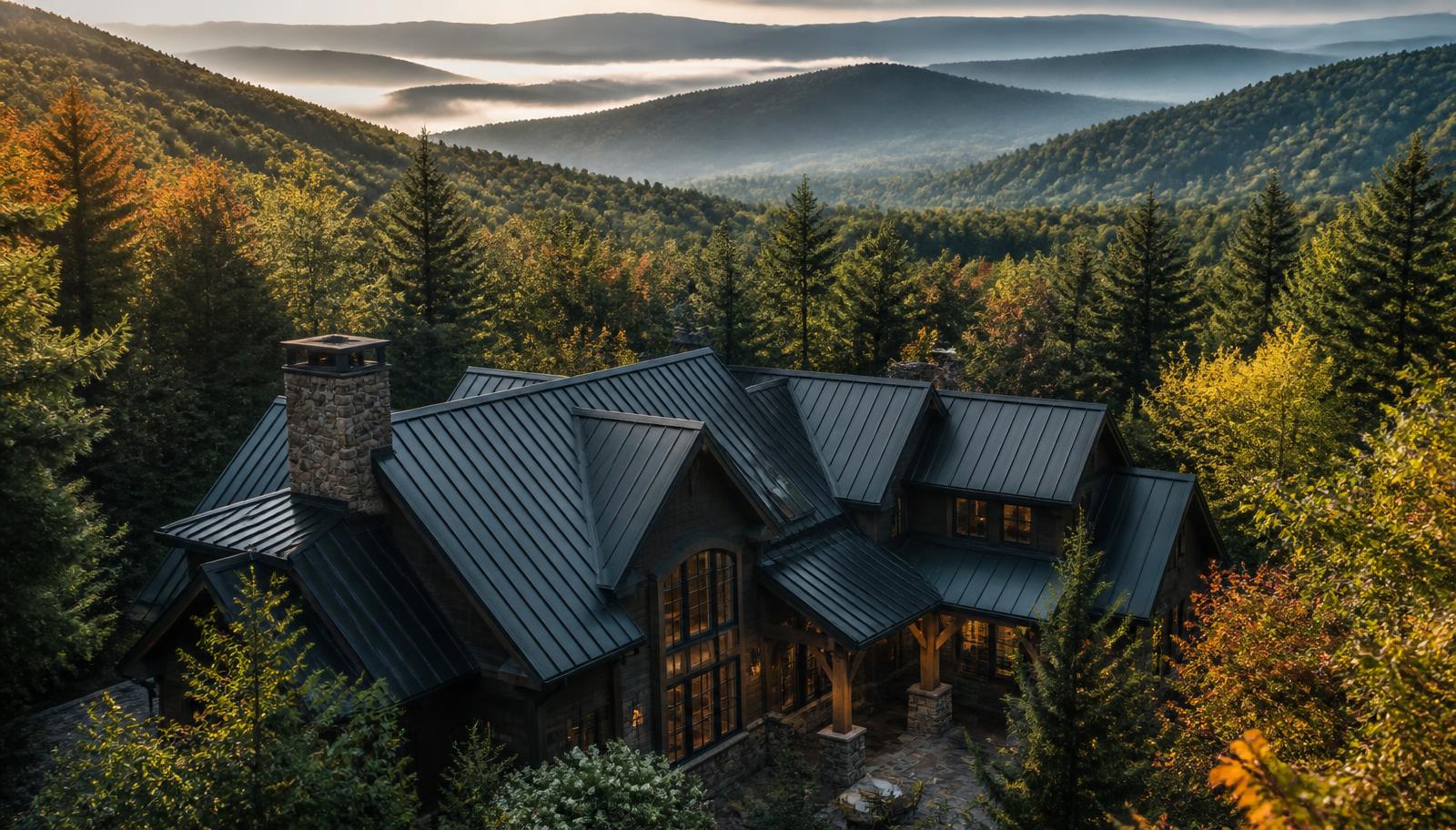
Western North Carolina Roofing Guide: Best Roofs, Costs and Mountain Home Maintenance
Which roofing materials perform best in the Western North Carolina mountains, what replacement costs in 2026, and how to protect a mountain home from rain, moss, wind and freeze-thaw damage.
Key Takeaways
Two homes on the same street in Highlands can have the same dimensional shingles, installed in the same year, yet need replacement nearly a decade apart. One roof may remain watertight after 22 years, while the other begins leaking at 14.
Why? In the Western North Carolina mountains, roof performance depends on far more than the product printed on the warranty. Elevation, tree cover, slope orientation, rainfall, ventilation, flashing and maintenance all affect how quickly a roof ages.
A sunny, south-facing roof near Franklin may dry within hours after a storm. A north-facing roof under hemlocks in Cashiers may stay damp for days. That difference changes the risk of moss, algae, wood rot, freeze-thaw damage and premature shingle failure.
This Western North Carolina roofing guide explains:
- Which roofing materials perform best on mountain homes
- How long shingles, metal, cedar and synthetic roofing realistically last
- Why roofs in Highlands and Cashiers often age faster
- What a new roof may cost in Western North Carolina in 2026
- When roof repair makes sense and when replacement is the better investment
- How to prevent leaks, moss, ice dams and storm damage
- What to verify before hiring a roofing contractor
Need a professional opinion on your roof? Highlander Building Services provides roof inspections, repairs and replacements throughout Highlands, Cashiers, Franklin, Sylva and nearby mountain communities. Call 828-524-7773 or request a mountain roof assessment.
Western North Carolina mountain roofing: the key facts
- Western North Carolina mountain roofs face frequent rain, persistent humidity, deep shade, falling debris, high winds and repeated freeze-thaw cycles.
- Moss and algae are not merely cosmetic. When allowed to spread, they retain moisture and can contribute to premature roof deterioration.
- Installation details—including underlayment, flashing, ventilation, valleys and gutters—often matter more than the roofing material alone.
- Standing-seam metal, synthetic slate or shake, and algae-resistant dimensional shingles can all perform well when matched to the home and installed correctly.
- Roofs beneath heavy tree cover generally require more inspection, cleaning and gutter maintenance than roofs on open, sunny lots.
- Wind and falling trees create many sudden roof failures. After a major storm, homeowners should inspect from the ground and arrange a professional assessment when damage is suspected.
Why roofs age faster in the Western North Carolina mountains
Heavy rainfall and slow drying
Highlands sits at approximately 4,100 feet near the Blue Ridge Escarpment. As weather systems rise across the mountains, they release substantial moisture on the Highlands-Cashiers Plateau. Cashiers, Sapphire and nearby higher-elevation communities experience similarly wet conditions. Franklin and Sylva sit at lower elevations, but still receive considerable rainfall compared with many parts of the country.
The challenge is not only the intensity of individual storms. Frequent rain can prevent shaded roof surfaces from drying completely. Persistent moisture increases the likelihood of algae, moss, deteriorated sealants, corroded components and hidden wood damage.
Shade, moss and black streaks
Many mountain homes sit beneath hemlock, white pine, oak, rhododendron and mountain laurel. On north- and east-facing roof planes, limited sunlight creates ideal conditions for organic growth.
Black streaks on asphalt shingles are commonly associated with algae such as Gloeocapsa magma. Moss presents a greater concern because it can retain water and grow around shingle edges. As trapped moisture freezes and expands, it may gradually lift or weaken roofing materials.
Never pressure-wash asphalt shingles. High pressure can remove protective granules and shorten the roof's service life. The appropriate method is typically a manufacturer-compatible, low-pressure roof-cleaning treatment performed by a qualified professional.
Freeze-thaw cycles and ice dams
Western North Carolina does not need extreme snowfall for winter weather to damage a roof. Repeated cycles of freezing nights and warmer days can force water deeper into small cracks, failed sealant joints, lifted shingles and moss-covered areas.
Ice dams may form when heat escaping through the roof melts snow higher on the surface. The water then refreezes near a colder eave and can back up beneath the roofing. Recurring ice buildup often points to a combination of roofing, attic ventilation, insulation and air-sealing issues.
Wind, limbs and falling trees
Exposed ridge-top homes around Highlands and Cashiers can experience stronger winds than protected valley properties. Wind typically exploits an existing weak point: an unsealed shingle, loose ridge cap, damaged flashing or poorly fastened edge.
Falling trees and limbs are an even greater concern on wooded mountain lots. Hurricane Helene, which affected Western North Carolina in September 2024, demonstrated how quickly tree damage can compromise otherwise serviceable roofs. Homes with mature trees within falling distance should be checked after significant wind events, and unsafe or overhanging limbs should be evaluated by a qualified tree professional.
How long does a roof last in Western North Carolina?
Manufacturer warranties are not the same as real-world service life. Roof lifespan in the North Carolina mountains varies with shade, exposure, roof pitch, workmanship, ventilation and maintenance.
| Roofing material | Common national range | Practical mountain range | Primary mountain concern |
|---|---|---|---|
| 3-tab asphalt shingles | 15–20 years | 12–18 years | Wind lift, algae, moss and lighter construction |
| Dimensional asphalt shingles | 25–30 years | 18–28 years | Shade, moisture, ice at eaves and ventilation |
| Exposed-fastener metal | 30–40 years | 25–40 years | Aging fasteners and washers from thermal movement |
| Standing-seam metal | 40–60+ years | 40–60+ years | Snow and ice release, detailing and panel quality |
| Synthetic slate or shake | 40–50+ years | 40–50+ years | Product-specific installation requirements |
| Cedar shake | 25–30 years | 15–30 years | Shade, moss, slow drying and maintenance needs |
| Natural slate | 75–100+ years | 75–100+ years | Structural weight, flashing and specialty labor |
| TPO or EPDM low-slope roofing | 20–30 years | 20–25 years | Debris, ponding water and seam maintenance |
These are planning ranges, not guarantees. A properly installed dimensional shingle roof on an open, sunny lot may reach the upper end. The same roof beneath dense tree cover may need substantial maintenance or replacement earlier.
What is the best roofing material for a mountain home?
The best roof for a Western North Carolina mountain home depends on the property's tree cover, home style, budget, elevation and expected ownership period.
Dimensional asphalt shingles
Dimensional shingles remain a practical and economical option for many homes in Franklin, Sylva and the Highlands-Cashiers area. For mountain conditions, look for:
- Algae-resistant shingles with manufacturer-supported protection
- A fastening pattern appropriate for local wind exposure and the product specifications
- Proper starter strips and edge fastening
- Installation within the manufacturer's temperature and weather requirements
- Adequate attic intake and exhaust ventilation
Shingles generally make the most financial sense on open or moderately shaded lots when homeowners want a lower upfront cost.
Standing-seam metal roofing
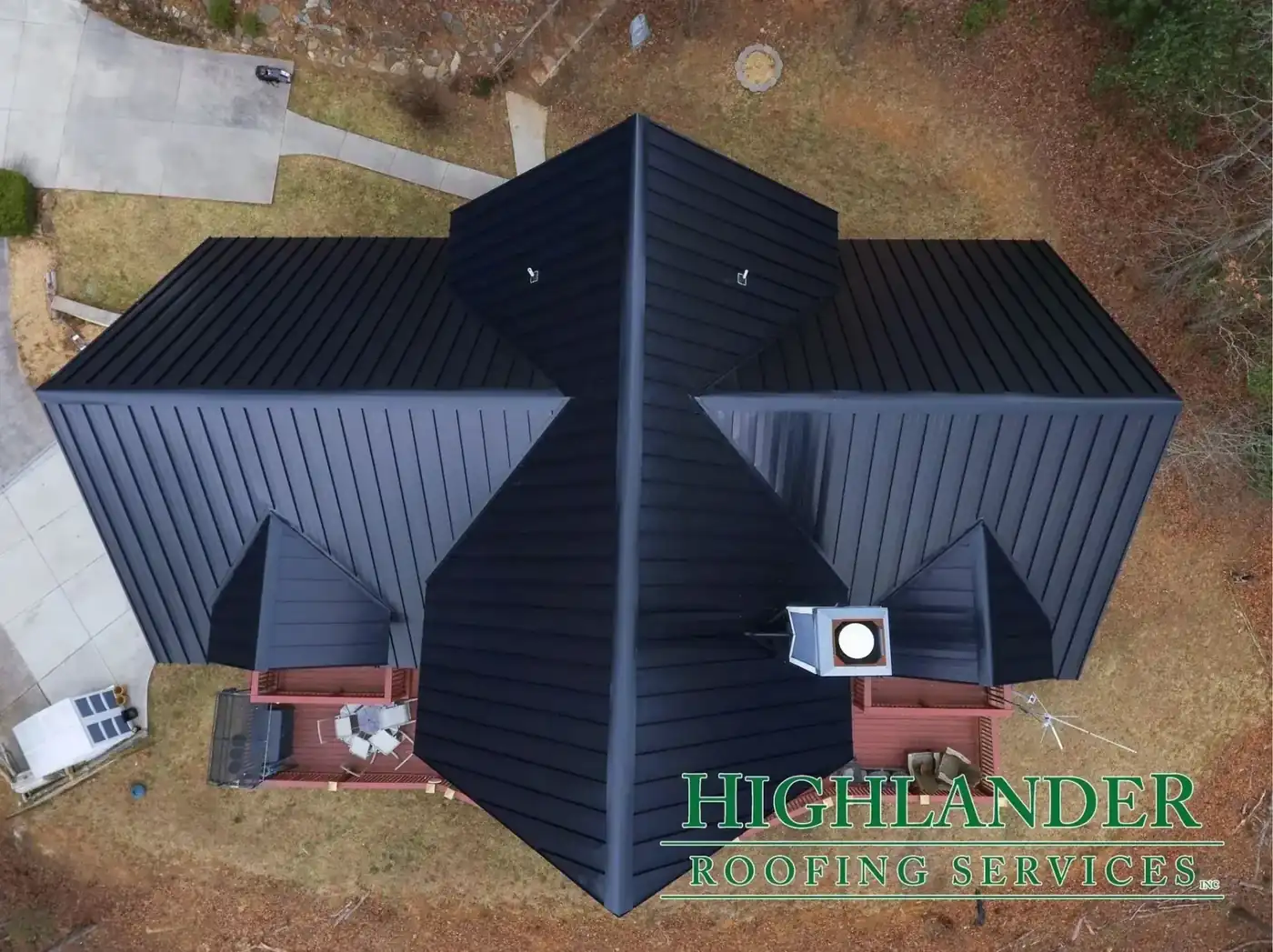
Standing-seam metal roofing is often the strongest long-term choice for a mountain home, particularly on wooded properties or homes expected to remain in the family for decades.
Important specifications include:
- An appropriate metal gauge for the panel profile and building exposure
- A high-quality painted finish, such as PVDF where specified
- Concealed clips or fastening systems designed to allow thermal movement
- Continuous panels from ridge to eave whenever the roof design permits
- Snow-retention systems above entrances, decks, walkways and vulnerable gutters where needed
- Flashing and trim designed as part of the roof system rather than improvised on site
Exposed-fastener metal costs less, but its screws and washers remain exposed to weather and usually require periodic inspection and eventual maintenance.
Synthetic slate and synthetic shake
Synthetic or composite products can provide the appearance of slate or hand-split cedar without the weight of natural slate or the moisture sensitivity of natural wood. Many premium products offer strong fire, impact and wind ratings, but specifications and warranties vary by manufacturer.
Composite roofing is particularly attractive for high-end homes in Highlands and Cashiers, where design review requirements may favor a traditional slate or shake appearance.
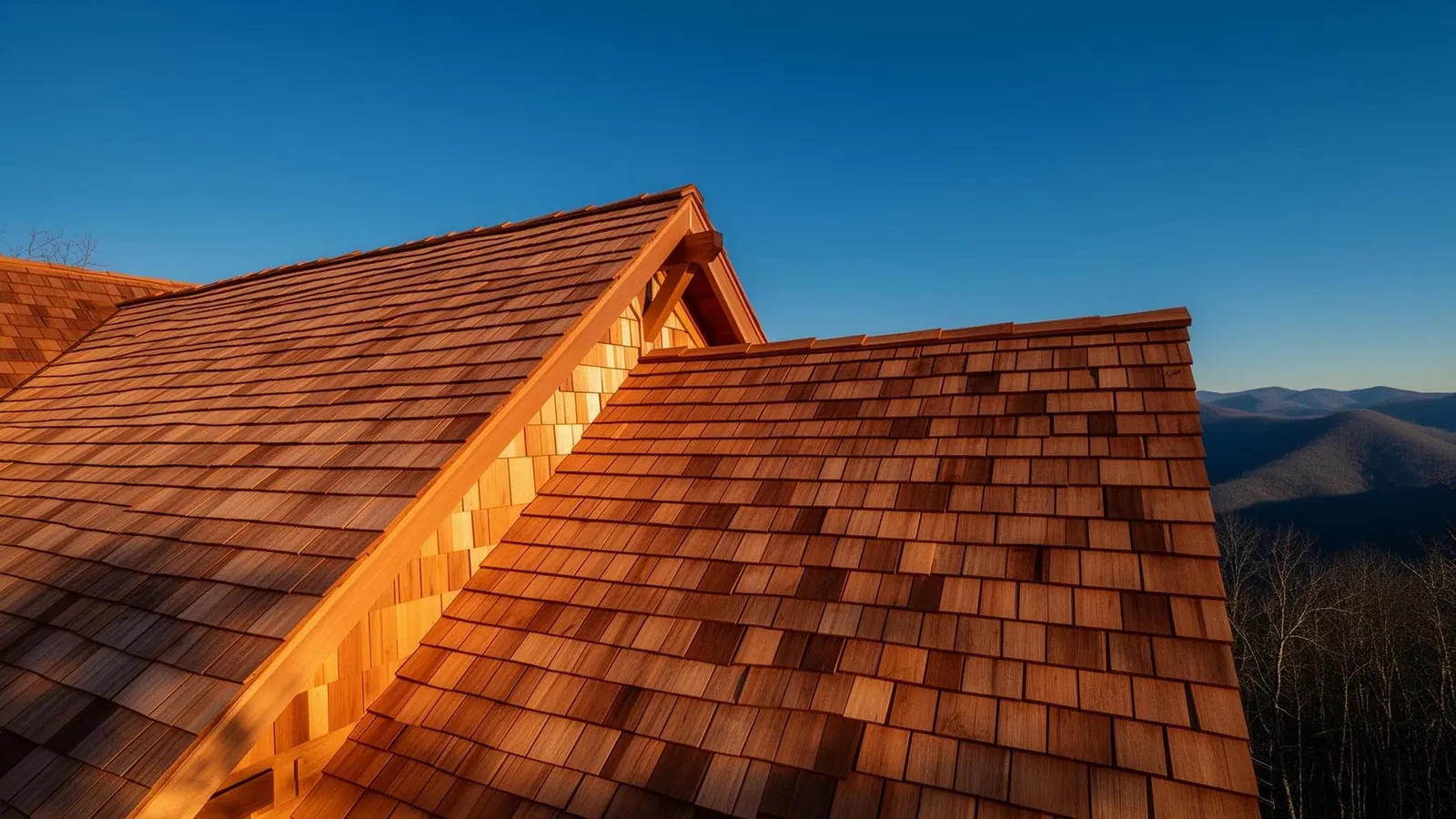
Cedar shake roofing
Cedar can be beautiful on an open, sunny and well-ventilated property. Beneath dense canopy, however, cedar requires regular attention and may age significantly faster because it cannot dry properly. Homeowners who want the cedar look on a shaded lot should compare natural cedar with a high-quality synthetic shake.
Natural slate
Natural slate can last generations, but it requires adequate structural support, compatible flashing and fasteners, and specialized installation. It is most appropriate for historic restoration and custom mountain homes designed to carry its weight.
Low-slope roofing
Porches, additions and contemporary mountain homes may include low-slope roof sections. TPO and EPDM systems can perform well when properly drained and kept clear of leaves, needles and branches. Low-slope roofs beneath trees should be inspected and cleaned at least annually.
Metal roof vs. shingles in the North Carolina mountains
| Consideration | Dimensional shingles | Standing-seam metal |
|---|---|---|
| Initial cost | Lower | Higher |
| Expected service life | Moderate | Long |
| Performance beneath trees | Requires more maintenance | Generally easier to keep clear |
| Moss and algae | More susceptible | Less susceptible |
| Noise | Similar when installed over a roof deck and insulation | Similar when properly assembled |
| Snow and ice | Tends to hold snow longer | May release snow suddenly; guards may be needed |
| Appearance | Broad color and style selection | Distinctive mountain and modern appearance |
| Best fit | Budget-conscious projects and sunnier lots | Long-term ownership and demanding sites |
Mountain roof installation details that prevent leaks
Most roof leaks begin at a transition—not in the middle of an intact roof plane. Valleys, walls, chimneys, skylights, penetrations and edges deserve as much attention as the chosen material.
Underlayment and ice protection
The roof assembly should follow the currently adopted North Carolina code, local requirements and the roofing manufacturer's instructions. Ice-barrier membrane may be appropriate or required at eaves in locations with a history of ice damming. On mountain homes, it is also commonly used in vulnerable valleys and around penetrations, chimneys and skylights.
Chimney and wall flashing
Where a roof meets a wall, properly integrated step flashing helps direct water onto the roofing surface. Stone and masonry chimneys typically require durable counter-flashing integrated with the masonry. A chimney wider than 30 inches may also require a cricket or saddle to divert water and debris.
Valleys
Valleys carry concentrated runoff and collect leaves and needles. On heavily wooded properties, an open metal valley may shed water and debris more effectively than some closed-valley designs. The best detail depends on the material, roof geometry and manufacturer requirements.
Drip edge and starter course
Correctly installed drip edge, starter shingles and perimeter fastening help protect the most wind-vulnerable parts of the roof. Weak edge details can allow wind-driven rain beneath the roofing and contribute to fascia or deck damage.
Attic ventilation
Balanced intake and exhaust ventilation helps manage heat and moisture. Blocked soffits, disconnected bath fans and insufficient ridge or exhaust ventilation may contribute to condensation, overheated shingles and winter ice problems. Ventilation must be designed for the specific attic and roof assembly; adding exhaust without adequate intake can make performance worse.
Mountain-sized gutters and drainage
On larger or heavily wooded mountain roofs, 6-inch gutters and high-capacity downspouts may manage rainfall and leaf load better than smaller systems. Capacity must still be calculated from roof area, pitch and local rainfall intensity. Downspouts should discharge to a drainage system or a location that carries water safely away from the foundation.
Skylights and roof penetrations
When replacing an older roof, evaluate aging skylights at the same time. Reusing a skylight or flashing kit near the end of its service life can create a weak point in an otherwise new roof. Plumbing boots, vents and other penetrations should also be inspected because rubber components can crack under UV exposure and temperature cycling.
Mountain roof maintenance checklist
A small amount of scheduled maintenance can prevent expensive leaks and help a roof reach the upper end of its expected life.
| When | What to check | Why it matters |
|---|---|---|
| Early spring | Lifted shingles, exposed fasteners, cracked boots, gutter damage and attic staining | Finds winter damage before spring rain intensifies |
| Late spring | Overhanging limbs, moss and algae on shaded planes | Addresses organic growth and falling-debris risk |
| Summer | Attic heat, moisture, blocked soffits and disconnected exhaust ducts | Reveals ventilation problems |
| Early fall | Gutters, downspouts, valleys and roof drains | Prepares drainage paths before leaf drop |
| Late fall | Gutters and debris behind chimneys, dormers and valleys | Prevents trapped water during winter |
| After strong wind or hail | Missing or lifted materials, displaced caps, dents and fallen limbs | Documents and limits storm damage |
| Winter | Recurring ice at eaves and interior moisture | May indicate air leakage, insulation or ventilation problems |
For safety, perform routine observations from the ground with binoculars or from accessible windows. Steep, wet or moss-covered mountain roofs should be inspected by trained professionals with appropriate fall protection.
Roof repair or roof replacement: how to decide
Roof repair is usually appropriate when damage is isolated and the surrounding roof still has meaningful service life. Replacement becomes more sensible when deterioration is widespread or the roof system is approaching the end of its realistic lifespan.
Repair may be the better choice when:
- A small area was damaged by wind or a branch
- One pipe boot, vent or flashing detail has failed
- The roof deck remains dry and structurally sound
- Shingles remain flexible and retain most of their granules
- Matching replacement material is available
Replacement may be the better choice when:
- Leaks or previous repairs occur in several areas
- Shingles are brittle, curling, cracked or losing granules across multiple planes
- Moss growth is extensive and has lifted shingle edges
- The roof deck is soft, delaminated or moisture-damaged
- Flashing and underlayment are failing throughout the system
- The roof is near the end of its realistic mountain lifespan
An accurate recommendation requires more than looking from the driveway. A professional roof inspection should evaluate roof surfaces, flashing, penetrations, drainage, ventilation and—when accessible—the attic and underside of the roof deck.
How much does a new roof cost in Western North Carolina in 2026?
Roof replacement costs vary substantially based on square footage, pitch, access, height, material, roof complexity, tear-off requirements and hidden deck damage. Mountain homes with steep driveways, multiple dormers, stone chimneys or limited staging areas typically cost more than simple valley homes.
The following broad planning ranges are not quotes. A “square” equals 100 square feet of roof surface.
| Roofing material | Planning range per square | Illustrative range for 25–40 squares |
|---|---|---|
| Dimensional asphalt shingles | $450–$800 | $11,250–$32,000 |
| Exposed-fastener metal | $650–$1,100 | $16,250–$44,000 |
| Standing-seam metal | $1,000–$1,800 | $25,000–$72,000 |
| Synthetic slate or shake | $1,200–$2,000 | $30,000–$80,000 |
| Cedar shake | $1,000–$1,600 | $25,000–$64,000 |
| Natural slate | $2,000–$4,000+ | $50,000–$160,000+ |
Factors that commonly increase mountain roofing costs include:
- Roof pitches above 8:12
- Multiple valleys, dormers and roof-to-wall transitions
- Stone chimneys requiring new flashing or crickets
- Difficult material delivery or limited equipment access
- Extensive tear-off or multiple existing layers
- Damaged decking discovered after removal
- Snow guards, custom metalwork or design-review requirements
Because labor, materials and site conditions change, homeowners should use these figures only for early budgeting. The only reliable price is a detailed written estimate based on an on-site inspection.
Roofing permits, contractor licensing and insurance in North Carolina
Permit requirements can vary by project scope and local jurisdiction. Before work begins, confirm requirements with the applicable building department in Macon County, Jackson County or the municipality where the property is located.
North Carolina requires a licensed general contractor when the total project value reaches the state threshold—currently $40,000 or more. Homeowners can verify a contractor through the North Carolina Licensing Board for General Contractors. Licensing is only one part of due diligence; also request current proof of general liability and workers' compensation coverage appropriate to the project.
Design review in Highlands and Cashiers communities
Many planned and gated communities on the Highlands-Cashiers Plateau require design review approval for roof material, profile and color. Approval timing varies, so begin the process early. An experienced local contractor can help provide samples, product data and color documentation for the review board.
Roof insurance claims after a storm
After a storm:
- Photograph visible damage from a safe location.
- Prevent additional damage only when it is safe to do so.
- Keep receipts for emergency tarping or mitigation.
- Notify the insurer promptly and follow the policy's claim instructions.
- Obtain a photo-documented roofing assessment and written scope.
- Read any contingency agreement or assignment carefully before signing.
Coverage depends on the policy, cause of loss, roof condition and insurer's investigation. A roofer can document physical conditions but should not promise claim approval or interpret coverage unless qualified to do so.
How to choose a roofing contractor in Western North Carolina
Use this roofing contractor checklist before signing an agreement:
- Verify the business's local presence. Look for an established location, local references and projects you can inspect.
- Check the contractor license when applicable. Search the company or qualifying party through the state licensing board.
- Confirm insurance. Request certificates for general liability and workers' compensation and verify them with the issuer when appropriate.
- Ask about experience with your roofing system. Shingles, standing seam, cedar, slate and membrane roofing require different skills.
- Request a photo-documented estimate. It should identify tear-off, underlayment, flashing, ventilation, disposal, gutters and potential decking costs.
- Review material and workmanship warranties separately. Confirm duration, exclusions, transferability and who handles a future claim.
- Ask who supervises the project. Know who will be on site and who is responsible for communication and final inspection.
- Request recent and older local references. A five-year-old roof often reveals more than a project completed last week.
- Confirm design-review experience. This is especially important in planned communities around Highlands, Cashiers, Sapphire and Lake Toxaway.
- Avoid high-pressure storm sales. Do not choose a contractor solely because they arrived immediately after a storm or offered a same-day discount.
Roofing service areas in Western North Carolina
Highlander Building Services provides mountain roofing services across Macon County, Jackson County and nearby communities, including:
- Highlands, NC
- Cashiers, NC
- Franklin, NC
- Sylva, NC
- Sapphire, NC
- Glenville
- Lake Toxaway
- Cullowhee
- Dillsboro
- Bryson City
Local conditions vary even within the same neighborhood. Elevation, canopy, slope direction and drainage should be evaluated at the property before choosing a roof system.
Frequently asked questions about mountain roofing
What is the best roof for a mountain home in Western North Carolina?
Standing-seam metal and premium synthetic slate or shake are strong long-term choices for shaded or heavily wooded mountain properties. Algae-resistant dimensional shingles remain a practical, lower-cost option for many open or moderately shaded homes. The best selection depends on the site, home style, budget and expected ownership period.
How long does a shingle roof last in Highlands or Cashiers?
Dimensional shingles may last approximately 18 to 28 years under mountain conditions, but deep shade, moss, poor ventilation and installation problems can shorten that range. Open, well-maintained roofs are more likely to reach the upper end.
Why are there black streaks on my roof?
Black roof streaks are commonly caused by algae growing on asphalt shingles. Persistent shade and humidity make the issue common in Western North Carolina. A low-pressure, manufacturer-compatible cleaning method is safer than pressure washing.
Is moss on a roof a serious problem?
Yes. Moss retains moisture and can grow around shingle edges. Over time, this may contribute to granule loss, lifted shingles and freeze-thaw damage. Address moss early and correct contributing conditions such as heavy shade and accumulated debris where practical.
Is a metal roof worth the cost in Western North Carolina?
For homeowners planning long-term ownership, standing-seam metal can be worth the higher initial price because of its long service life and reduced susceptibility to moss. The system must still be properly detailed, and snow retention may be necessary above entrances and walkways.
How often should a mountain roof be inspected?
Homeowners should visually check the roof and drainage system in spring and fall and after significant wind, hail or tree impact. A professional inspection every two to three years—or sooner when warning signs appear—can identify small problems before they become interior leaks.
When is the best time to replace a roof in the North Carolina mountains?
Late spring through mid-fall often provides the most reliable installation conditions. Exact timing depends on the material, manufacturer instructions, temperature, moisture and contractor schedule. Do not delay an active leak solely to wait for a preferred season.
Does my HOA need to approve a new roof?
Many planned communities near Highlands, Cashiers, Sapphire and Lake Toxaway require approval of roofing material and color. Review the community's current design guidelines before ordering materials.
Can a new roof be installed over old shingles?
Building-code and manufacturer rules determine whether an overlay is permitted, but a full tear-off allows the contractor to inspect the deck, replace damaged wood and install a complete new underlayment and flashing system. In wet mountain conditions, that visibility is often valuable.
What are the signs that I need roof repair?
Common warning signs include ceiling stains, damp attic decking, missing or lifted shingles, cracked pipe boots, loose flashing, granules in gutters, moss lifting shingle edges, sagging gutters and debris trapped in valleys. Arrange an inspection promptly if water is entering the home.
Schedule a Western North Carolina roof inspection
Highlander Building Services, Inc. provides roof inspections, roof repairs, storm-damage assessments and complete roof replacements for homes throughout the Western North Carolina mountains. Our team works with dimensional shingles, standing-seam metal, synthetic slate and shake, cedar roofing, gutters and mountain drainage systems.
With locations in Franklin and Sylva, we serve Highlands, Cashiers, Sapphire, Glenville, Lake Toxaway, Cullowhee, Dillsboro, Bryson City and surrounding communities.
Call 828-524-7773 or request your roof assessment online.
Local to Highlands, NC
This article was written specifically for homeowners in Highlands and the surrounding area. Highlander Building Services serves Highlands and all of Western North Carolina with in-person consultations and local crews.
Talk With Our Local TeamFrequently Asked Questions
What is the best roof for a mountain home in Western North Carolina?
Standing-seam metal and premium synthetic slate or shake are strong long-term choices for shaded or heavily wooded mountain properties. Algae-resistant dimensional shingles remain a practical, lower-cost option for many open or moderately shaded homes. The best selection depends on the site, home style, budget and expected ownership period.
How long does a shingle roof last in Highlands or Cashiers?
Dimensional shingles may last approximately 18 to 28 years under mountain conditions, but deep shade, moss, poor ventilation and installation problems can shorten that range. Open, well-maintained roofs are more likely to reach the upper end.
Why are there black streaks on my roof?
Black roof streaks are commonly caused by algae growing on asphalt shingles. Persistent shade and humidity make the issue common in Western North Carolina. A low-pressure, manufacturer-compatible cleaning method is safer than pressure washing.
Is moss on a roof a serious problem?
Yes. Moss retains moisture and can grow around shingle edges. Over time, this may contribute to granule loss, lifted shingles and freeze-thaw damage. Address moss early and correct contributing conditions such as heavy shade and accumulated debris where practical.
Is a metal roof worth the cost in Western North Carolina?
For homeowners planning long-term ownership, standing-seam metal can be worth the higher initial price because of its long service life and reduced susceptibility to moss. The system must still be properly detailed, and snow retention may be necessary above entrances and walkways.
How often should a mountain roof be inspected?
Homeowners should visually check the roof and drainage system in spring and fall and after significant wind, hail or tree impact. A professional inspection every two to three years—or sooner when warning signs appear—can identify small problems before they become interior leaks.
When is the best time to replace a roof in the North Carolina mountains?
Late spring through mid-fall often provides the most reliable installation conditions. Exact timing depends on the material, manufacturer instructions, temperature, moisture and contractor schedule. Do not delay an active leak solely to wait for a preferred season.
Does my HOA need to approve a new roof?
Many planned communities near Highlands, Cashiers, Sapphire and Lake Toxaway require approval of roofing material and color. Review the community's current design guidelines before ordering materials.
Can a new roof be installed over old shingles?
Building-code and manufacturer rules determine whether an overlay is permitted, but a full tear-off allows the contractor to inspect the deck, replace damaged wood and install a complete new underlayment and flashing system. In wet mountain conditions, that visibility is often valuable.
What are the signs that I need roof repair?
Common warning signs include ceiling stains, damp attic decking, missing or lifted shingles, cracked pipe boots, loose flashing, granules in gutters, moss lifting shingle edges, sagging gutters and debris trapped in valleys. Arrange an inspection promptly if water is entering the home.
Related Services
Compare materials on your actual roof in Highlands, NC
Pitch, exposure, and access change what makes sense. We price the real options, not a generic quote.
- 4.8★ Google · 158 reviews
- Licensed & insured · family-owned since 2017
- Franklin-based crews across 10 WNC counties
Calls are answered by the local team during working hours. Messages are answered during business hours.
More for Highlands, NC
Real Work in Highlands
Market Context
Roofing & Construction in Highlands
Explore localized standards and proven projects in your area.
Written By
Highlander Editorial Team
Highlander Building Services
Expert roofing and construction guidance from the team that builds in Western North Carolina's mountains every day.
Why Highlander
Roofing help in Highlands, NC
Photos, findings, and a written scope — no pressure to buy anything.
(828) 524-7773Request an InspectionStart with three simple contact details.
Roofing or construction, you do not need to diagnose the problem or finish a long intake first. Send your contact details and Highlander will discuss the project with you.
Prefer to talk directly?
(828) 524-7773- 4.8★ Google · 158 reviews
- Licensed and insured
- Crews based in Franklin, serving Western North Carolina