
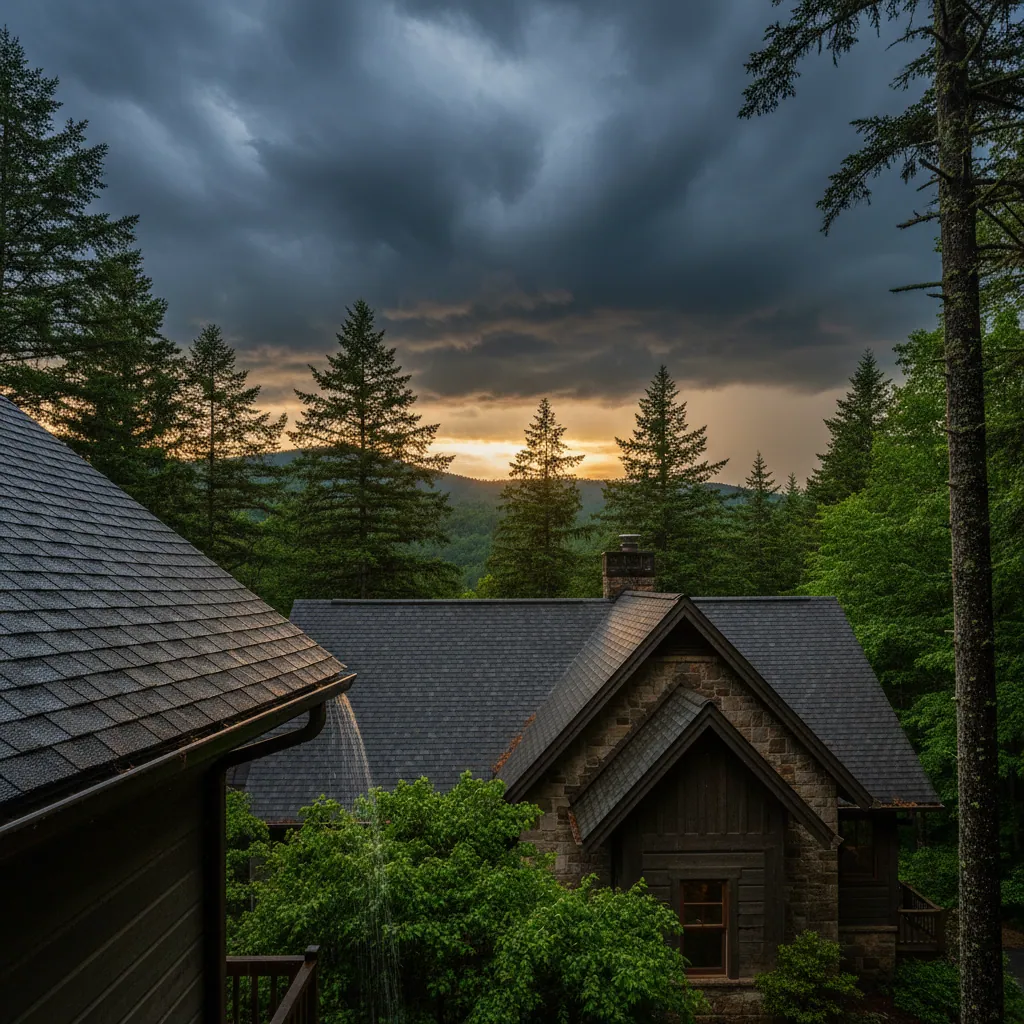
Storm Damage Roof Checklist for Western NC Homeowners
What to look for after a WNC storm — and the steps to take before calling your insurance company.
Key Takeaways
A storm has just passed and you want to know whether your roof is still doing its job. The short answer: stay off the roof, walk the property and check the ceilings inside within 24 to 48 hours, photograph anything that looks wrong, and get a professional inspection before you agree to any work. Most of the expensive interior damage we repair started as wind or water damage nobody noticed for weeks.
This checklist applies across Western North Carolina — Franklin, Highlands, Cashiers, Sylva, Bryson City, Cullowhee and the plateau in between. Wind exposure and rainfall change by valley and by elevation, but what you check, and the order you check it in, does not.
Stay Safe First
Before any inspection:
- Do not climb on the roof. A wet, storm-damaged roof is the most dangerous place on the property.
- Stay clear of downed power lines and anything they may be touching, including fences and standing water.
- Watch for compromised trees and hanging limbs above the area you are walking.
- Wait for daylight. Nothing below needs to be done at night.
Everything in this guide can be done safely from the ground or from inside the house.
Walk the Property Perimeter
Start with a slow lap around the outside of the home and look for:
- Shingle pieces, granule piles or metal fragments on the ground
- Downed limbs on the roof, in gutters, or leaning against the structure
- Debris lodged in valleys or against downspouts
- Bent or displaced flashing at eaves, rakes and wall lines
- Damaged siding, trim, window screens or soffit
- Movement at chimney caps, vents and any roof-mounted hardware
Photograph anything unusual as you go. A timestamped phone photo taken the day of the storm is worth more later than a careful description from memory.
Check Each Roof Slope From the Ground
Use binoculars or your phone camera to look at every slope from the yard:
- Missing, lifted, torn or creased shingles
- Bent, dented or displaced metal panels
- Exposed underlayment where surface material has come away
- Ridge caps out of alignment
- Cracked or dented skylight glazing
- Debris sitting in valleys where water needs to run
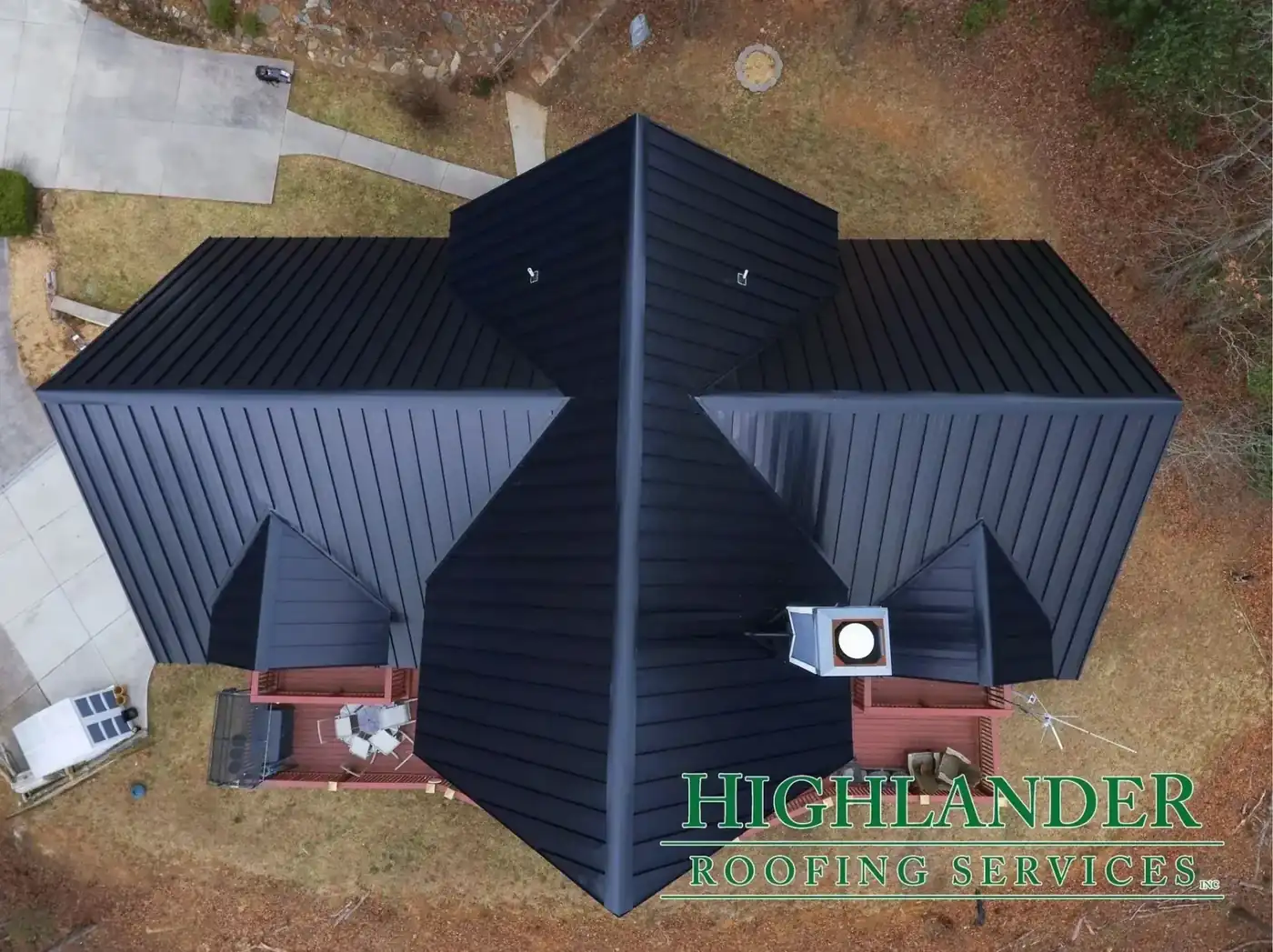
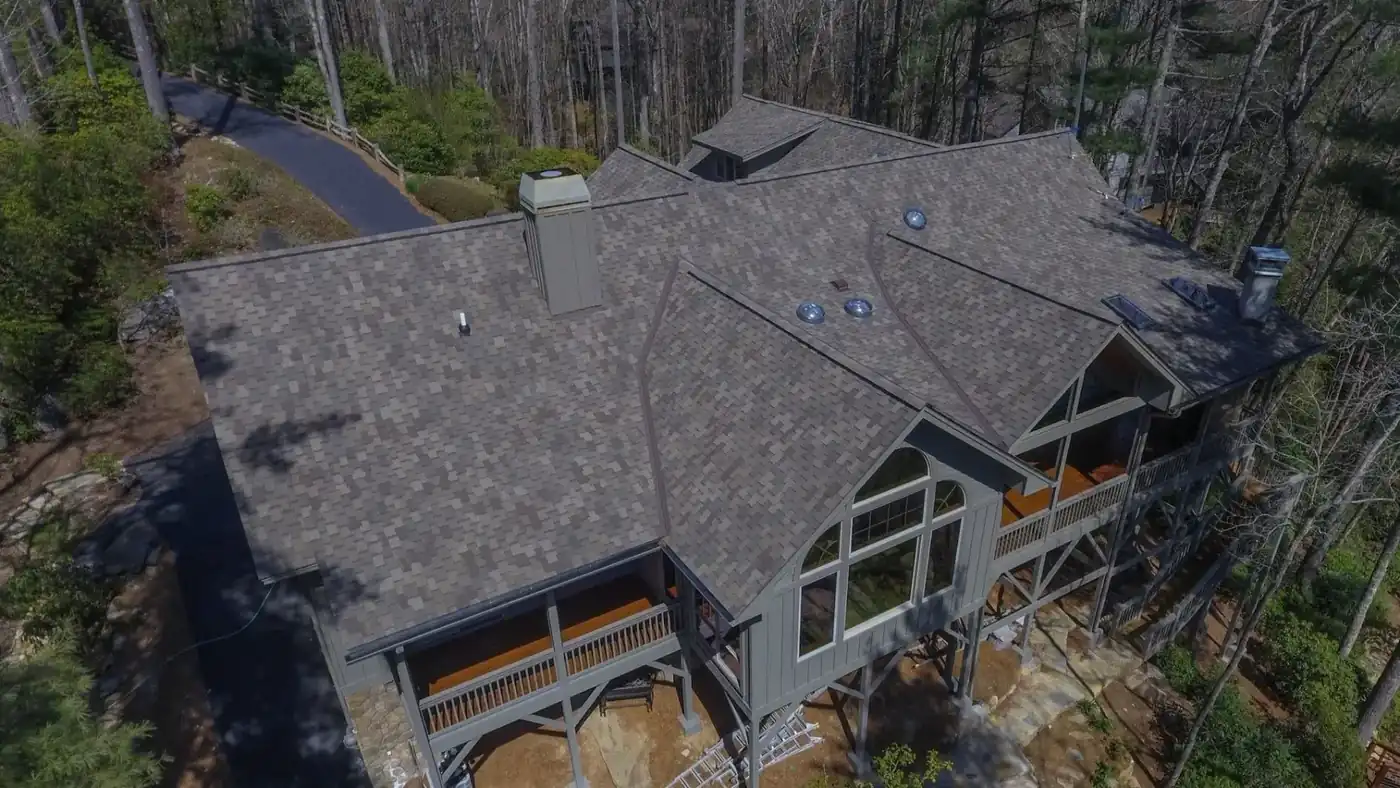
On a steep or multi-storey mountain roof, a drone photograph is often the only safe way to see the upper slopes. That is something a local roofer can do for you.
Check the Interior Within 48 Hours
Water takes time to show. Inside the house, within a day or two of the storm, look for:
- New ceiling stains or damp patches, particularly near chimneys and skylights
- Bubbling paint or discolouration high on interior walls
- Moisture around any roof penetration
- Wet insulation in accessible attic space
- Daylight visible in the attic where there should be none
- A musty smell that was not there before
A small new stain is worth a call. It is usually the earliest evidence that the roof has been compromised.
Check Gutters and Drainage
Heavy rain finds every weak point in a drainage system, and a good share of what looks like storm damage is really a drainage failure:
- Overflow marks on siding beneath the gutter line
- Erosion at downspout outlets
- Standing water near the foundation
- Splash blocks and extensions moved out of position
- Granules washed into the gutter, which points to shingle wear
What Elevation Changes
Higher ground is not simply windier. On the Highlands and Cashiers plateau, wind arrives from more directions and rain totals are among the highest in the eastern United States, so the same storm that lifts a few tabs in a Franklin valley can strip a rake edge on an exposed ridge. Ice loading adds a second failure mode in winter, when water that got in during the storm freezes, expands and opens the gap wider. On wooded lots in Sylva, Cullowhee and Bryson City the bigger risk is usually limb impact and blocked valleys rather than uplift.
If your home sits on an exposed ridge or on the plateau, treat any storm with sustained wind as a reason to inspect, not just the ones that make the news.
Document Everything
If insurance may be involved:
- Timestamped photographs of exterior and interior damage
- A note of when the storm happened and when you first saw the damage
- Any prior inspection reports you already hold
- Weather alerts or reports covering your area that day
Keep it together in one place. A claim is far easier to support when the record starts on day one.
What to Do About Insurance
- Report promptly. Most policies require timely notice.
- Do not make permanent repairs before the adjuster visits. Temporary tarping to stop water getting in is expected and appropriate.
- Get a professional inspection so the damage is described in the terms an adjuster works in.
- Be there when the adjuster inspects, with your own documentation in hand.
When to Call a Roofer
Call if you see missing or displaced shingles or panels, new interior water stains, damaged flashing, a limb strike anywhere on the roof, or granules collecting in the gutters. Call too if you simply cannot see the upper slopes from the ground — not knowing is a reason to look, not a reason to wait.
Highlander inspects storm damage across Western North Carolina and provides written, photographed findings you can keep whether or not you file a claim. See storm damage repair, roof repair, or request an inspection.
Get your roof checked after the storm in Western NC
Call and talk to someone local, or request an inspection and we'll come document the damage in person.
- 4.8★ Google · 158 reviews
- Licensed & insured · family-owned since 2017
- Franklin-based crews across 9 WNC counties
Calls are answered by the local team during working hours. Messages get a reply within one business day.
More Western NC resources
Mountain-Proven Results
Written By
Highlander Editorial Team
Highlander Building Services
Expert roofing and construction guidance from the team that builds in Western North Carolina's mountains every day.
Why Highlander
Talk to a local roofer
Photos, findings, and a written scope — no pressure to buy anything.
(828) 524-7773See Storm Damage Response