
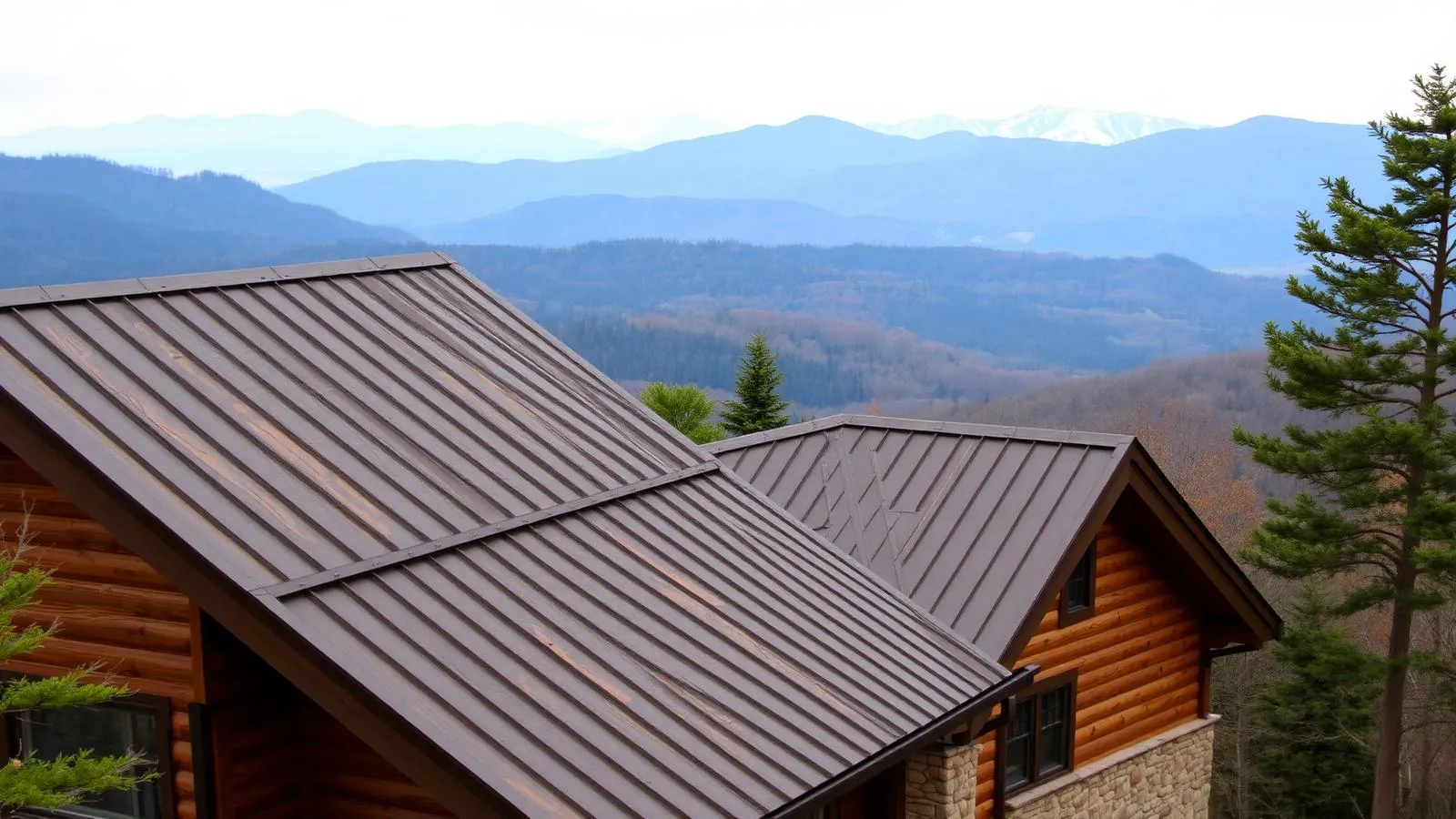
Standing Seam vs Exposed-Fastener Metal Roofing for Mountain Homes
The two metal systems are not the same product at different prices. Here is how they differ on cost, fasteners, movement, wind, repairability and look.
Key Takeaways
For a primary residence at elevation, standing seam is usually the right metal roof: its fasteners are hidden under the seam, so nothing penetrates the water plane in the field of the roof, and there is no gasket wearing out in the weather. Exposed-fastener panels cost roughly half as much and are the sensible choice for a garage, workshop, barn or simple gable outbuilding, as long as you accept that the screws and their washers are a maintenance item for the life of the roof.
Both are real metal roofs. They are not the same product sold at two price points, and the difference that matters most is where the fasteners sit.
How Each System Is Built
Standing seam. Panels run the full length of the slope and are held down by concealed clips fixed to the deck. Adjacent panels lock or are mechanically seamed together, and that raised seam sits above the water line. Trim at hips, valleys and terminations is usually fabricated on site to fit the roof.
Exposed fastener. Panels are screwed straight through the face into the deck or purlins, with a neoprene washer under each screw head compressing to make the seal. The panels overlap at a rib rather than locking together.
Side by Side
| Criterion | Standing seam | Exposed fastener |
|---|---|---|
| Installed cost | $1,300 – $2,100 per square | $650 – $1,100 per square |
| Fasteners | Concealed clips, none through the field | Screws through the panel face, with gaskets |
| Service life | 40+ years when detailed correctly | 30–40 years with fastener maintenance |
| Maintenance | Inspect seams, penetrations and trim | Inspect and re-torque or replace screws and washers |
| Panel movement | Clips let panels expand and contract | Screw holes elongate as panels move |
| Wind performance | Excellent when engineered and clipped for the site | Good, and highly dependent on screw pattern and edge detail |
| Repairability | Panel or seam sections can be replaced | Individual screws and panels are easy to swap |
| Look | Clean lines, no visible fixings | Visible screw lines across every panel |
| Typical use here | Primary residences, exposed ridges, design-review communities | Barns, workshops, cabins, garages, simple gable roofs |
Those cost bands are the same ones published on our Western NC roofing cost guide and are set for 2026. Pitch, access, decking condition and detail count move a real number inside them.
Why the Fastener Position Decides So Much
A metal roof expands and contracts every day. A long panel on a hot afternoon is measurably longer than the same panel at dawn, and it has to be free to move.
Standing seam clips allow that movement. Nothing fights it, and nothing in the field of the roof is relying on a rubber washer to stay watertight.
On an exposed-fastener roof every screw resists that movement. Over years, the hole around each screw works slightly oval, the washer flattens and hardens under UV, and eventually a screw no longer seals. That is not a defect, it is the design, and it is why those roofs come with a fastener maintenance schedule. On a barn that is trivial. On a two-storey house on a steep mountain lot, getting someone up there to check several thousand screws is not trivial.
What Elevation and Exposure Change
- Wind. On an exposed ridge, uplift concentrates at rakes, eaves and ridge. Standing seam is engineered for that with clip spacing and edge metal; exposed fastener depends entirely on the screw pattern being right and staying right.
- Snow and ice. Both shed snow more readily than shingles, which raises the same design question: where does the snow land? Snow retention above entries, decks and walkways is part of the design, not an afterthought.
- Rain volume. The plateau gets some of the heaviest rainfall in the eastern United States. Standing seam has fewer places for that water to find, simply because there are fewer holes in it.
- Trees. Neither system minds needles and leaves, but both need valleys and gutters kept clear, or water backs up under the panel at the transitions.
When to Choose Exposed Fastener Anyway
It is the honest answer for:
- Detached garages, workshops, barns and storage buildings
- Simple, low, walkable gable roofs where maintenance is easy
- Cabins and outbuildings where the budget decides and the look is not the point
- Covering a large, simple area where standing seam's cost is hard to justify
We install both, and we will tell you when the cheaper system is the right one.
When Standing Seam Is Worth the Difference
- The house is your primary residence and you plan to keep it
- The roof is steep, tall, or awkward to access safely
- The property sits on an exposed ridge or high on the plateau
- A club or community design review has a say in the finished look
- You want a roof you inspect rather than one you service
What Actually Decides Whether Either Lasts
Neither system is better than its installation. On the metal roofs we are called out to repair, the problem is almost never the panel: it is a valley that was not detailed, a chimney flashed with sealant instead of metal, a termination left open at a wall, or a screw pattern that missed the purlin. Ask any contractor how they will handle the valleys, the penetrations and the eave detail before you ask them for a price per square.
If you are weighing the two for a home in Franklin, Highlands, Cashiers, Sylva or anywhere across Western North Carolina, we will look at the roof and tell you which one fits the building. See metal roofing, what a new roof costs here, or request an inspection.
Frequently Asked Questions
Is exposed-fastener metal a bad roof?
No. It is a real metal roof at roughly half the installed cost, and it is the right choice on barns, workshops, garages and simple gable roofs. The trade-off is that the screws and their washers are exposed to weather and need periodic inspection, which is easy on a low outbuilding and awkward on a tall house.
How often do exposed fasteners need replacing?
There is no single interval. Gaskets age with UV and thermal cycling, so a roof with full sun exposure needs looking at sooner than a shaded one. The practical answer is to have the screws inspected as part of a regular roof check and to replace them in sections as they show wear rather than waiting for a leak.
Can you put standing seam on any roof?
Almost any, but the deck has to be sound and continuous, and very low slopes need a mechanically seamed profile rather than a snap-lock. We check the substrate and the pitch before specifying the panel system.
Does standing seam cost twice as much?
Often close to it, per square. The panel material, the on-site trim fabrication and the labour to detail hips, valleys and penetrations are all higher. Whether the difference is worth it depends on how long you intend to own the house and how hard the roof is to get onto.
Which is quieter in rain?
Both are quiet when installed over solid decking with underlayment. The noisy metal roof people remember is an open-frame barn or porch with no decking and nothing to absorb the sound.
Related Services
Compare materials on your actual roof in Western NC
Pitch, exposure, and access change what makes sense. We price the real options, not a generic quote.
- 4.8★ Google · 158 reviews
- Licensed & insured · family-owned since 2017
- Franklin-based crews across 9 WNC counties
Calls are answered by the local team during working hours. Messages get a reply within one business day.
More Western NC resources
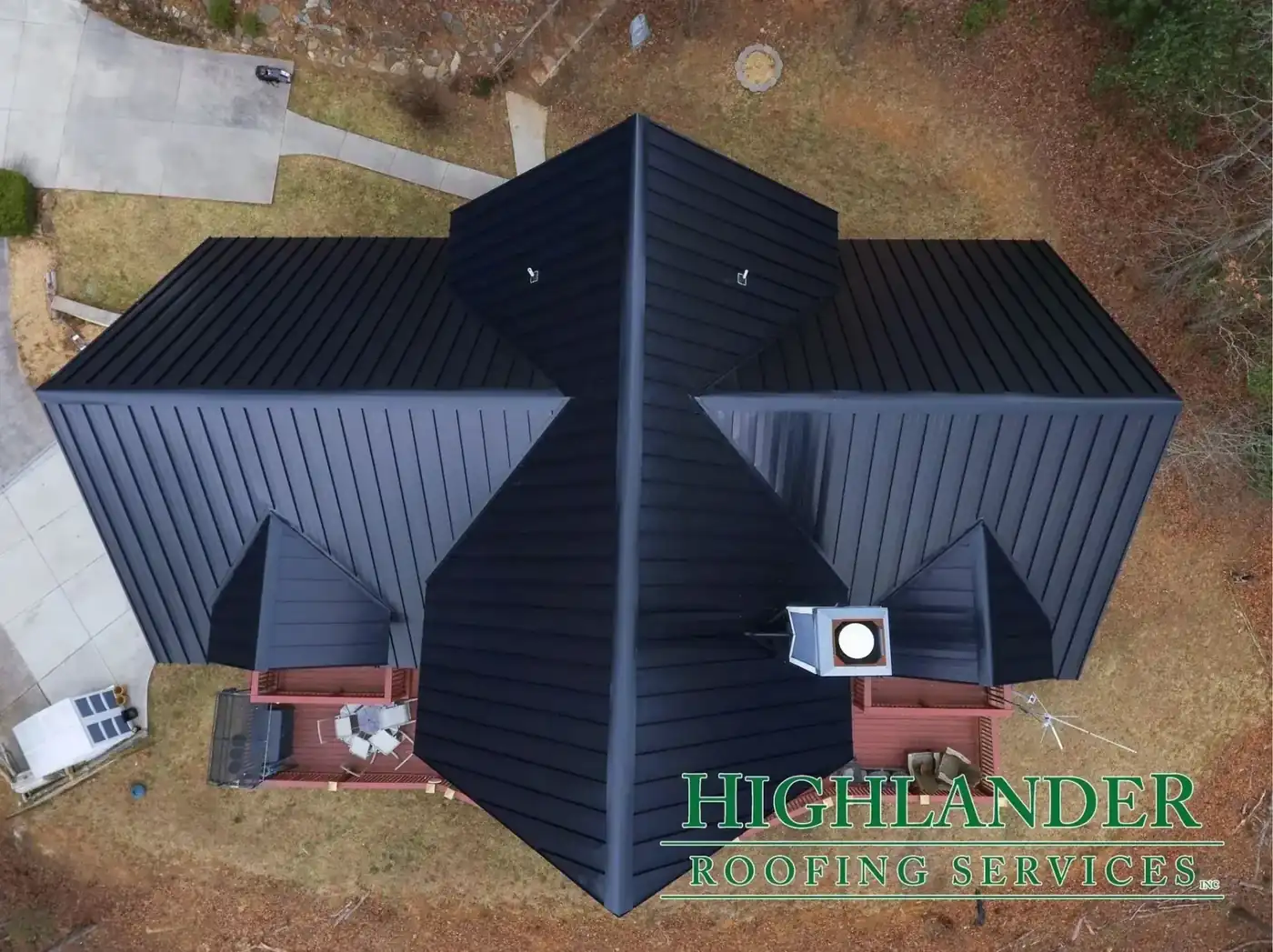
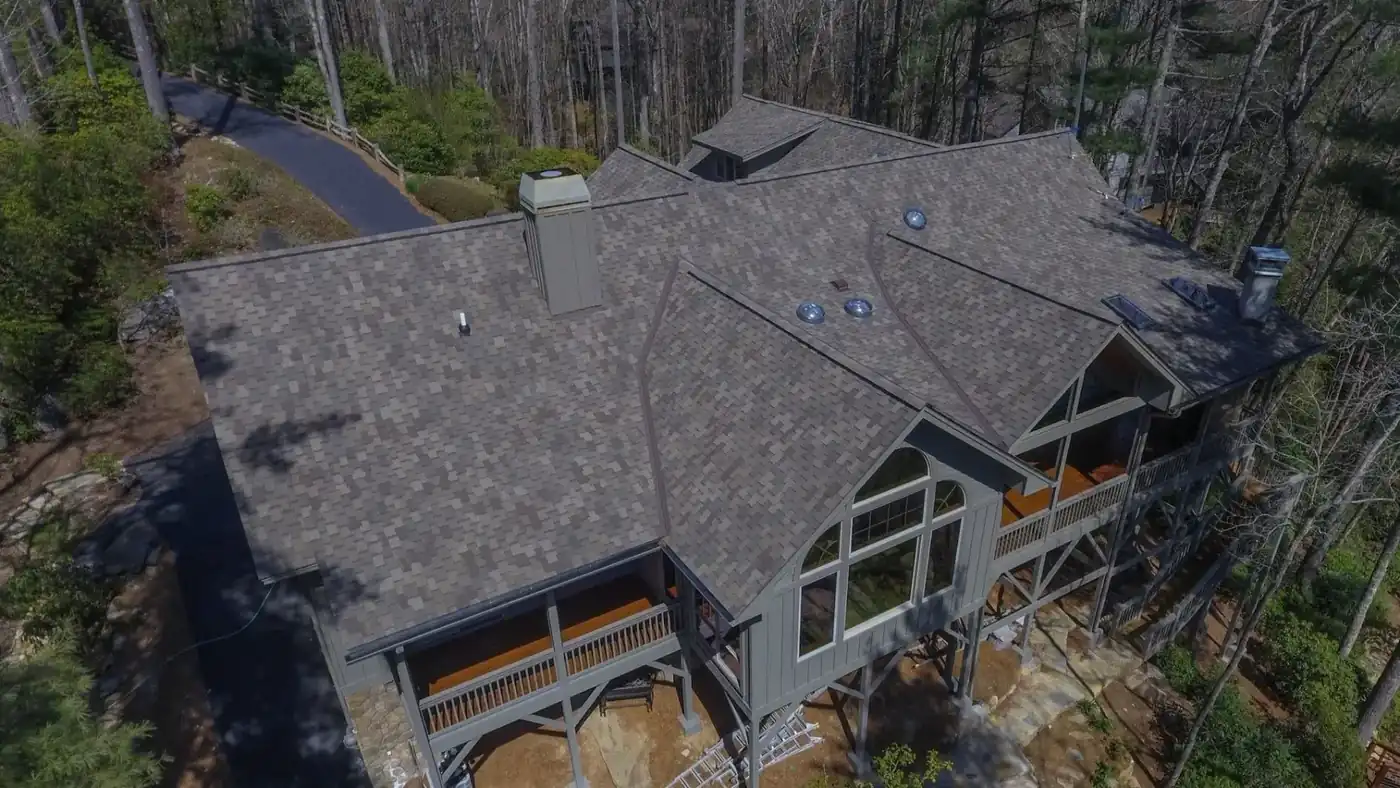
Mountain-Proven Results
Written By
Highlander Editorial Team
Highlander Building Services
Expert roofing and construction guidance from the team that builds in Western North Carolina's mountains every day.
Why Highlander
Talk to a local roofer
Photos, findings, and a written scope — no pressure to buy anything.
(828) 524-7773Request an Inspection