Metal vs. Shingle Roofing: What's Best for WNC Mountain Homes?
Comparing the two most popular roofing options for Western North Carolina — cost, durability, and performance at elevation.
Key Takeaways
Choosing between a metal roof and asphalt shingles is one of the biggest decisions Western North Carolina homeowners face. Both are proven, code-compliant systems — but mountain elevation, ice, wind, and rainfall add factors that simply don't apply to flatland roofing. This guide walks through how each material actually performs on WNC homes so you can decide with clear expectations rather than sales copy.
Why the WNC Climate Changes the Answer
Homes across Highlands, Cashiers, Lake Toxaway, Sapphire, Lake Glenville, and the surrounding plateau routinely sit above 3,000 feet. That elevation brings:
- Sustained wind exposure on ridgelines and open lots
- Freeze/thaw cycles that push water under any weak flashing
- 60–90+ inches of annual rainfall in many microclimates
- Winter ice events, occasional heavy snow, and rapid temperature swings
- Dense tree cover that drops limbs, needles, and organic debris year-round
A roof that performs beautifully in Charlotte or Raleigh can underperform quickly at 4,000 feet. Material choice matters — but so does the underlayment, flashing, ventilation, and installer skill behind it.
Asphalt Shingle Roofing in Western NC
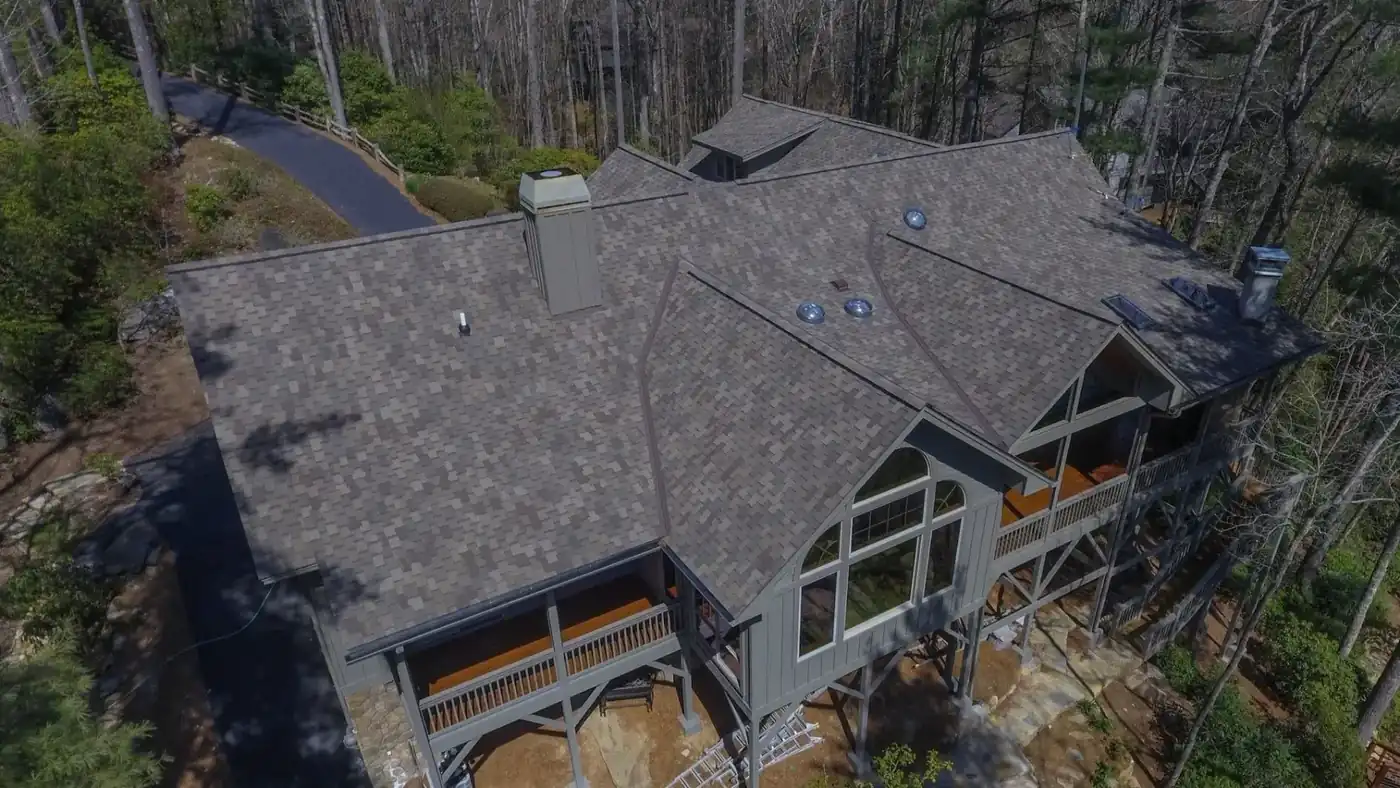
Dimensional asphalt shingles are still the most common roof on WNC homes for good reasons: strong performance, wide style selection, and a lower upfront investment than metal.
Where shingles work well
- Homes with simpler roof lines and moderate wind exposure
- Traditional mountain cottages and craftsman-style homes where a shadowed, layered look fits
- Budgets where upfront cost matters more than 50-year horizon
- Properties where future repairs and partial replacements need to be simple
Considerations at elevation
- Wind uplift is the #1 failure mode on exposed ridgelines — proper nailing pattern and starter/hip/ridge accessories matter more than the shingle brand
- Organic debris under trees can trap moisture and shorten service life
- Ice damming at eaves is a real risk without proper ice-and-water shield
- Expect meaningful maintenance touchpoints across the roof's life
What we install
We install CertainTeed dimensional shingle systems and are a CertainTeed ShingleMaster certified contractor, which lets us offer their upgraded system warranties when the full assembly is installed to spec. Warranty terms vary by product and installation — we walk homeowners through the actual coverage tied to their specific roof rather than quoting generic year counts.
"Shingles aren't the 'budget' option in WNC — they're the right option for a lot of homes. What matters is the underlayment, the flashing, and the crew putting it on."
Metal Roofing in Western NC
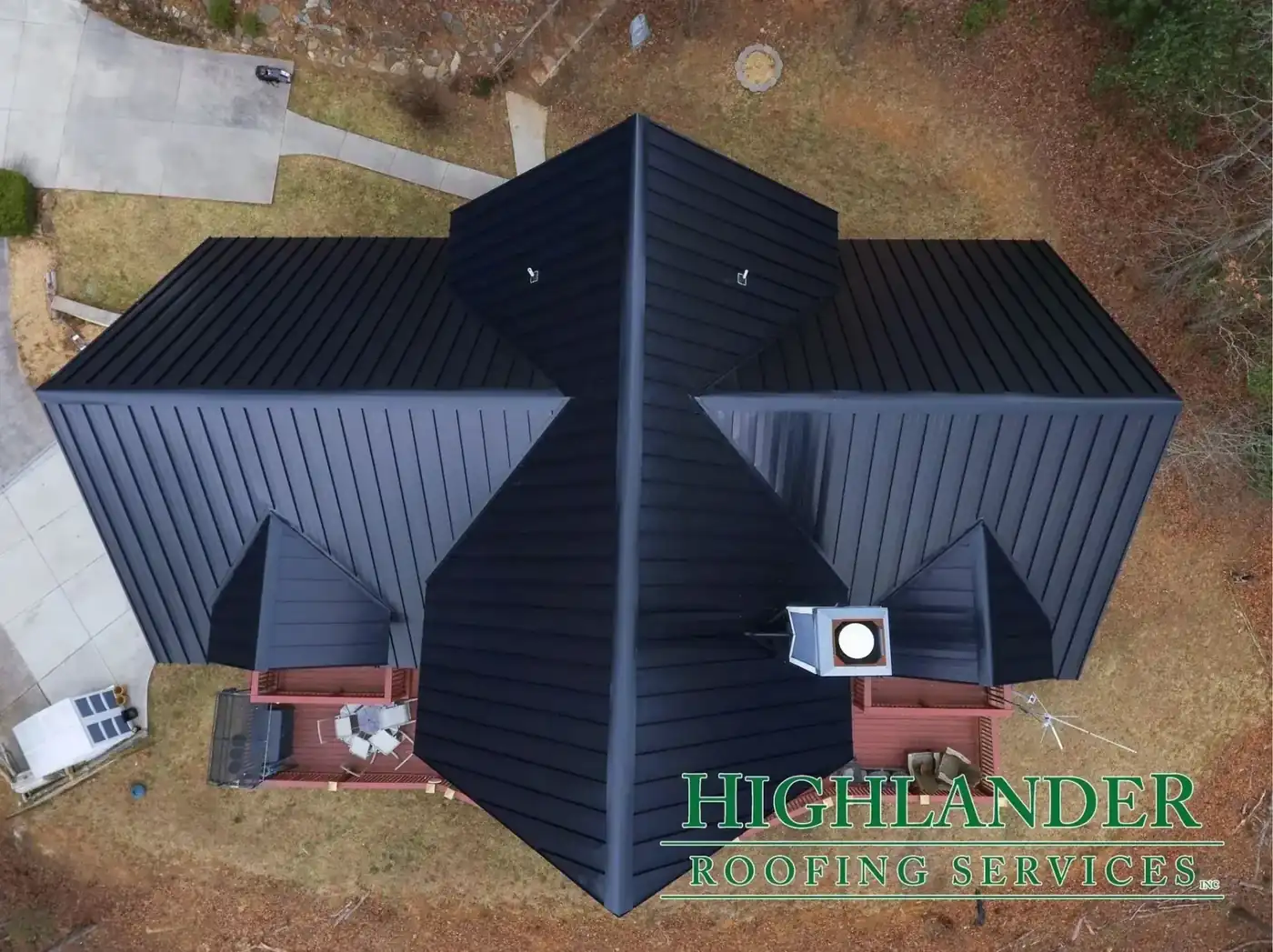
Standing seam metal roofing has grown quickly across the WNC plateau, and for good reason. When installed correctly, it's one of the best-performing systems available for mountain conditions.
Where metal shines
- Steep-pitch mountain homes where snow and ice need to shed cleanly
- High-wind ridgeline lots and open exposures
- Modern mountain, farmhouse, and lodge-style homes
- Homeowners planning to stay long-term and prioritize lifecycle value
- Properties near heavy tree cover, where a smooth surface sheds debris better
Considerations
- Higher upfront investment than shingles
- Installation is unforgiving — panel layout, clip spacing, and flashing details need an experienced crew
- Large hail can dent softer panels (cosmetic on most systems, not a leak issue)
- Expansion and contraction noise is minimal on properly floated panels but should be planned for
- Skylights, valleys, and dormers add complexity and cost
Panel systems we work with
Concealed-fastener standing seam is our default recommendation for full re-roofs — it eliminates exposed screws that eventually need to be re-torqued or replaced. Exposed-fastener panels (like R-panel) still have a place on outbuildings, cabins, and simple porch roofs where cost matters more than a 50-year horizon.
Durability and Lifespan (Honest Version)
We won't publish specific warranty year counts here because real coverage depends on the exact product, the installer certification level, and the assembly details. What we can say honestly:
- A properly installed standing seam metal roof is a generational roof for most WNC homes
- A properly installed dimensional shingle roof is a long-service roof, typically outlasting the average homeowner's stay
- A poorly installed roof of either material will fail early — installer quality often matters more than material choice
Cost and Value (Without Made-Up Numbers)
Real pricing depends on roof size, pitch, complexity, access, tear-off scope, decking condition, underlayment spec, and panel or shingle selection. Any contractor giving you a firm number over the phone is guessing.
What's consistent:
- Metal roofs cost meaningfully more upfront than dimensional shingles
- Metal roofs generally deliver a lower cost-per-year of service life
- Insurance premiums can respond favorably to impact-resistant and Class-A fire-rated systems — worth asking your carrier
- The cheapest bid on either material is almost always the most expensive roof over 10 years
Which Homes Benefit Most From Metal
- Steep-pitch homes where snow and ice shedding matters
- High-elevation properties with open wind exposure
- Homes with long roof runs where standing seam looks intentional and clean
- Owners planning to stay 15+ years and wanting minimal maintenance
- Modern mountain, farmhouse, and lodge-style homes
Which Homes Benefit Most From Shingles
- Homes with complex, cut-up roof lines where metal panel layout gets expensive
- Traditional cottage, craftsman, and cabin aesthetics
- Budgets prioritizing strong upfront value with a proven system
- Rental properties or homes being prepared for sale where fast, cost-effective replacement matters
- Homeowners who want future partial repairs to be straightforward
What Actually Matters More Than the Material
After years of re-roofing WNC homes, the pattern is clear. The failure points on almost every roof we tear off are the same:
- Underlayment that wasn't rated for this climate
- Ice-and-water shield missing or too narrow at eaves and valleys
- Flashing shortcuts around chimneys, walls, and skylights
- Ventilation that didn't match the roof's intake/exhaust geometry
- Fastener patterns rushed on windy ridgelines
Get those five right, and either material will serve a WNC home well.
Mountain Conditions, One by One
The short version above is the answer most homeowners need. If you want the reasoning behind it, here is how the two materials behave in the conditions that actually show up on Western NC roofs.
Heavy rain and moisture
Both materials manage heavy rainfall when they are installed correctly. Standing seam panels shed water across a surface with very few attachment points; properly installed shingles shed it through overlapping courses. The weak spots are rarely the broad surfaces. Water gets in where the roof changes direction or meets something else: valleys, chimneys, skylights, sidewalls, headwalls, plumbing penetrations. Underlayment is a backup, not a substitute for flashing that was designed for the detail.
Wind
Standing seam metal delivers excellent wind-uplift performance when it is engineered and fastened for the site. Dimensional shingles are also available with substantial wind ratings when they are installed to the manufacturer's specification. In both cases the number on the box depends on the fastening method, the edge and perimeter details, the decking, and the crew. A ridgetop lot in Highlands and a hollow outside Franklin are not the same wind environment, and the roof should not be specified as if they were.
Hail and impact
Judge impact resistance by the specific product, not the category. Shingles carry different UL 2218 impact classes, and not every product has one. Metal performance varies with gauge, panel profile, and substrate. An impact rating is not a promise that hail cannot mark the roof; UL 2218 tests for physical breach, not for denting or granule loss.
Snow, ice, and freeze-thaw
A smooth metal roof sheds snow more readily than shingles. That is useful for load, but it raises a design question: where does the snow go? Large releases above entries, decks, walkways, and driveways need snow retention, which is why we plan snow guards into a metal design rather than adding them later. Freeze-thaw cycles also make drainage and flashing critical for either material, because water that collects in a vulnerable spot will freeze, thaw, and refreeze all winter.
Shade, moss, algae, and tree debris
Wooded lots have roof sections that stay damp long after the rain stops. Some modern shingles use copper-bearing granules to resist algae. Metal is not maintenance-free on a wooded lot either: leaves, needles, and twigs still collect in valleys, gutters, and behind chimneys, and those drainage paths have to be kept clear whichever material you choose.
Where exposed-fastener metal fits
Exposed-fastener (screw-down) panels are the lower-cost way into metal and make sense for garages, workshops, barns, and utility buildings. The trade-off is maintenance: the fasteners and their sealing washers sit in the weather, so periodic inspection becomes part of owning the roof. For a primary residence at elevation we usually steer toward standing seam.
Questions to Ask Any Mountain Roofing Contractor
- How will the existing material be removed?
- How will the decking be inspected, and what happens if damage is found?
- What secondary water protection will be used, and where?
- How will valleys be built and chimneys and skylights flashed?
- How will attic ventilation be evaluated?
- How will materials reach the property, and how will landscaping be protected?
- Which manufacturer specifications apply, and what workmanship warranty is provided?
A contractor who works in the mountains should be able to explain not only what will be installed, but why that approach makes sense for your particular home.
Talk With Highlander
If you're weighing metal vs. shingle for a home in Highlands, Cashiers, Sapphire, Lake Toxaway, or the broader Western NC plateau, we'll come out, look at the roof, and give you a straight recommendation based on your home — not a script. No pressure, no upsell.
Frequently Asked Questions
Is a metal roof really worth the extra cost in Western NC?
For most steep-pitch, high-elevation homes with open wind exposure and heavy tree cover, yes — the lifecycle cost of a properly installed standing seam roof is generally lower than replacing a shingle roof once or twice in the same timeframe. For simpler roofs or shorter ownership horizons, dimensional shingles are often the smarter choice.
Will a metal roof be loud in the rain?
Not on a properly built assembly. Standing seam panels installed over solid decking with underlayment sound similar to a shingle roof from inside the home. The 'loud tin roof' stereotype comes from open-frame barns and porches without any underlayment or decking.
Can I mix metal and shingles on the same house?
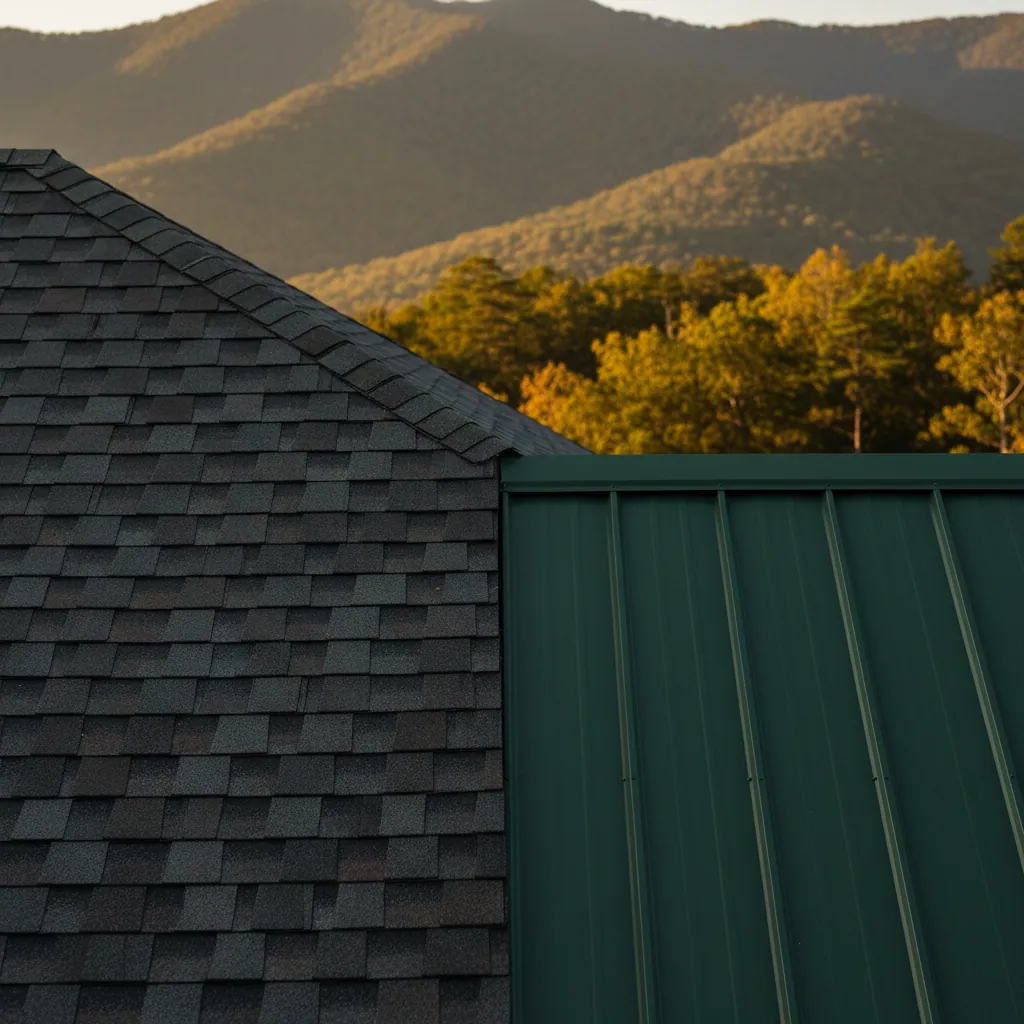
Yes, and we do this regularly on WNC homes — standing seam on porches, dormers, or lower shed roofs paired with dimensional shingles on the main field. Done thoughtfully, it looks intentional and can lower total cost.
Do metal roofs shed snow safely?
Standing seam panels shed snow and ice efficiently, which is a benefit for load management but means snow guards are important above entries, walkways, and outdoor living areas. We plan snow retention as part of the design, not as an add-on.
Which is better for insurance in NC?
It depends on the carrier and the specific product. Class-A fire-rated and impact-resistant systems (available in both metal and shingle categories) can qualify for premium credits with some insurers. Ask your carrier for their approved product list before you decide.
Related Services
Compare materials on your actual roof in Western NC
Pitch, exposure, and access change what makes sense. We price the real options, not a generic quote.
- 4.8★ Google · 158 reviews
- Licensed & insured · family-owned since 2017
- Franklin-based crews across 9 WNC counties
Calls are answered by the local team during working hours. Messages get a reply within one business day.
More Western NC resources
Mountain-Proven Results
Written By
Highlander Editorial Team
Highlander Building Services
Expert roofing and construction guidance from the team that builds in Western North Carolina's mountains every day.
Why Highlander
Talk to a local roofer
Photos, findings, and a written scope — no pressure to buy anything.
(828) 524-7773Request an Inspection