
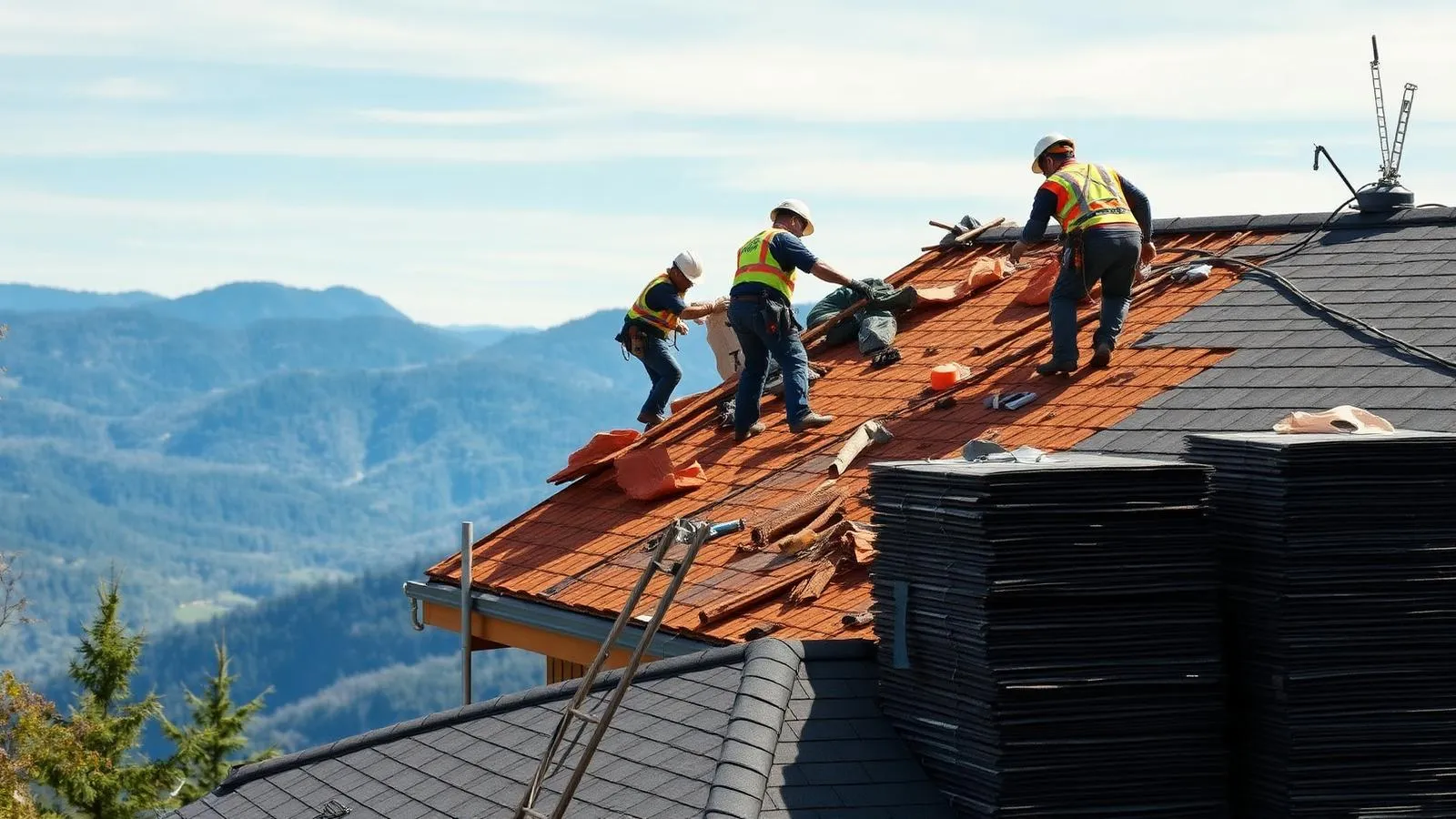
Roof Repair vs. Roof Replacement: How Homeowners in Highlands Know the Difference
A local roofer's guide to deciding when a Highlands, NC home needs a focused roof repair and when full replacement is the smarter long-term move.
Key Takeaways
One of the most common questions homeowners in Highlands, North Carolina ask us is simple to say and difficult to answer without context: can this roof be repaired, or is it time for a full replacement? The honest answer depends on the age of the roof, the type and extent of the damage, the number of previous repairs, whether moisture has moved into the system, the roofing material, your long term plans for the property, and how mountain weather has treated the home over the years.
Below is a plain, homeowner focused guide that reflects how our local team actually thinks about this decision on Highlands, Cashiers, and Franklin roofs every week.
Repair or Replace? The Right Answer Starts With the Roof's Condition
A visible leak inside the house is only one signal. Roof problems rarely begin where the water shows up on the ceiling. They usually start in the parts of the roof most people never see.
A thorough evaluation looks at the entire roofing system, not just the spot where a stain appeared. That includes:
- Flashing around chimneys, sidewalls, and dormers
- Valleys where two roof planes meet and shed water
- Roof penetrations for pipes, vents, and skylights
- Chimneys and their crickets, counter flashing, and caps
- Attic vents and ridge ventilation
- Fasteners on metal panels and exposed screw systems
- Shingles or metal panels across the entire field
- Underlayment beneath the surface material
- Drainage areas including gutters, downspouts, and kick out flashing
When any one of these fails, water can travel several feet before it becomes visible. That is why a focused patch over a stain sometimes solves the symptom without addressing the actual source.
What Is the Difference Between Roof Repair and Roof Replacement?
Roof Repair
A roof repair targets a specific damaged area. It usually involves fewer materials, can be completed in a shorter window, and makes sense when most of the roof remains in sound condition. Repairs commonly address flashing, a small section of shingles or metal panels, penetrations, isolated leaks, or localized storm damage.
Roof Replacement
A roof replacement removes and replaces most or all of the existing roofing system. It addresses widespread deterioration and typically includes any damaged decking, new underlayment, updated flashing, and adjustments to ventilation or drainage where needed. Replacement makes sense when repairs would only delay a decision that is already becoming unavoidable.
The least expensive option today is not always the least expensive option over the next several years. A repair that has to be redone twice, followed by a replacement, usually costs more than a single well planned replacement.
When a Roof Repair May Be the Right Choice
A repair is often the right call when the roof is still doing most of its job well and the problem is contained. The signs below tend to point in that direction.
The damage is limited to one area
If the issue is isolated to a single valley, one section of flashing, or a small run of shingles, a targeted repair can restore protection without disturbing the rest of the roof.
The roof is relatively young
A roof in the first third of its expected service life usually has plenty of useful years ahead. Repairing a young roof preserves the investment you already made.
The problem comes from flashing or a roof penetration
Many leaks in Highlands homes are not shingle or panel failures at all. They are flashing failures around a chimney, a skylight, a plumbing vent, or where the roof meets a sidewall. These are often very repairable.
Only a small number of shingles or panels are damaged
A handful of lifted shingles or one bent metal panel is usually a repair, not a replacement, provided the surrounding material is still in good shape.
The issue appeared after a recent storm
A specific weather event that caused specific damage is often a repair situation, especially if the rest of the roof came through the storm intact.
The roof has not required repeated repairs
If this is the first or second time in many years that the roof has needed attention, a repair is often reasonable.
The underlying decking remains sound
If the plywood or board decking beneath the surface material is dry and solid, the roof still has a strong foundation to build on.
There is no widespread moisture damage
When moisture has not spread through the underlayment, decking, or interior framing, a focused repair can usually stop the problem where it started.
A repair may make sense when: the damage is isolated, the surrounding roofing system remains strong, and the repair can reasonably restore long term protection.
When Roof Replacement May Be the Smarter Decision
Replacement is not something a good roofer recommends lightly. It is the right recommendation when the roof is telling you, in several different ways, that patching is no longer a dependable solution.
The roof is approaching or past its expected service life
Every roofing material has a realistic service range. When a roof has spent decades in mountain weather, small repairs may hold for a season but tend not to solve the underlying wear.
Leaks are appearing in multiple areas
One leak is usually a repair. Leaks appearing in unrelated spots on the same roof often mean the system as a whole is beginning to fail.
Repairs are becoming frequent
If you find yourself calling a roofer every year, the cost and frustration of ongoing repairs typically overtake the value they provide.
Shingles are curling, cracking, lifting, or missing throughout the roof
When these symptoms show up across many slopes rather than in one spot, the roof surface itself is at the end of its life.
Metal panels, seams, coatings, or fasteners show widespread deterioration
On metal roofs, look for backed out fasteners across many panels, failing sealant at seams, and coating breakdown that is no longer cosmetic.
Moisture has reached the roof decking or interior structure
Once water has soaked into the decking or shown up as staining in interior walls and ceilings in more than one area, a surface repair rarely resolves the full problem.
The roof has extensive storm, tree, or wind damage
A large limb strike, a wide hail event, or wind damage across most of the roof is often better handled through replacement, especially when the insurance scope supports it.
The roofing system was installed incorrectly
We occasionally find roofs that were installed with the wrong underlayment, missing flashing, or improper ventilation. In those cases, repairs continue to fight the original problem.
The homeowner is planning a major renovation
If you are already planning an addition, a large exterior refresh, or a resale in the near future, replacing a tired roof at the same time often costs less and protects the rest of the work.
Continuing repairs would cost more over time
When the math on ongoing repairs starts to approach the cost of a new roof, replacement usually becomes the better value.
Replacement may be the better investment when: the problem is widespread, the roofing system is nearing the end of its useful life, or repeated repairs are no longer providing dependable protection.
Why Roofing Decisions Are Different in Highlands, NC
Highlands sits at more than 4,000 feet, surrounded by dense tree cover, steep terrain, and some of the highest rainfall totals in the eastern United States. A roof here does not have the same life as an identical roof in the Piedmont.
A few local realities shape how we evaluate roofs in Highlands, Cashiers, Franklin, and the surrounding Western North Carolina mountain communities:
- Heavy rainfall puts constant stress on flashing, valleys, and drainage
- Wind across ridges and open lots lifts shingles and stresses fasteners
- Falling branches from mature hardwoods can bruise shingles or dent metal
- Tree coverage holds moisture on the roof and in gutters longer than in open terrain
- Freeze and thaw cycles work small openings into larger ones over time
- Steep rooflines common on mountain homes require experienced crews and proper anchoring
- Mountain terrain and limited property access can influence how a project is staged
- Seasonal occupancy means many homes sit unattended for months at a time
- Drainage around mountain properties has to move a lot of water quickly
Damage on a full time residence usually gets noticed within days. Damage on a second home or seasonal property can quietly progress for months before an owner returns. That is one reason we recommend a documented roof inspection between visits for homeowners who split their time between Highlands and another primary residence.
A local roofing contractor should understand mountain weather patterns, the home styles common to this region, how metal and shingle systems behave at elevation, how to work safely on steep slopes, how to solve real drainage problems, and how various roofing materials actually perform in Western North Carolina.
Roof Repair or Replacement? A Simple Comparison
The factors below are the ones that most often push a decision in one direction or the other.
Roof age
- Repair may make sense: roof is in the first half of its expected service life
- Replacement may make sense: roof is near or past its expected service life
Extent of damage
- Repair may make sense: damage is contained to one area
- Replacement may make sense: damage appears across multiple slopes or systems
Number of leaks
- Repair may make sense: one leak with a clear source
- Replacement may make sense: multiple leaks in unrelated locations
Repair history
- Repair may make sense: this is a first or occasional repair
- Replacement may make sense: the roof has needed frequent attention
Moisture damage
- Repair may make sense: moisture is limited to one area and easy to trace
- Replacement may make sense: moisture has reached decking or spread through the interior
Material condition
- Repair may make sense: most shingles or panels remain sound
- Replacement may make sense: surface material is failing across the roof
Long term property plans
- Repair may make sense: you plan to reevaluate in a few years
- Replacement may make sense: you plan to keep or improve the home for many years
Estimated long term cost
- Repair may make sense: a targeted fix is clearly less than the value it protects
- Replacement may make sense: ongoing repair costs are approaching replacement cost
Installation quality
- Repair may make sense: the original system was installed correctly
- Replacement may make sense: fundamental installation issues keep causing new problems
Storm damage
- Repair may make sense: damage is limited and clearly localized
- Replacement may make sense: storm impact is widespread or the insurance scope supports a full replacement
Which Option Costs More?
Repairs almost always cost less upfront than replacement. That is not the whole picture. The lowest immediate cost is not always the best long term value, especially when the same area needs to be revisited a year or two later.
Several factors move both repair and replacement pricing:
- Roof size and pitch
- Property accessibility and staging area
- Roofing material chosen
- Extent of the damage found
- Condition of the decking beneath the surface
- Flashing that needs to be updated or replaced
- Ventilation adjustments
- Removal and disposal of the existing roof
- Labor required for steep slopes and elevation
- Property location and drive time
Rather than publishing generic ranges, we walk each roof, document what we find, and put a written scope in front of the homeowner. That way you can compare a repair option and a replacement option using the same facts.
What Highlander Looks for During a Roof Inspection
A roof inspection is not a pitch for replacement. It is a written assessment that helps you understand exactly what your roof needs, and nothing more. During a typical inspection we evaluate:
- Visible roofing material damage across every slope
- Flashing at chimneys, walls, dormers, and skylights
- Valleys and how they are shedding water
- Chimneys, crickets, and roof penetrations
- Roof edges, drip edge, and eaves
- Gutters, downspouts, and drainage
- Fasteners and seams on metal systems
- Attic and ridge ventilation
- Signs of moisture in the underlayment or decking
- Interior water staining in ceilings and upper walls
- Roof decking where it is safely accessible
- Previous repair areas and how they are holding up
- Overall installation quality
- Storm or tree impact
The purpose is to identify the cause, the extent, and the most practical solution, then give you a clear recommendation you can act on with confidence.
Questions to Ask Before Making a Decision
Before you sign a proposal for either a repair or a replacement, we suggest asking a roofer the following questions:
- What is actually causing the problem?
- Is the damage isolated or widespread?
- How much useful life is left in the rest of the roof?
- Is the roof decking still sound?
- Has this area been repaired before?
- What happens if the repair is delayed?
- Would a repair provide a dependable long term solution?
- Are there multiple options I should consider?
- What is included in the proposed scope?
- Is replacement likely within the next few years?
Clear answers to those questions tend to make the right decision obvious.
Get a Clear Answer Before Making a Major Decision
Some roofs only need a focused repair. Some roofs are better served by replacement. The way to know which situation you are in is a careful look at the entire roofing system rather than a guess based on a stain or a single missing shingle.
Highlander Building Services focuses on practical recommendations, local mountain experience, quality workmanship, and long term protection for homes across Highlands, Cashiers, Franklin, and the surrounding Western North Carolina communities. Whether the right answer for your home is a targeted roof repair, a full roof replacement, or a broader construction or exterior update, we will walk you through the reasoning before we ever touch the roof.
You can also see recent work in our recent projects or read more about our roofing services and service area in Highlands, NC.
Not Sure Whether You Need a Repair or Replacement?
Schedule a professional roof inspection with Highlander Building Services. We will evaluate the condition of your roof, explain what we find, and help you understand the most practical next step for your Highlands property.
Request a Roof Inspection or Get My Questions Answered to talk with our team.
Local to Highlands, NC
This article was written specifically for homeowners in Highlands and the surrounding area. Highlander Building Services serves Highlands and all of Western North Carolina with in-person consultations and local crews.
Talk With Our Local TeamFrequently Asked Questions
Can a leaking roof be repaired without replacing it?
In many cases, yes. A single leak with a clear source, especially one that traces back to flashing, a roof penetration, or a small area of damaged shingles or panels, can often be repaired without a full replacement. The important step is finding the actual source of the water rather than only patching where the stain appeared inside the home.
How do I know whether roof damage is isolated?
A professional inspection is the most reliable way to tell. If damage is limited to one valley, one section of flashing, or a small area of the field, the rest of the roof is likely still doing its job. When similar problems show up on multiple slopes or in unrelated areas, the roof as a whole is usually the issue.
Is an older roof automatically in need of replacement?
No. Age is one factor, not the only one. Some older roofs are still performing well and only need targeted maintenance. Others have lost the sealants, fasteners, or surface material that keep them watertight. We look at age alongside condition, installation quality, and damage before making a recommendation.
Can storm damage be repaired?
Often, yes. A specific weather event that damages a specific area is frequently a repair situation. Widespread hail, extensive wind uplift, or major impact from trees is more likely to require replacement, sometimes with insurance involvement.
How many roof repairs are too many?
There is no exact number, but when the same roof needs attention year after year, or when new leaks keep appearing in different areas, the cost and hassle of ongoing repairs usually outweigh their value. At that point, replacement is often the better long term decision.
Should I repair a roof before selling my home?
In most cases, yes. A documented recent repair or replacement gives buyers confidence and removes a common negotiating point. A written inspection report can also help you decide whether a repair is enough or whether replacement will strengthen the sale.
Does Highlander inspect both metal and shingle roofs?
Yes. We work on shingle, standing seam metal, exposed fastener metal, and synthetic roofing systems on homes across Highlands, Cashiers, Franklin, and the surrounding Western North Carolina area.
How quickly should I respond to a roof leak?
Sooner is always better. Even a small leak can spread through underlayment, decking, insulation, and framing over time. Getting a professional eye on the roof early usually keeps the repair smaller and less expensive.
Does Highlander serve second home owners in Highlands?
Yes. A large part of our work supports second home and seasonal property owners. We can coordinate inspections between visits, document conditions with photos, and communicate clearly by phone or email so owners can make informed decisions from anywhere.
Can Highlander help with roofing, construction, and exterior repair needs?
Yes. Beyond roofing, our team handles construction, additions, renovations, and exterior repairs across Highlands and Western North Carolina. That means one experienced local team can plan and complete work that involves more than just the roof.
Related Services
Get a written replacement scope in Highlands, NC
Line-item pricing and a realistic schedule so you can plan around it.
- 4.8★ Google · 158 reviews
- Licensed & insured · family-owned since 2017
- Franklin-based crews across 9 WNC counties
Calls are answered by the local team during working hours. Messages get a reply within one business day.
More for Highlands, NC
Real Work in Highlands
Market Context
Roofing & Construction in Highlands
Explore localized standards and proven projects in your area.
Written By
Highlander Editorial Team
Highlander Building Services
Expert roofing and construction guidance from the team that builds in Western North Carolina's mountains every day.
Why Highlander
Roofing help in Highlands, NC
Photos, findings, and a written scope — no pressure to buy anything.
(828) 524-7773Request an Inspection